Unbounce is a real, long-running hosted landing page builder with public plan prices and a 14-day trial that needs no card. Unbounce is the pick if you send enough paid traffic to split-test your landing pages every month and want tests, popups and dynamic text replacement in the same editor where you build the pages. You will regret it on a small ad budget, where the plan that unlocks A/B testing eats a large share of spend, or if you need a checkout and upsells, because Unbounce stops at the landing page.
It is at its best for paid media teams with enough monthly clicks to split-test their landing pages. That is the lens the rest of this review uses: not whether it is the biggest tool on the market, but whether it is the right one for that operator.
Is Unbounce legit, and will you regret it?
Unbounce is the landing page builder most PPC buyers already know, and the question behind this search is usually narrower: will it pay for itself on the ad budget you have? The company has sold its builder since 2009, its plan prices are public, and the 14-day trial opens the full plan you pick without asking for a card.
Regret tends to come from buying the wrong tier. The two cheaper plans host pages but cannot A/B test them, and the plan that can costs more than many small accounts want to pay for a page tool. The sections below show where that line falls, so you can choose a tier before the trial ends. If the plan limits are your first question, compare the Unbounce plans side by side.
What the builder does on a paid-traffic page
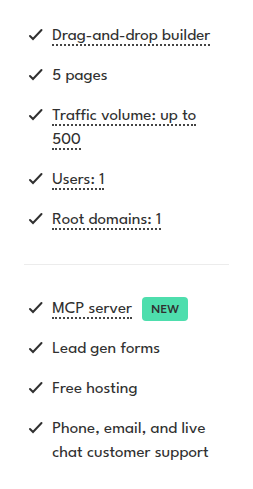
Unbounce builds hosted landing pages in a drag-and-drop editor, with popups and sticky bars from the Build plan up. Build also adds custom scripts and pixels and multi-step forms, which is what an ad account needs to fire its own conversion tags. Every plan includes unlimited conversions, so a lead page that converts well never pushes you into a higher tier.
Its MCP server is the newest piece. It connects Claude and ChatGPT to your account on every plan, trial included, so an assistant can build a page, start a test or switch on Smart Traffic from a chat window. That speeds up shipping variants. Whether a variant wins still comes down to your offer and your traffic.
Is Unbounce worth it for paid traffic?
Count visitors before you count features. Unbounce meters unique visitors per month: a person who views a page, popup or sticky bar counts once that month, however often they come back. Starter allows 500 of them across five pages, about 16 a day. That is enough to build and preview pages, and too little to run live ad traffic to them for long.
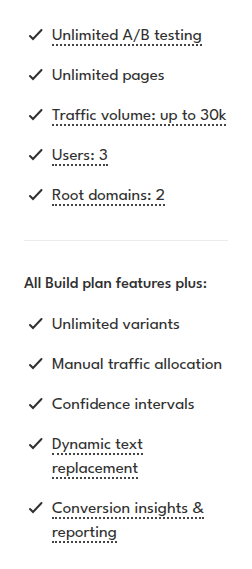
Build lifts the allowance to 20,000 visitors with unlimited pages, which covers many single-offer accounts. Experiment adds A/B testing at 30,000 visitors, and Optimize adds Smart Traffic at 50,000. Pass a limit and your pages keep running. Unbounce warns you by email and in the app first, then bills the extra traffic as a one-time charge.
So the answer depends on what you buy it for. On Build you pay for hosted pages with your pixels on them, without the testing that sets Unbounce apart from simpler page tools. It earns its fee on Experiment, when you send enough clicks each month for a split test to reach a result and a lift in conversion rate is worth more than the plan. On r/PPC, buyers with smaller budgets call that price steep and the incumbents overpriced, and at low spend the complaint is fair.
Unbounce A/B testing: what the Experiment plan adds
Testing lives in the same editor: you build variants there and launch a test without code. Experiment allows unlimited tests and unlimited variants, with manual control over how traffic is split, confidence intervals on the results and conversion reporting. The same plan adds dynamic text replacement, for matching the page headline to the keyword or ad that brought the visitor.
AI traffic optimization, which Unbounce calls Smart Traffic, is the Optimize plan's addition, along with scheduling and audience insights. For most single-offer accounts the manual tests on Experiment are the part worth paying for, because one clear winner is easier to act on and to report to a client.
Use the trial to judge this. It gives full access to whichever plan you start it on, so pick Experiment if A/B testing is why you are looking. A trial on Starter tells you nothing about the feature you would be paying for.
What Unbounce leaves to other tools
Unbounce stops at the landing page. It has no checkout, order bumps or one-click upsells, so an offer that sells on the page still needs a cart behind it: ClickFunnels for a general funnel, Funnelish for an ecommerce store, SamCart for digital products. Its conversion reporting covers the page itself. Tying a lead or a sale back to the campaign and the spend that produced it is a tracker's job, which our RedTrack review covers.
A long-time user on r/PPC sums up the trade against Leadpages as far more control with more complexity attached. If your team wants quick pages and rarely tests, that complexity is a cost you carry for nothing. The Unbounce alternatives page sorts the other options by the reason you would leave.