You have a high-risk MID, or an ISO is boarding one, and every sale still has to reach a processor. A high-risk payment gateway is the technology that transmits the payment data between the customer, the site and the card networks. Get the merchant account approved first. Read the guide to high-risk merchant accounts for paid offers before you compare gateway brands. Then choose the gateway, and the checkout in front of it, for the number of MIDs you will actually run.
My take
I'd start with the acquirer application, and I'd wait to choose a gateway until that application is in underwriting. Authorize.net's Gateway Only plan connects to a processor the business already has, which fits when there is only one MID. Several MIDs belong on one gateway account that can choose among them, which is the routing product NMI describes. The checkout in front of either login is its own decision. Funnelish publishes routing rules on Scale and leaves them off Pro. Checkout Champ's pricing FAQ names both gateways on a long integration list. Published fees are in each product block below. The freeze stories come from operators on public threads. We do not run these gateways on live campaigns. The methodology page explains how those calls were made.
Read the high-risk merchant account guide
What the gateway does behind your MIDs
Authorize.net's pricing page is the clearest public split between the two layers. A payment gateway securely transmits payment data between a customer, your website or terminal, and the payment networks. Authorize.net calls the holding account a merchant account: it keeps funds after a transaction is approved, before they move to the business bank account. Gateway Only connects Authorize.net to one you already hold. The other published plan on that page bundles a new holding account with the gateway.
That bundled plan is a published path for a business the vendor will board itself. An ISO-boarded high-risk file is a different path, even when the name on the gateway field of the application looks familiar. People in the US often treat the self-serve form as if it were a high-risk approval. The form boards the bundled account. The ISO boards the file that aggregators have already turned away.
The fraud module lives on the gateway side of that split. The published gateway plans include the Advanced Fraud Detection Suite, with customizable rules that flag suspicious activity before it becomes a chargeback. The acquirer still decides whether the offer, the geography and the billing model are acceptable.
Authorize.net
- 23 Nov 2026
- Gateway Only: $25 a month, 10¢ per transaction, 10¢ daily batch. Bundled plan: $25 a month plus 2.9% and 30¢, with the bank account included.
One existing processor on Gateway Only, or the bundled account on the published signup.
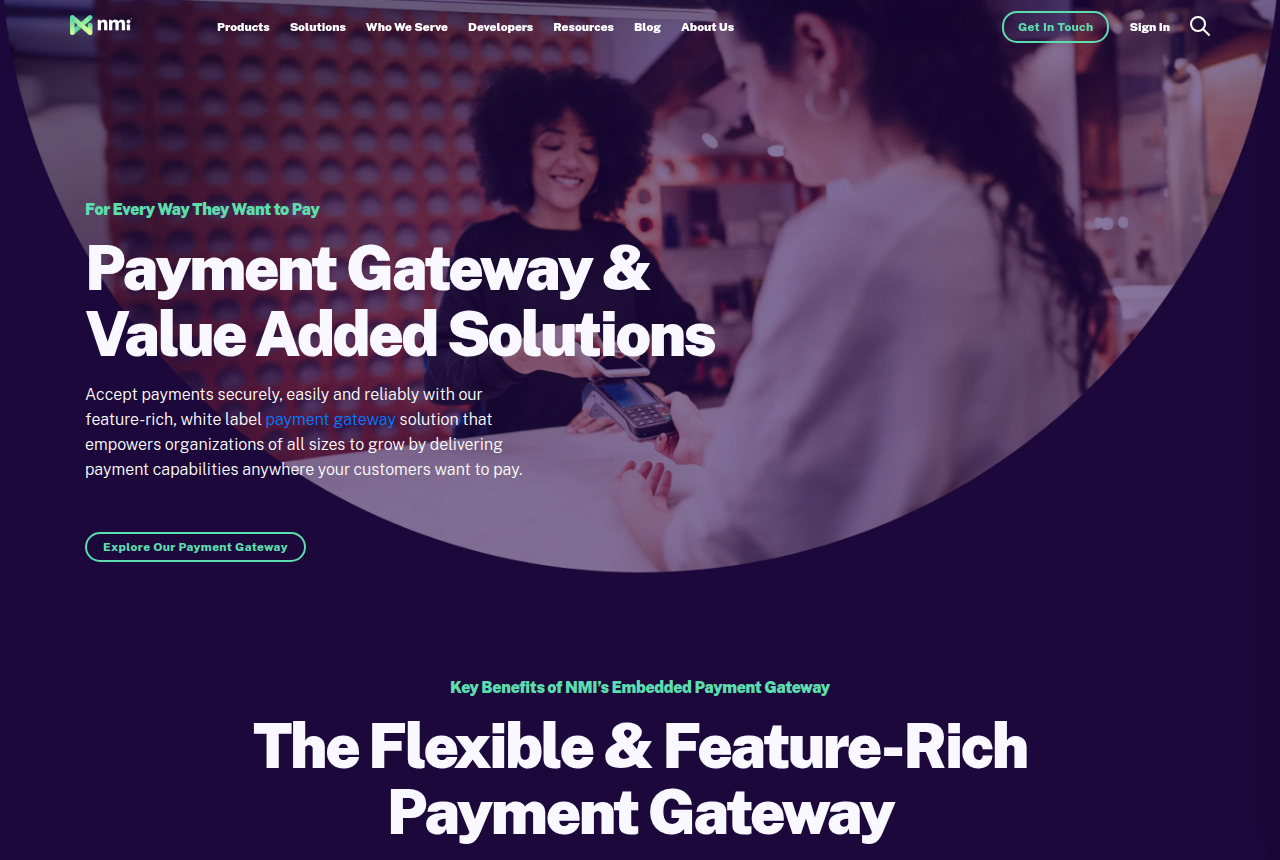
NMI sells a white-label embedded payment gateway to ISOs, software companies and resellers. The homepage asks you to talk to the team, because merchants usually buy this gateway from an ISO or a software partner. On the payment gateway page, Transaction Routing chooses which MIDs receive a charge from the active routing directives, on a single gateway account. The same page says several MIDs can sit on that one account. The partner sets the fee. The same page lists the processor and shopping-cart integrations beside that routing.
The ISO still places the merchant. NMI's IntegralPay case study describes an ISO that serves medium- and high-risk ecommerce and that works with a large number of payment processors so merchants can be placed despite high-risk profiles. The write-up is about that partner's processor list, and about why the partner wanted a white-label gateway. The NMI payment gateway review covers those routing rules.
NMI
- 23 Nov 2026
- No public merchant rate card. The ISO or the software partner sets the fees. The gateway page lists 200+ processors and 125+ shopping carts.
Several MIDs on one gateway login, with the fee coming from the ISO that resells it.
The checkout rule in front of those MIDs
A payment gateway for high-risk work still has to sit inside a checkout that can send a charge to a second MID. Funnelish lists that choice on Scale, and the pricing page shows it on that tier.
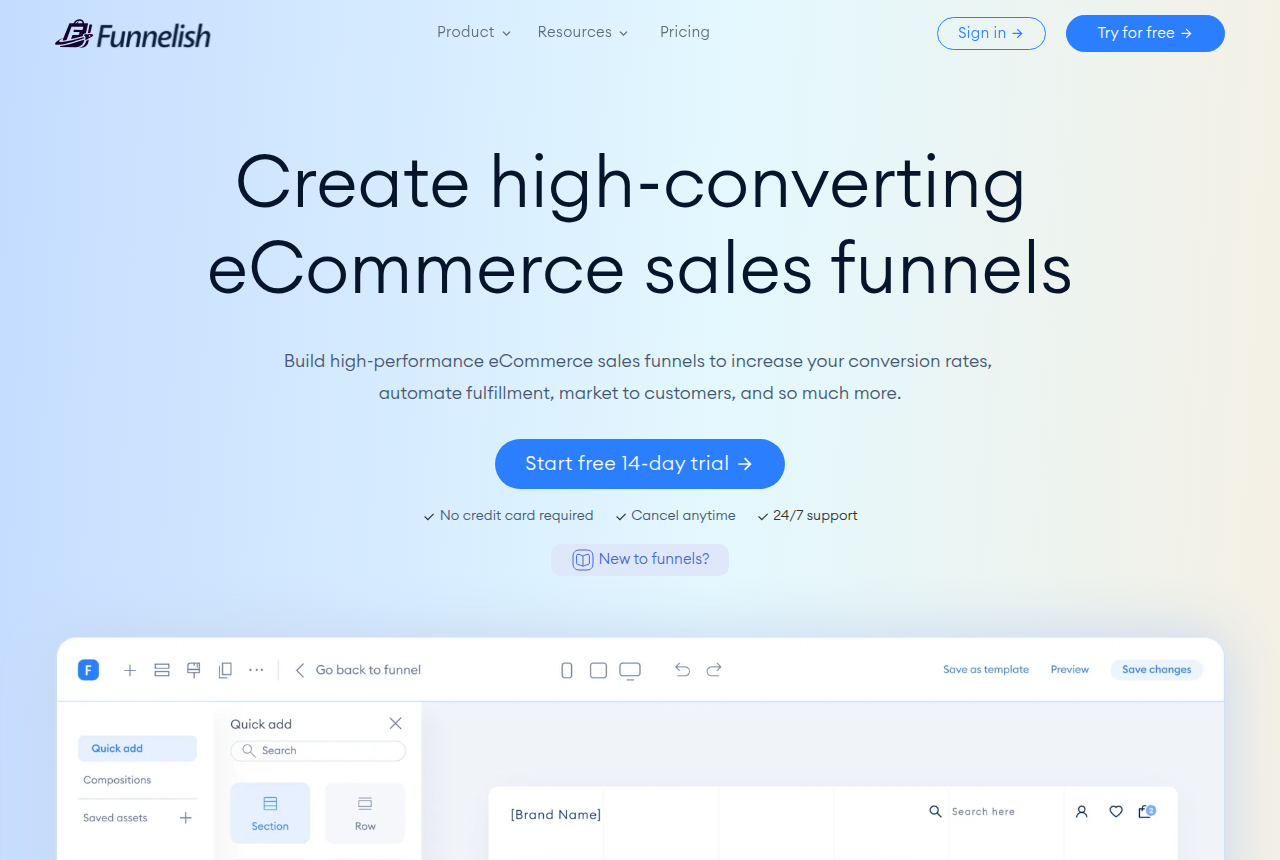
Funnelish's pricing page includes smart payment routing on Scale: routing rules, cascading, decline recovery and volume split. The Pro plan excludes those four features. The page leaves NMI and Authorize.net unnamed inside those rules, so the feature stays gateway-agnostic until the funnel shows which accounts it will load. Volume split is the label for spreading charges. That same line stops at volume split. Check the funnel to see whether an upsell or a rebill stays on the first MID.
If the upsell requires the buyer to enter the card again, the one-click upsell checkout guide compares hosted carts with high-volume checkouts. The stack picker pairs the tracker, the checkout and the player when you are choosing all three.
Funnelish
- 23 Nov 2026
- Scale is $249 a month, billed monthly, and includes smart payment routing. Paid plans list unlimited gateways and MIDs, and 0% platform transaction fees.
Routing rules on Scale, once you have confirmed which gateways the funnel will load.
Checkout Champ publishes a long list of supported gateways. Its pricing FAQ names NMI and Authorize.net in the same list as Stripe, PayPal, Checkout.com, WithReach and Aquired.com, the spelling that FAQ prints. A name on that menu is a connection the checkout can load. Loading an aggregator from the same menu brings back the holds in the next section.
When the pages are already built and you need an order hub, read the Konnektive CRM review. The direct-response CRM guide separates that headless hub from a priced funnel CRM.
Checkout Champ
- 23 Nov 2026
- The pricing FAQ lists integration with more than 270 gateways, including NMI and Authorize.net.
A checkout that needs NMI and Authorize.net on a long list of gateway connections.
What operators run once monthly volume is real
People looking for this gateway from a US acquirer often land on an aggregator first. On a payment-processing thread, commenters say Stripe, Shopify Payments and PayPal hold high-risk digital volume once disputes stack up. At $30,000 to $50,000 a month, one commenter on that discussion says a dedicated merchant ID reduces the random freezes they associate with those aggregators. A comment on the same kind of thread calls a true high-risk merchant account with a dedicated gateway the right move. A new gateway label, while the volume still clears through an aggregator, leaves the hold where it was.
Operators on another thread describe keeping a backup MID or gateway available, and sometimes a second payment method, so one freeze does not stop the business overnight. That report assumes the extra MIDs are already underwritten. A second login helps after that extra account is approved.
In those threads, a high-risk merchant payment gateway is the dedicated pipe behind an account an underwriter has already approved. The high-risk merchant account guide covers PaymentCloud, Durango and PayKings.
After the account is live, disputes and reserves still determine whether you can keep spending on ads. The chargeback ratio calculator places a month of sales against Visa and Mastercard thresholds. Chargeback alerts and representment cover prevention and the reply to a dispute. The rolling reserve calculator shows how much of a month's volume stays locked when the contract holds back a percentage. Read those three guides before you raise spend on the MID this gateway will charge.
Match the gateway to the MID count
The best payment gateway for a high-risk business depends on how many MIDs are already approved. Someone who wants one winning gateway is asking for a single brand. Base the choice on how many MIDs you already have. A listicle's top brand is a weaker guide than that count.
One MID, and a processor that has already approved the offer: use the Gateway Only connection published with the Authorize.net plans. The bundled line beside it includes the bank account. Use that bundled plan when you want the vendor to underwrite the account itself. An ISO's high-risk application is a separate submission.
If you have several MIDs that should share one login, NMI's routing directives are built for that setup. A merchant who already had underwritten accounts, and then added this gateway, reported that everyday use falls short of Stripe. That complaint is about the interface, and it shows up after the accounts are already approved. If you are deciding between those two logins, read NMI versus Authorize.net.
When the checkout has to spread charges or recover a decline, Funnelish Scale is the plan that lists those controls. Confirm the gateway names inside the funnel, because the pricing page leaves them out. Checkout Champ is the checkout when you need NMI and Authorize.net on one long integration list. Open the Konnektive review when you want the order hub and the landing pages are already built.
Sign the merchant-account file before you accept a gateway fee from an ISO. The other paid-traffic guides are on the best guides page once that file is in underwriting.
Start with the account file
If the MID is still undecided, read that guide next. Come back to the gateway once an acquirer has a file in underwriting, and match the login to the number of MIDs on that file.
Sources
Vendor pages behind the split and the plan lines: Authorize.net pricing, NMI's payment gateway, the IntegralPay case study, Funnelish pricing and Checkout Champ pricing.
Operator reports linked above: the thread on aggregator holds, the comment on dedicated MIDs around that monthly volume, the comment on a dedicated gateway, the thread on NMI's screens, and the thread on keeping more than one MID.
Related reading

Written by
Marcus Flynn
Tracking and attribution editor
Marcus Flynn runs OfferROAS's tracking and attribution desk. He covers direct-response paid media for this site, from the tracker to the merchant account. He reads operator threads, vendor changelogs and pricing pages, then writes what those sources support. He sets the methodology and puts his name on the commercial pages.
Last checked 2026-11-24
Comments
No comments yet. Questions and your own experience are welcome.
Thank you. Your comment will appear once it has been reviewed.