A ratio letter usually names a rebill the buyer forgot, an upsell on a descriptor they do not recognize, or a stack of both.
Turn on network alerts first, and automate representment for the disputes that still post. Add a pre-shipment scan only when fraud, or friendly fraud, is what is pushing the count. Chargebacks911's prevention guide says alert tools can cut chargeback volume by 20 to 40 percent while the longer fixes are still being built.
My take
Before I price a contract, I would run the ratio calculator. Chargeflow is where I would start for one Shopify store or one Stripe account, because the published fees are a charge per deflected alert and a share of wins. Disputifier is where I look when there are several merchant accounts, or when PayPal is in the alert mix. Chargebacks911 is the demo to book when a team wants the evidence packets built for them. On an info product whose disputes come from a confusing descriptor, I skip the post-checkout scan.
Why the ratio letter arrives before the funnel breaks
Paid offers pick up disputes on the second and third charges as well as on the front-end sale. The upsell descriptor and the rebill descriptor are separate lines on the card statement. The funnel can keep converting while the merchant account's dispute count climbs.
The chargeback ratio calculator shows where that count sits against Visa and Mastercard. Chargebacks911 cites an industry figure of $4.61 lost for every dollar disputed, once fees and fulfillment costs are counted. That figure is in the prevention guide linked above.
A checkout at this volume often runs on more than one merchant account. Operators who do that usually use Konnektive, Checkout Champ, or Sticky.io. Each account is still scored on its own disputes.
Chargeback prevention software refunds the alert
Chargeback prevention software is the early warning: Ethoca on Mastercard, and Verifi CDRN and RDR on Visa. You refund the order inside the window, and the dispute stays off the chargeback count.
Chargebacks911's alert page sells Verifi CDRN and Ethoca together, and says merchants get 24 to 72 hours before a pending dispute becomes a chargeback. The same page claims that alerts can resolve up to half of disputes before they post. Both lines are that company's claims. Treat them as one vendor's ceiling, and compare each tool by the fee on its card.
Chargeflow's pricing page says its alerts run through Verifi, Ethoca, and Chargeflow's own network, and that the alert fee is charged only when the alert prevents a formal chargeback. The dollar amount is on the Chargeflow block further down.
Disputifier's alerts page lists Ethoca, CDRN, RDR, Order Insight, PayPal, and coverage it claims for Amex and Discover. The page says duplicates and overlaps are credited, and that you pay for alerts that stop a dispute. A per-alert dollar price is absent from Disputifier's pricing page, so that line stays off the Disputifier block.
Audit the alert invoices. The public complaints are about Chargeflow billing for alerts. Stripe merchants in one thread say they paid for alerts on transactions the customers say were never disputed. That complaint is about the alert bill. Match the first month of alert rows to disputes the processor actually shows.
Representment after the chargeback posts
A posted chargeback is a different bill from an alert. Someone assembles the evidence, the network decides, and the software fee is a share of what comes back.
Chargeflow and Disputifier both publish a pay-on-win fee and a zero charge when the dispute is lost. Chargeflow's share of the recovered amount, and Disputifier's share with a per-win cap, are on their blocks further down. Disputifier's pricing page also states that representment has no subscription.
Chargebacks911's merchant page sells that same job as a managed service. The page leads with a demo and an ROI analysis. No rate card is published there.
Moving tools is the hard part for a team that already works in the Shopify admin or the Stripe dashboard. Chargeflow's homepage lists a Shopify app, a Stripe marketplace app, and more than 100 commerce and processor integrations. That is the install path for the usage-fee tools.
Contract length is a separate objection, and the only figure on record here is one seller's. In a comparison thread, that merchant described a two-year Chargebacks911 contract at around $1,200 a month, then a move to a self-serve tool. Treat it as that one contract. The proposal you receive is a different document.
A scan only when fraud is the driver
A scan after checkout is a third product. Chargeflow calls it Prevent. Transactions are scanned after checkout, with a free opening block and then a per-scan fee, both printed with Chargeflow below.
Buy the scan when the driver is fraud, or a buyer who disputes on purpose. A high-ticket supplement order and a serial disputer are the cases that fit. An info product that loses orders because the descriptor confused the buyer can stop at alerts and representment.
Disputifier sells alerts separately from the representment fee. Those alerts still work by refunding the order before a chargeback posts. Ad-click fraud is a different buy, and the stack picker is where the tracker, the checkout, and the VSL player get matched.
How these three tools bill
The best chargeback management software here is the tool whose published fee matches the job in front of you.
Chargeflow prints the usage fees
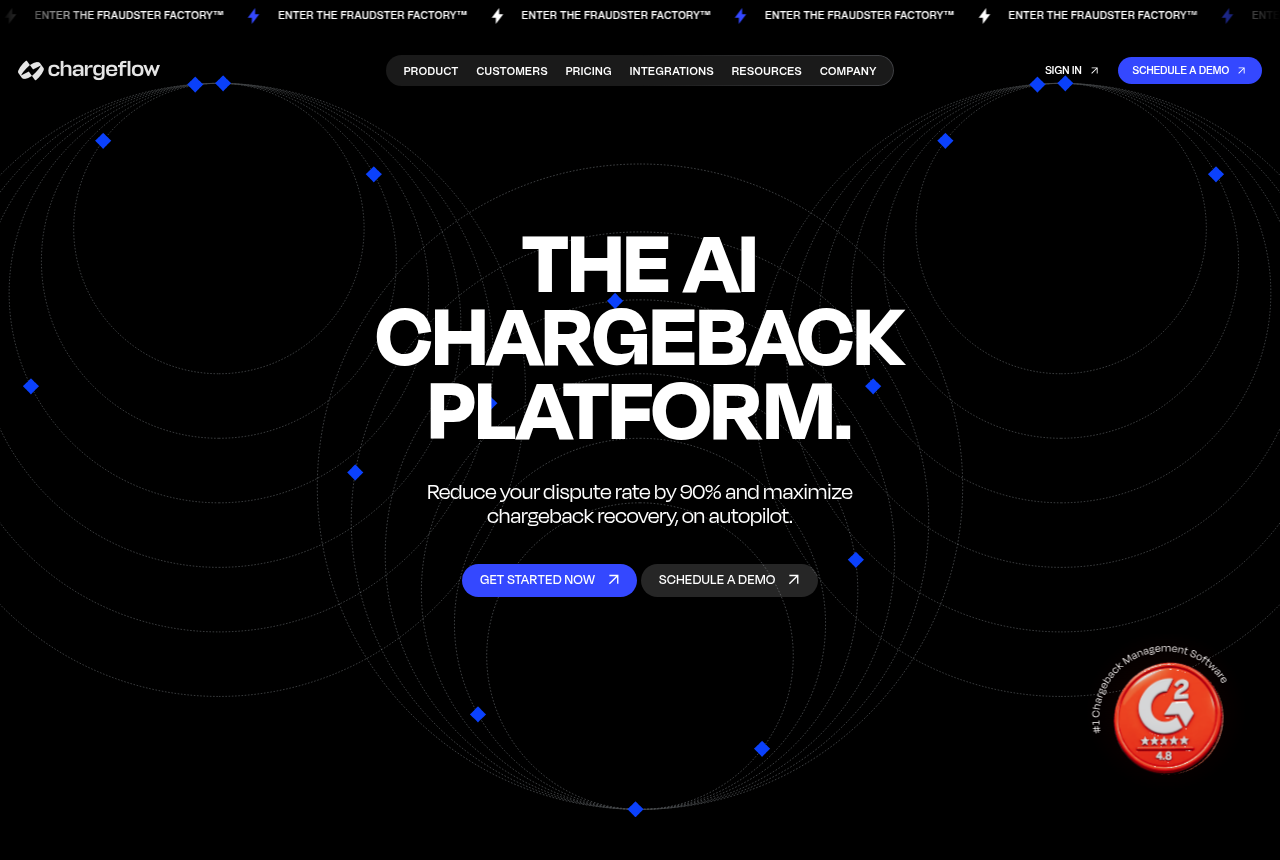
Alerts, representment, and the post-checkout scan share one price list, and the homepage is built around the Shopify and Stripe installs already linked. Start here when one processor account is the whole book and a sales call can wait. Reconcile the first alert invoice against the Stripe reports already cited.
Chargeflow
- Alerts (16 Oct 2026)
- $29 per deflected chargeback
- Automation (16 Oct 2026)
- 25% of the recovered amount, nothing if lost
- Prevent (16 Oct 2026)
- $0.20 per scan after 1,000 free scans
One Shopify store or one Stripe account, when the fees need to be in writing.
Disputifier caps the win and watches several MIDs
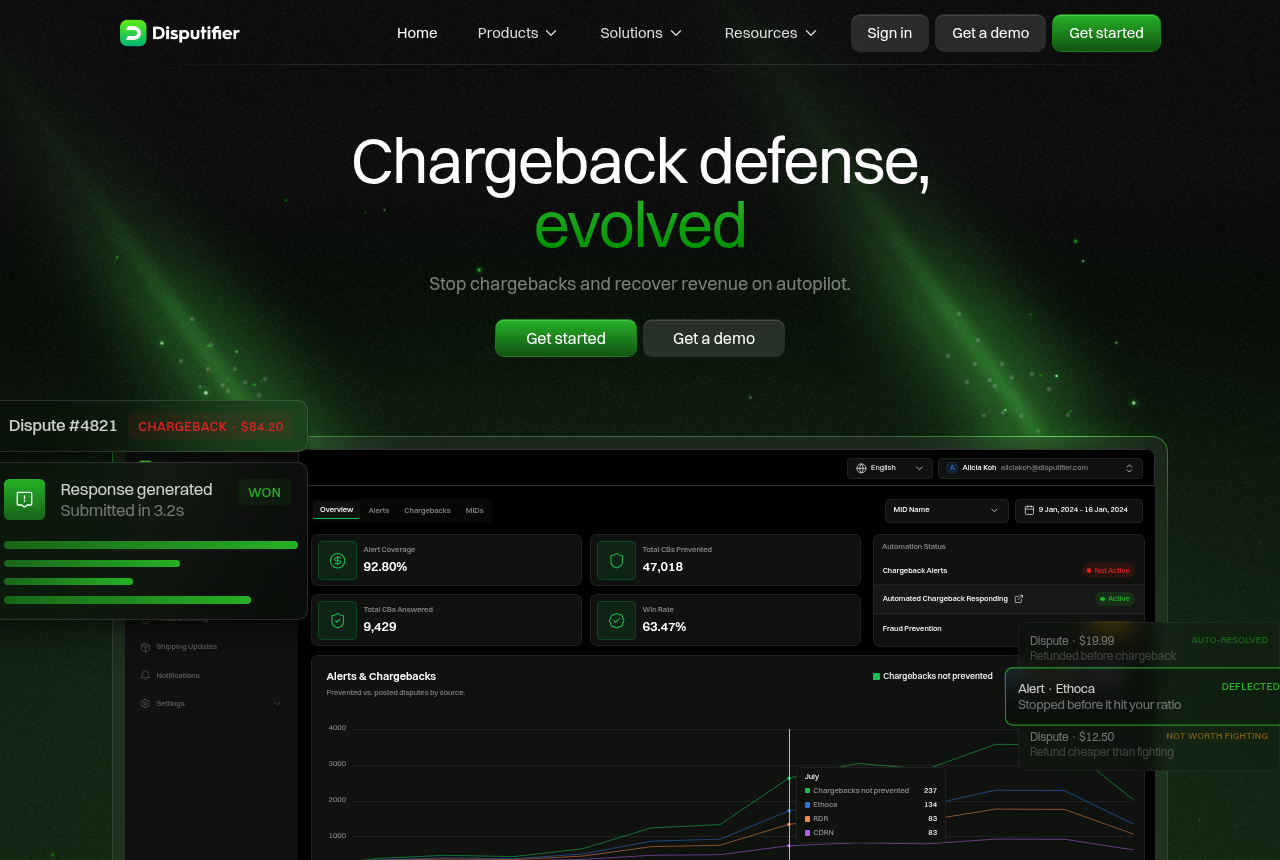
The alerts page is built for a book of MIDs, and PayPal is one of the networks it lists. The alerts page shows a multi-MID dashboard and a sample rule that auto-refunds an alert under $25. The representment fee is capped on each win, which changes the math on a large recovered order. The per-alert dollar fee stays off the block, because the pricing page does not print one.
Disputifier
- Representment (16 Oct 2026)
- 20% of recovered revenue, capped at $250 a win
- Subscription
- None stated on the pricing page
- Alerts
- Separate product. Per-alert fee not listed
Several merchant accounts, or a book that needs PayPal alerts.
Chargebacks911 starts with a demo
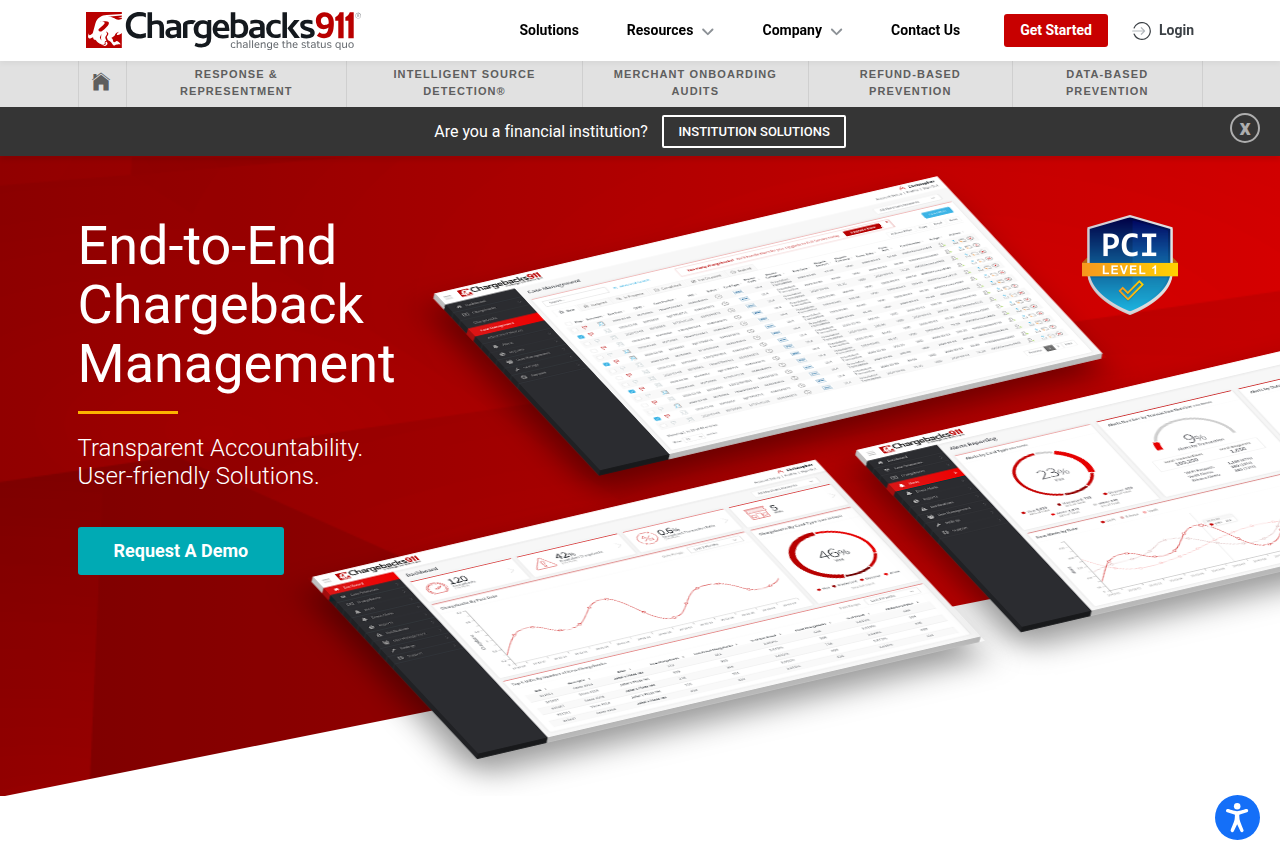
Book the demo when someone is still building evidence packets by hand and a contract is an acceptable next step. The merchant page gathers CDRN and Ethoca alerts with representment, and the action on that page is an ROI analysis. That two-year figure is one seller's contract. Read the proposal for the contract term and the monthly fee.
Chargebacks911
- Public price
- Demo and ROI analysis. No rate card on the page
- Alerts
- Verifi CDRN and Ethoca in one place
A team that wants representment handled and will take a demo.
Run the ratio before you sign an alert contract
If the calculator shows the month approaching a threshold your acquirer has already warned you about, buy alerts and wait for the next month of data before you add a second product.
If the evidence packets are still manual, add representment from the vendor whose win fee you compared above. Several MIDs point to Disputifier's dashboard. A managed contract points to the Chargebacks911 demo.
In the first month, match the alert file to real disputes. That is the check for the Chargeflow billing reports, and it is the same file you would use to confirm the credits Disputifier describes.
The calculator uses a month of sales and chargebacks to show where the MID stands. Price the alert path after that result.
Sources
Related reading

Written by
Marcus Flynn
Tracking and attribution editor
Marcus Flynn runs OfferROAS's tracking and attribution desk. He covers direct-response paid media for this site, from the tracker to the merchant account. He reads operator threads, vendor changelogs and pricing pages, then writes what those sources support. He sets the methodology and puts his name on the commercial pages.
Last checked 2026-10-21
Comments
No comments yet. Questions and your own experience are welcome.
Thank you. Your comment will appear once it has been reviewed.