Head-to-head
SegMetrics vs Cometly
You are down to two attribution platforms that both threw out the last-click pixel, and the choice is hard because they describe themselves in almost the same words. SegMetrics reads your funnel by the person, tying each lead's lifetime value across ads, email and payments. Cometly reads your revenue by the deal, tying ad spend to Stripe subscriptions and CRM pipeline. One is built for info-product funnels. The other is built for B2B SaaS. Here is which one your business needs.
By Marcus Flynn, tracking and attribution editor. Updated 29 September 2026.
Pick SegMetrics if you sell courses, coaching, memberships or other info products through long, email-driven funnels and want person-level lifetime-value attribution, self-serve pricing from $57 a month, and your real sales fed back to Meta, Google, TikTok and Bing; pick Cometly if you run a B2B SaaS business on a trial-to-paid or demo-to-closed motion and want ad spend tied to Stripe revenue, HubSpot or Salesforce pipeline and closed-won ARR, quoted after a demo.
Quick answer
SegMetrics is our top pick for most people. SegMetrics is a person-level marketing attribution platform that stitches your ads, email, CRM and payments into one timeline per contact, then tells you what each lead is worth over its whole lifetime instead of at first click. For a creator or agency running real ad spend into an email-driven funnel, it is one of the most trusted ways to see which leads actually turn into revenue.
- SegMetrics. Best for Info-product sellers, course creators, coaches and agencies who need person-level attribution and lead value across email-heavy, long-cycle funnels. From $57/mo.
- Cometly. Best for B2B SaaS teams tying ad spend to Stripe revenue and CRM pipeline.
Side by side
| Tool | Core job | Anchored on | Built for | Free trial | From |
|---|---|---|---|---|---|
| SegMetrics | Person-level LTV | Email + payments | Info-product funnels | 14-day, self-serve | $57/mo |
| Cometly | Revenue to ARR | Stripe + CRM | B2B SaaS | None, demo only | Not listed |
SegMetrics: pros and cons
What works
- Person-level attribution buyers say they trust. It ties every conversion and its lifetime value back to a named individual across ads, email, funnel and payments, so a decision rests on a real person's journey rather than a black-box number. One Capterra reviewer put it as being able to tie every lead out to a named person, which makes the tool more trustworthy.
- Built for the funnel most of this category ignores: email-heavy, long-cycle info-product, course and coaching businesses where the value of a lead shows up weeks or months after the first click. A native ESP connection and full lifetime-value tracking follow the money the whole way, which a first-click ad tracker misses.
- Conversion Feeder sends your real sales back to Meta, Google, TikTok and Bing every day, and you can filter what you send by funnel or customer value, so a $50 one-time buyer and a $5,000 lifetime customer stop looking identical to the ad algorithms.
- Transparent, self-serve pricing and a low bar to try it. Plans are published from $57 a month, there is a 14-day free trial and a 30-day money-back guarantee, no long-term contract, unlimited users on every tier, and 130-plus integrations with historical data imported so your first login has years of context in it.
What to watch
- It is involved, and small lean teams feel that most. Reviewers describe it as expensive and convoluted on Trustpilot, and a small-business analysis flags the hidden cost as the time to configure it and the mental load of learning another reporting layer. That weighs heaviest on a solo operator; a team with someone who owns reporting gets the value the setup unlocks.
- The interface and onboarding have rough edges. Capterra reviewers say the user interface could look better and that setup is a little tricky until you understand the full scope of what it tracks, and some wanted more in-depth onboarding and tutorials. It is a learning curve, not a wall, and concierge onboarding on the paid tiers is there to shorten it.
- Watch the billing. There is a report on Trustpilot of a customer being charged after cancelling because an add-on was not removed. The published terms include a 30-day money-back guarantee and cancel-anytime billing, so keep the confirmation and check your invoice after any plan change.
- It is a person-level tracker, not a media mix model, and it is aimed at info-product funnels. Its numbers are its own reconciled view and will not match Meta, GA4 or Shopify to the dollar, which is the point of an independent source. If you sell physical DTC at scale or buy traffic to offers across affiliate networks, a mix-model tool or a click tracker fits better than this one.
Cometly: pros and cons
What works
- Server-side Conversion API is the genuine strength. Cometly sends deduplicated conversions back to Meta, Google, LinkedIn and TikTok, and reports Meta event match quality up to 9.3 out of 10 where a manual setup sits at 4 to 5. Buyers on r/FacebookAds confirm it pushed more matched data to Meta than other trackers they had run.
- Revenue attribution built around Stripe and the CRM, not just clicks. The native Stripe sync ties trials, new customers, recurring revenue and LTV to the originating ad, and HubSpot and Salesforce lifecycle stages map onto the same touchpoints, right through to closed-won ARR. That is the report a SaaS finance team will actually defend.
- Modern data plumbing under it. A cookieless Comet Pixel with cross-device identity, 70-plus native integrations, an Agent you query in plain English instead of writing SQL, and on Enterprise a warehouse sync to Snowflake or BigQuery plus an MCP server that lets an AI agent read your attribution data. The vendor puts setup at hours rather than weeks.
- Established and reviewed, not a new app. Comet LLC has tracked paid spend for years, with named case studies (ClickFunnels reports a 31% ad-return lift, Trainual a 40% improvement in 90 days) and aggregate ratings of 4.8 out of 5 on G2 across 36 reviews and 3.6 out of 5 on Trustpilot across 92.
What to watch
- It is not a route-through campaign tracker. Cometly attributes traffic to your own site and funnel; it does not rotate offers, split traffic across landers by rule, or distribute clicks the way Voluum, RedTrack or Binom do. That matters most to affiliate media buyers running many offers through a redirect. A SaaS team sending paid traffic to one funnel does not need routing.
- It has left the DTC and ecommerce market it once served. Cometly's own site now names Triple Whale as the ecommerce tool and positions itself for B2B SaaS. Shopify still integrates, but reviewers report weaker matching on cash-on-delivery and email-less orders, so an ecom brand should demand proof on its own orders before buying.
- No public price and no free trial. Every plan is usage-based on monthly pageviews and quoted on a sales call, and Cometly says it does not run a trial because attribution needs setup first. Buyers who want to test against their own numbers before paying, or just want a price before a call, get neither. One G2 reviewer wanted more transparent negotiation and flagged pricing changes over time.
- Support and journey timing draw the recurring complaints. The long-running r/FacebookAds thread reports support replies measured in business days and trouble seeing the full pre-purchase journey or getting purchases captured fast enough. The sample is small, but it is consistent enough that you should test response times and event latency during onboarding.
The real differences
What each one actually is
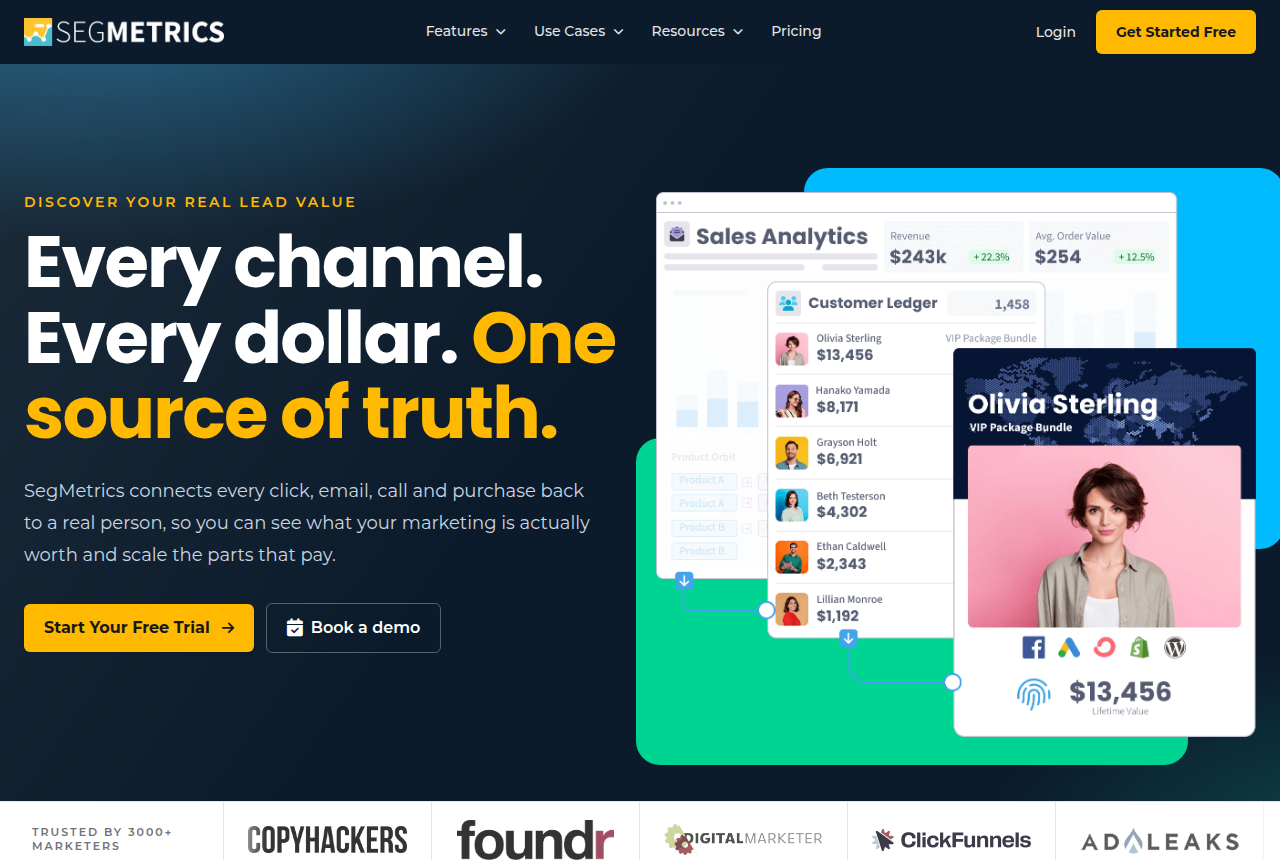
SegMetrics is a person-level marketing attribution platform. It does not sit in your click path the way a media-buyer tracker like Voluum does, and it is not a modeled measurement layer. It connects your ad platforms, your CRM, your email tool and your payment processor into a single timeline for each real person, then follows that person from first click through opt-in, email, webinar and sale and reports what they are worth at every step. Its home page frames the promise as "Every channel. Every dollar. One source of truth." Two features do most of the work: contact journey reporting, which lays out every tag, sequence, charge, refund and renewal for a person in order, and its Conversion Feeder, which sends your real sales back to Meta, Google, TikTok and Bing daily.
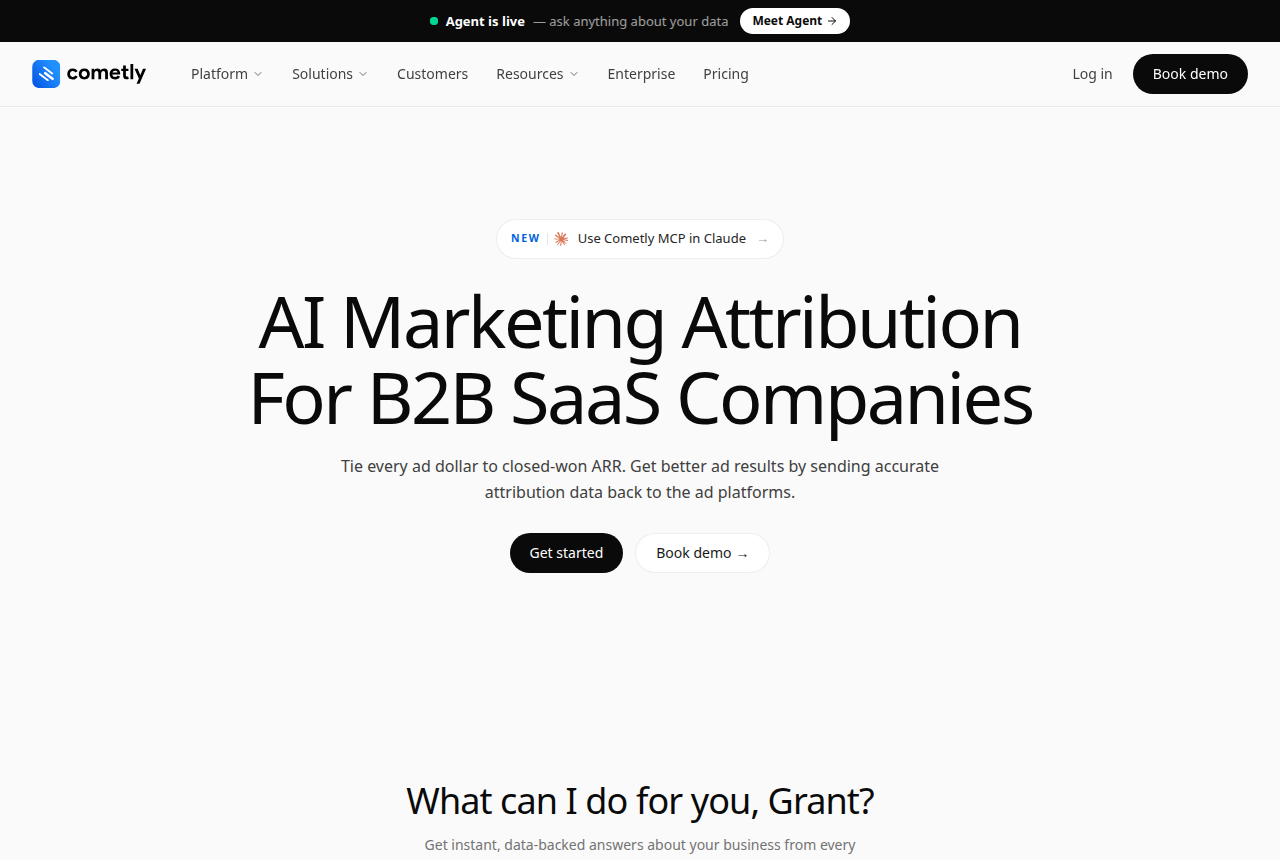
Cometly is also an attribution platform that records conversions server-side and models the full journey, but in 2026 it is built for a different buyer. You install its Comet Pixel with one line, it captures visitors cookielessly and across devices, and its headline job is revenue attribution for B2B SaaS: a native Stripe integration ties trials, new customers, recurring revenue and lifetime value to the originating ad, and HubSpot or Salesforce lifecycle stages map onto the same touchpoints, right through to closed-won ARR. Its own page puts it plainly: "Tie every ad dollar to closed-won ARR." Where SegMetrics reads the lead in an email funnel, Cometly reads the deal in a sales pipeline.
The lead versus the deal
This is the fork, and it is not about which tool is more accurate. It is about the revenue each one is built to measure. SegMetrics is lifetime-value-led. It stitches identity across tools and devices into one contact record, then reports value at each funnel step, so a webinar attendee, a lead-magnet downloader and a cold ad click stop being one blob and start carrying their own worth over time. That is the read a course, coaching or membership business needs, because in that model the value of a lead shows up over email days or weeks after the first click, and a native connection to the email tool follows the money the whole way.
Cometly is pipeline-led. It starts from the subscription: Stripe knows who pays, the ad platforms know who clicks, and Cometly stitches the two so every trial, paid conversion and renewal flows back to the ad, audience and creative that drove it. Its unit is a deal moving from booked demo to closed-won ARR, not a lead accruing lifetime value through a nurture sequence. That is the report a SaaS finance team will defend in a board meeting. SegMetrics gives you the sharper what-is-this-lead-worth answer over a long email cycle; Cometly gives you the sharper which-ad-created-this-subscription answer across a sales motion.
Where each one anchors your revenue
The clearest way to tell which fits you is to look at where your money is recorded. SegMetrics anchors on your email platform and your checkout: it wants an ESP connection and a payment processor so it can follow a buyer from opt-in through every charge, refund and renewal, which is exactly how an info-product funnel books revenue. If your sales live in an email sequence and a course or membership cart, that is the shape SegMetrics was built around.
Cometly anchors on Stripe and your CRM. Its integrations that earn their keep are the Stripe sync and the HubSpot or Salesforce pipeline, and its reports are cut by MRR, CAC payback and closed-won ARR. If your sales live in a subscription billed through Stripe and a pipeline your sales team works, that is Cometly's home ground, and it is the reason an ecommerce or affiliate operator should look elsewhere: Cometly's own site now names Triple Whale as the ecommerce option and positions itself away from that market, and neither tool rotates offers or splits landers the way a RedTrack-style click tracker does.
Which one feeds the ad platforms
Here both tools do the same thing, and it is worth saying so plainly, because it is a real strength of each. Both close the loop back to the ad platforms rather than only reporting. SegMetrics does it through its Conversion Feeder, posting your real sales back to Meta, Google, TikTok and Bing every day, and letting you filter what you send by funnel or customer value so a $50 one-time buyer and a $5,000 lifetime customer stop looking identical to the algorithms. Cometly does it through a server-side Conversion API to Meta, Google, LinkedIn and TikTok, and it is the capability its buyers rate most: it reports Meta event match quality up to 9.3 out of 10 where a manual setup sits at 4 to 5, and buyers on r/FacebookAds say it pushed more matched data to Meta than other trackers they had run.
The small but telling difference is the channel list. SegMetrics feeds Bing, which an info-product advertiser running search may use; Cometly feeds LinkedIn, which is where a B2B SaaS advertiser spends. Neither gap is a dealbreaker, but each points back at the audience the tool was built for.
Why your numbers will not match Meta or Stripe
Both tools disagree with your ad platforms by design, because both exist to catch what a last-click pixel drops. SegMetrics starts from your actual sales and reassembles each contact's identity across tools, so it reconciles at the person and will not tie out to Meta, GA4 or your cart to the dollar. Cometly records conversions server-side and models multi-touch, so its number will not match a platform's in-app count either, and it only agrees with your backend once identity data is passed cleanly. In both cases the independent read is the point, not a bug. Treat whichever you choose as a decision layer you reconcile against backend revenue, keep your attribution windows consistent, and do not expect either number to match the platform dashboards exactly.
Who each one is for
SegMetrics is the better fit for this site's typical reader: a course, coaching or info-product business scaling into real ad spend that wants person-level lifetime value per lead, transparent pricing it can model in advance, a 14-day trial to validate before it commits, and the loop back to the ad platforms closed. It rewards a business with a real email list and someone to own the reporting, and reviewers are honest that it is involved, so a lean solo team pays for it in setup time as much as in dollars. Its ceiling is the shape it does not fit: it is a person-level tracker for owned email funnels, not a SaaS pipeline reporter and not a mix model for a physical retail brand. See the full SegMetrics review, the plan-by-plan SegMetrics pricing, or how it reads against a done-for-you owned-funnel engine in Hyros vs SegMetrics.
Cometly is the better pick when you sell B2B software on a trial-to-paid or demo-to-closed motion, run paid acquisition into it, and want one report that connects Meta and Google spend to MRR, CAC payback and closed-won ARR that finance will defend. The Stripe and CRM plumbing is the part that earns its keep, and it is an established product, not an app that appeared last quarter. Its ceiling is buying friction and fit: no public price and no trial, so you cannot test against your own numbers before a call, and the recurring complaints on r/FacebookAds are support replies measured in business days and trouble getting the full pre-purchase journey captured fast enough. See the full Cometly review, or how it reads against a click tracker in RedTrack vs Cometly. One caveat covers both. Below roughly $50,000 a month of spend, clean UTMs, server-side events and blended metrics like MER and new-customer CAC do most of the job for far less, and neither tool fixes a weak offer, a broken pixel setup or a low conversion rate. They make the numbers clearer. They do not make the funnel better. For the full field, see the best ad tracking and attribution software.
Changelog
- 29 September 2026: First published. Pricing and features read from each vendor's own site, SegMetrics on 28 September 2026 and Cometly on 23 September 2026, and user sentiment weighed from Capterra, Trustpilot, G2 and r/FacebookAds.
What each one costs
SegMetrics publishes its plans and you start yourself, banded by how many active contacts you have rather than by seats. Launch is $57 a month, Grow is $197 and is the recommended tier because it adds the Conversion Feeder that sends sales back to your ad platforms, Scale is $397 and adds server-side tracking on your own domain and a dedicated account manager, and Enterprise is quote-only for companies over $10m a year in revenue. Every tier includes unlimited users, and there is a 14-day free trial, a 30-day money-back guarantee and no long-term contract. Model one thing: the price scales with active contacts, so the headline tiers are a floor and a large or fast-growing list moves you up the slider.
Cometly no longer publishes a price. Its two plans, Core and Enterprise, are usage-based on your monthly pageviews and quoted after a demo, with annual billing about 20% cheaper than monthly. There is no free trial: Cometly's reasoning is that attribution needs CRM and ad-platform setup to be useful, so it pairs new accounts with a paid onboarding specialist instead of a self-serve trial. That is defensible for an enterprise SaaS sale, but it means you cannot see a figure or test against your own numbers before you talk to sales.
So the cost comparison is really a buying comparison. SegMetrics shows you a $57 entry you can size against your contact count today; Cometly requires a call before you see a number at all. Neither charges a percentage of ad spend. Below serious spend, clean UTMs, server-side events and blended metrics like MER and new-customer CAC do most of the job for far less, and neither tool fixes a weak offer or a broken pixel setup.
Prices read from each vendor's own pricing page, current as of SegMetrics on 28 September 2026 and Cometly on 23 September 2026.
Our pick
SegMetrics
SegMetrics is a person-level marketing attribution platform that stitches your ads, email, CRM and payments into one timeline per contact, then tells you what each lead is worth over its whole lifetime instead of at first click. For a creator or agency running real ad spend into an email-driven funnel, it is one of the most trusted ways to see which leads actually turn into revenue.
Frequently asked questions
SegMetrics or Cometly: which should I pick?
Do SegMetrics and Cometly even compete?
Which one sends conversions back to Meta and Google?
Is SegMetrics or Cometly cheaper?
Can Cometly track an info-product course funnel the way SegMetrics does?
Sources
From SegMetrics and Cometly
- https://segmetrics.io/
- https://segmetrics.io/pricing
- https://www.cometly.com/
- https://www.cometly.com/pricing
Other sources
5 discussions and reviews read for this page. Quotes are excerpts; open a link to read the original in context.
- [sm-capterra-value] SegMetrics Reviews 2026 - Capterra
- [sm-capterra-ui] SegMetrics Reviews 2026 - Capterra
- [reddit-marketingautomation-stripe] The attribution weekly: what happened in paid
- [reddit-ppc-directional] What attribution software you use
- [g2-pricing-changes] Cometly review on G2
How we compared these
We do not run paid campaigns through either tool. We read each vendor's own documentation and pricing, verify every number against the source, and weigh the long-term reports of operators who run them at real spend. The full rubric is on the methodology page.