Skip to content
Menu

Triple Whale review (2026)

By Marcus Flynn, tracking and attribution editor. Updated 24 September 2026.

Quick answer

RedTrack is our top pick for most people. The default first tracker for most direct-response buyers: CAPI on every plan, ad-level spend sync, and an entry price a solo operator can carry.

  • RedTrack. Best for Multi-channel paid-social buyers. From $69/mo.
  • Voluum. Best for Affiliate and native/pop/push buyers. From $119/mo.
  • Hyros. Best for High-ticket info, webinar and call funnels.
  • Binom. Best for High-volume affiliate and media buyers comfortable running a server. From $149/mo.
  • FunnelFlux. Best for Media buyers tracking complex, multi-step funnels. From $99/mo.
  • Northbeam. Best for Scaled DTC ecommerce brands. From $1,500/mo.
  • Polar Analytics. Best for Shopify brands centralizing profit and marketing reporting.
  • Triple Whale. Best for Shopify DTC brands wanting attribution and AI insights in one app. Has a free tier.
  • AnyTrack. Best for marketers who want server-side tracking without a developer. Has a free tier.
  • ClickFlare. Best for buyers who want flat, predictable pricing at scale. From $69/mo.
  • ClickMagick. Best for solo advertisers and small teams buying paid traffic to offers they own. From $79/mo.
  • Cometly. Best for B2B SaaS teams tying ad spend to Stripe revenue and CRM pipeline.
  • CPV Lab Pro. Best for Paid-traffic affiliates and media buyers who want a tracker they own and host themselves. From $57/mo.
  • Keitaro. Best for High-volume affiliate and media buyers who want a proven self-hosted tracker with hands-on support. From €40/mo.
  • Rockerbox. Best for Mid-market and enterprise brands running cross-channel media, including offline, that need unified measurement.

Where Triple Whale fits

The most widely used attribution and analytics app in Shopify DTC, now built around an AI layer called Moby. It is real and well supported, but its pixel-based numbers read lower than Meta's and unsettle people, the paid tiers are quoted after a demo and scale with your revenue, and long-time users say it grew as convoluted as GA4. Worth it once multi-channel spend makes better attribution change real budget calls, and overkill below roughly $50k a month.

It is at its best for shopify dtc brands wanting attribution and ai insights in one app. That is the lens the rest of this review uses: not whether it is the biggest tool on the market, but whether it is the right one for that operator.

What Triple Whale is

Triple Whale is an analytics and attribution app for ecommerce brands, most of them on Shopify. It is not a redirect or click tracker like most of the tools on this site. It connects your store, ad accounts, email and SMS, and turns the lot into one real-time view: blended MER and ROAS, CAC, LTV, contribution margin, and profit once you enter your costs. The pitch is to stop your team arguing over five dashboards that never agree and give everyone one number to work from.

Two things sit under that. Its own pixel, marketed as Sonar, collects first-party and server-side signal so attribution keeps working where browser tracking breaks. And Moby, the AI layer the company now leads with, reads your live data and answers questions in plain language. The homepage calls the product the AI operating system built for modern commerce, and every pricing tier is built around how much of Moby you get.

Is it real, and who will regret buying it

It is real, and it is the most used tool in its category. Triple Whale says it is trusted by more than 65,000 brands, names customers like Peloton, True Classic and Milk Bar, and carries Leader badges on G2. When a Shopify operator asks which attribution tool to buy, it is the first name that comes up.

The regret, when it comes, is almost always about spend level. A buyer who ran it for four years put it bluntly: no regrets, a waste of money, unless you are a $10 million a year business. The repeated advice is that below roughly $50k a month across a few platforms, Facebook's own reporting or a spreadsheet covers most of the value. It earns its price once you are multi-channel and spending enough that a better read on attribution changes real budget decisions. Operators at $100k a month and up say the Sonar pixel alone, set up properly, more than covers the cost.

Why your numbers will not match Meta, and why that is the point

Expect Triple Whale to report a lower ROAS than Meta, sometimes far lower. That gap is the product working, not failing. Meta counts a sale if someone clicked in a window or merely saw an ad and later bought, and every platform claims the same order. Triple Whale applies one first-party, click-based model across all of them, so the overlap the platforms hide becomes visible. One operator saw Meta report a 4-plus ROAS while Triple Whale measured 1.8, with 58% of orders overlapping between Google and Meta.

The catch is that the gap unsettles people. Users report Meta looking profitable while Triple Whale calls the same account unprofitable, and say they cannot tell which one to trust. Treat it as a cross-check you reconcile against backend revenue in Shopify, not a single source of truth, and keep your attribution windows consistent when you compare. Its accuracy also depends on clean UTMs and a correctly installed pixel. Skip that and it under-reports through no fault of the model.

Moby, and the drift from simple to complex

Moby is the reason to look again if you last saw Triple Whale as a dashboard. It is included from the free plan, where it summarizes what changed in your numbers, and the paid tiers hand it more to do, up to automating repeatable reporting and growth work. The free tier needs no credit card, so you can point it at your own store and judge the AI on your data before paying.

The honest counterweight is complexity. Long-time users say the app grew from simple and clear to, in one operator's words, as convoluted as Google Analytics. The breadth that makes it a command center is also a learning curve, and a skeptic's line that it just repeats what Meta already tells you is a fair warning if all you need is one platform's ROAS.

How it compares

Its real peers are the other ecommerce measurement suites. On this site the closest tools are Northbeam and Polar Analytics, and the split is worth knowing. Northbeam leads with multi-touch attribution and media-mix modeling for brands spending six or seven figures a month, and prices from $1,500 a month. Polar leads with Shopify-native BI and a queryable data warehouse. Triple Whale sits between them as the popular default: attribution, profit dashboards and an AI layer in one app, with a free tier to start. If you want the deepest attribution at scale, look at Northbeam. If you want a data warehouse and BI, look at Polar. If you want the widely used Shopify command center with an AI operator, Triple Whale is the one to try first. For the full field, see the best ad tracking and attribution software, or the alternatives to Triple Whale.

Pros and cons

What works

  • Pulls Shopify, Meta, Google, TikTok, email and SMS into one real-time view of blended ROAS, CAC, LTV and profit once you enter your costs, and agencies call that profitability picture the main reason to keep it.
  • Its Sonar pixel adds first-party and server-side signal, and operators at $100k a month and up say that alone, set up properly, more than covers the platform's cost.
  • Runs several attribution models side by side, so the channel overlap the ad platforms hide becomes visible: one operator saw 58% of orders overlapping between Google and Meta.
  • Moby, its AI layer, is included from a free plan that needs no credit card, so you can point it at your own store and judge the numbers before paying anything.

What to watch

  • Pixel-based attribution routinely reports a far lower ROAS than Meta, sometimes calling a profitable account unprofitable, and users repeatedly say they cannot tell which number to trust. It is a cross-check to reconcile, not a source of truth.
  • The paid Foundation, Automate and Enterprise tiers are quoted after a walkthrough and scale with your store revenue, so the cost climbs as you grow and there is no public price to plan against.
  • Below scale it is hard to justify: a four-year user quit calling it a waste of money under about $10 million a year, and others say Facebook's own reporting or a spreadsheet covers it under roughly $50k a month.
  • Long-time users say it drifted from simple and clear to as convoluted as Google Analytics, so the breadth now carries a real learning curve.
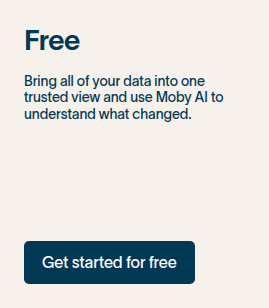
Triple Whale's pricing page showing the Free plan card, described as "Bring all of your data into one trusted view and use Moby AI to understand what changed," with a "Get started for free" button.
Pricing plans. Triple Whale's pricing page showing the Free plan card, described as "Bring all of your data into one trusted view and use Moby AI to understand what changed," with a "Get started for free" button. Screenshot: triplewhale.com,
Triple Whale's paid Automate plan card, marked Recommended on the pricing page, reading "Stop guessing, start operating. Moby automates repeatable growth work while you stay in control," with a "Book a walkthrough" button instead of a listed price.
Automate plan. Triple Whale's paid Automate plan card, marked Recommended on the pricing page, reading "Stop guessing, start operating. Moby automates repeatable growth work while you stay in control," with a "Book a walkthrough" button instead of a listed price. Screenshot: triplewhale.com,

What users actually say about Triple Whale

Research: unverified

Worth it above a spend threshold, overkill below

Operators converge on a threshold. Below roughly $50k a month across a few platforms, or under about $10m a year in revenue, they say Facebook reporting or a solid spreadsheet covers it. Above roughly $100k a month, run properly, the Sonar pixel can more than cover the platform's cost.

“I used triple whale for four years and got rid of it this year. No regrets waste of money. Unless you're a $10 million annual business there's really no need for that type of attribution tracking. Facebook reporting is good enough for most small Ecom businesses.”

Anonymous Reddit: Is triple whale a must?

“If you're not omnichannel or spending a lot on ads, it's really not something you can't do with a solid spreadsheet. Sonar would be good to get for real time data acquisition and enriched data, but otherwise, no need to worry pre (I would say) $50k/month in ads spend across a few platforms”

Anonymous Reddit: Is triple whale a must?

“Their 'Sonar' feature, implemented properly, more than covers for the platform's cost if you're at 100K+ per month.”

Anonymous Reddit: Triple Whale?

The numbers disagree with Meta and are hard to trust

Triple Whale's pixel-based attribution routinely reads far lower than Meta's, sometimes flipping a profitable account to unprofitable. Some users cannot tell which platform to trust, while others value seeing the channel overlap the platforms hide, such as a 58% order overlap between Google and Meta.

“Their ROAS on Meta was 4+ over 30d period, on TW it measured 1.8 with a 58% overlap between Google and Meta orders. And their first click, new customer ROAS was 1.05.”

Anonymous Reddit: Is triple whale a must?

“my meta ROAS according to triple whale is FAR lower than the reported one on the ad account to the point where it says it's unprofitable.”

Anonymous Reddit: Triple Whale vs Meta Reporting?

“I use triple whale too and have been confused by the data, have no idea which one is correct”

Anonymous Reddit: Triple Whale vs Meta Reporting?

Drifted from simple to convoluted ↓ common complaint

Long-time users say it grew from simple and clear to as convoluted as Google Analytics, and skeptics argue it largely repeats what Meta already reports.

“Triple Whale was really awesome when it started because it was simple and clear and powerful. Now it's confusing af and essentially just as convoluted as Google Analytics.”

Anonymous Reddit: Triple Whale?

“Don't need it. Just repeats what Meta already tells you. Save your time and effort”

Anonymous Reddit: Triple Whale?

Strong for real time profitability and automated reporting ↑ frequently praised

Agencies value adding their true costs for a real-time profitability view and automating client reporting from one place.

“Triple Whale is amazing and I wish ALL of our clients used it. You can first of all add your costs and get a clear, real-time view on profitability, and then secondly, you can automate all reporting”

Anonymous Reddit: Triple Whale?

What it costs

Free plan with no credit card, including Moby AI. The paid tiers (Foundation, Automate and Enterprise) are quoted after a walkthrough rather than publicly priced and scale with your store revenue; as of 23 September 2026 the vendor lists no dollar figure for them.

Prices read from the vendor's own pricing page and current as of 23 September 2026. Check the vendor before you buy; plans change.

See the full Triple Whale pricing breakdown

Frequently asked questions

How much does Triple Whale cost?
Free plan with no credit card, including Moby AI. The paid tiers (Foundation, Automate and Enterprise) are quoted after a walkthrough rather than publicly priced and scale with your store revenue; as of 23 September 2026 the vendor lists no dollar figure for them.
Does Triple Whale offer a free trial?
There is a free tier.

How we reviewed this

We do not run paid campaigns through Triple Whale. We read its own documentation and pricing, verify every number against the vendor, and weigh the long-term reports of operators who run it at real spend. The full rubric is on the methodology page.

Related reading

Marcus Flynn

Written by

Marcus Flynn

Tracking and attribution editor

Marcus Flynn runs OfferROAS's tracking and attribution desk. He has spent years close to direct-response paid media, and he reads the operator threads, vendor changelogs and pricing pages so you do not have to, then writes down what holds up once real budget runs through it. He owns the methodology and signs the site's money pages.

marcus@offerroas.com

Last checked 2026-09-24