SegMetrics is real and well regarded. It is a person-level marketing attribution platform that stitches your ads, email, CRM and payments into one timeline per contact, then tells you what each lead is worth over its whole lifetime instead of at first click. You will regret buying it only if you are the wrong shape of business: it is built for info-product, course and coaching funnels with long email-driven cycles, it assumes someone on your team will own the reporting, and small lean teams pay for it in setup time as much as in dollars. For a creator or agency running real ad spend into that kind of funnel, it is one of the most trusted ways to see which leads actually turn into revenue.
It is at its best for info-product sellers, course creators, coaches and agencies who need person-level attribution and lead value across email-heavy, long-cycle funnels. That is the lens the rest of this review uses: not whether it is the biggest tool on the market, but whether it is the right one for that operator.
What SegMetrics is
SegMetrics is a person-level marketing attribution platform. It does not sit in your click path the way a media-buyer tracker like Voluum does, and it is not a modeled measurement layer like the enterprise mix-model tools. It connects your ad platforms, your CRM, your email tool and your payment processor into a single timeline for each real person, then follows that person from first click through opt-in, email, webinar and sale, and tells you what they are worth at every step.
The reason it exists is a real problem for anyone selling through a funnel. Ad platforms stop watching after the opt-in, so Meta, Google and TikTok each optimise on a guess about who eventually buys. Last-click reporting hands the credit to whatever touch came right before the sale, which in a long email-driven funnel is almost never the channel that created the lead. SegMetrics starts from your actual revenue and stitches each contact's identity back together across tools and devices, so a webinar attendee, a PDF downloader and a cold ad click stop being one undifferentiated blob and start carrying their own lifetime value.
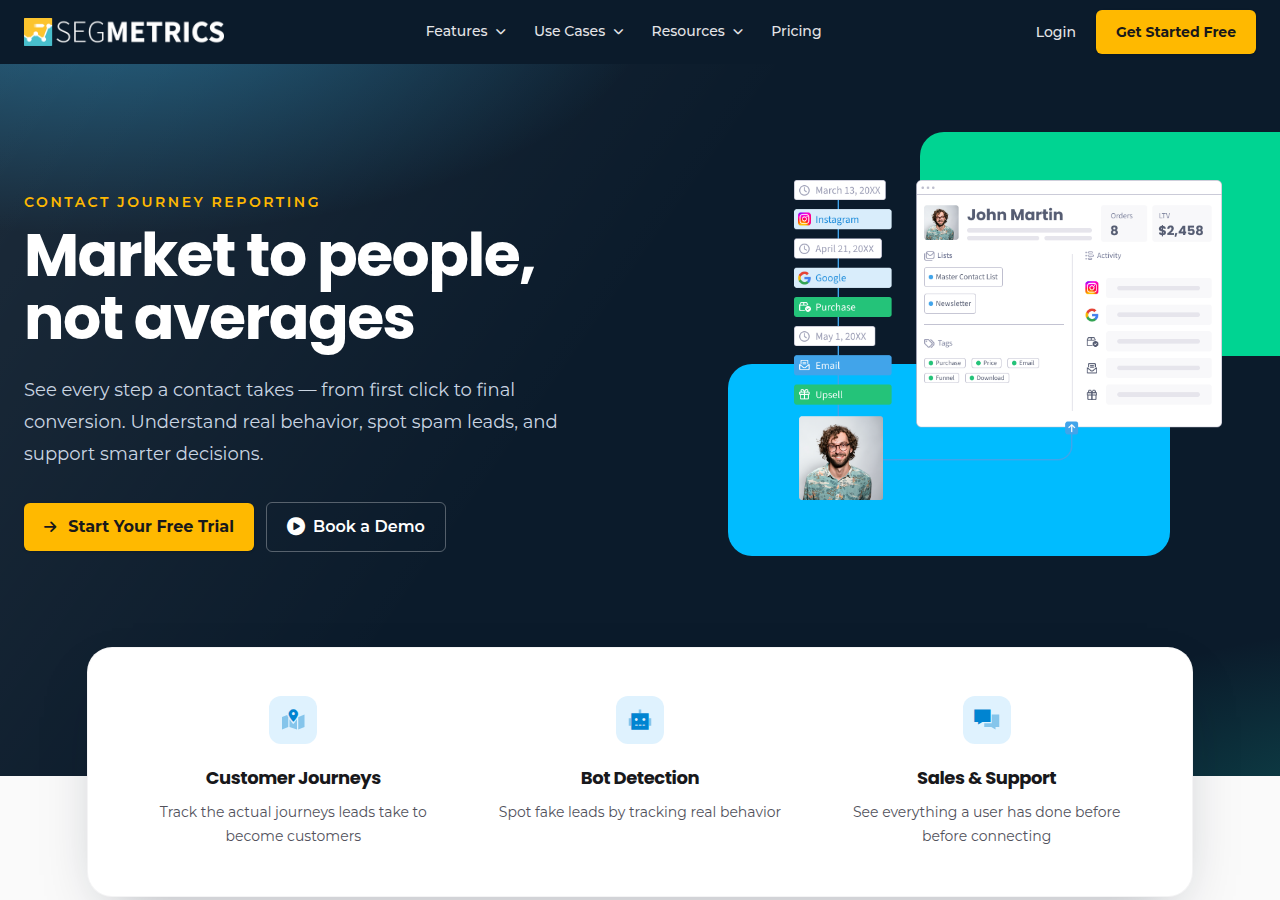
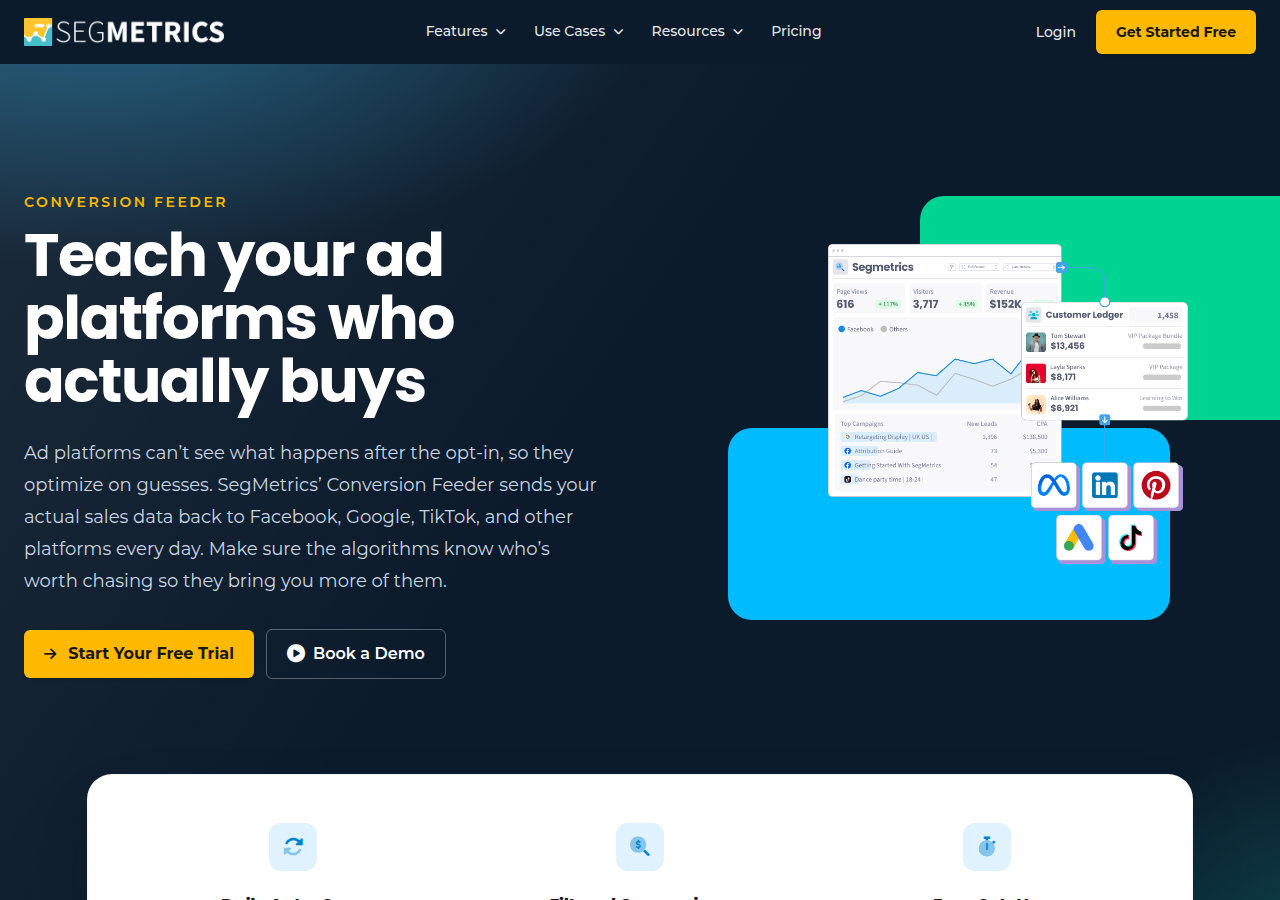
Two features do most of the work. Contact journey reporting shows every tag, sequence, charge, refund and renewal for a person in the order it happened, so you can see what a lead is worth rather than guess. Conversion Feeder runs the loop the other way, sending your real sales back to the ad platforms every day so their algorithms learn who actually buys. The company has been building this for about a decade, and it is aimed squarely at the info-product, course and coaching world rather than at physical ecommerce.
Is it real, and will you regret buying it?
If you are asking whether SegMetrics is legitimate and safe to pay for, the answer is yes. It is an established company with a genuine product, roughly ten years of attribution work behind it, thousands of paying marketers, and a founder who is a known, checkable name in the info-marketing community. The outside record is broadly positive: it holds strong ratings on Capterra and SoftwareAdvice, where one reviewer called it an indispensable tool for anyone spending money on online advertising. There is no scam story here.
The honest tension is not legitimacy, it is fit and effort. SegMetrics rewards a business that has a real funnel, an email list and someone who will own the reporting. It is not a set-and-forget dashboard, and reviewers say so: on Trustpilot it has been called expensive and convoluted, and an independent small-business analysis concluded it is probably not the right call for most lean-budget teams because the hidden cost is your own time to configure it. So the regret, when it happens, is almost always a fit problem rather than a trust problem. Clear the fit question first and the trust question takes care of itself.
Who it is for, and who it is not
SegMetrics fits a specific operator. If you sell courses, memberships, coaching or another high-consideration offer through a multi-step funnel, if a meaningful share of your sales close over email days or weeks after the first click, and if you run enough paid traffic that guessing at lead value is costing you money, this is the shape it is built for. It fits agencies especially well, because unlimited users, client-ready dashboards and agency management are part of the product rather than an upsell. One agency owner on the vendor's own site describes running it across forty or fifty clients at a time.
It is the wrong tool for several readers of this site. If you sell physical products through a Shopify store at scale, a pixel-based analytics tool or a modeled measurement platform such as Northbeam or Fospha will fit your motion better. If you buy traffic to offers across affiliate networks, you want a click tracker, not a lifetime-value engine. And if you run high-ticket, call-based VSL funnels and want the deepest ad-side attribution, Hyros is its closest and more expensive rival, which is why SegMetrics openly courts people migrating from it. If it is not the fit, the SegMetrics alternatives worth weighing are ranked by who each one suits.
What buyers actually report
Read the outside record as signal, and remember most of it lives on Capterra, SoftwareAdvice and Trustpilot rather than in the candid operator threads you would normally cross-check against. The praise is consistent. Buyers value that attribution ties out to a named person, which they say makes the numbers trustworthy, and they credit the customer-success team for helping them untangle attribution problems that other tools left them guessing at. Several describe it as the tool their advertising decisions now run on.
The criticism is worth knowing before you commit. The recurring theme is that it is expensive and involved: the interface could be cleaner, setup is a little tricky until you grasp the full scope of what it tracks, and some reviewers wanted more in-depth onboarding. A separate small-business review argued plainly that it assumes a dedicated ops person and an established list, so a lean team should weigh the time cost as seriously as the price. There is also a billing complaint on Trustpilot from a customer charged after cancelling, so keep your confirmation and check your invoice after any plan change. None of that contradicts the company being real and well liked by the businesses it fits; it maps the edge of who it fits.
What it costs, tier by tier
Pricing is public and self-serve, which is unusual for this category, and it is banded by how many active contacts you have rather than by seats. Launch is $57 a month and covers full-funnel analytics, essential reporting, 100-plus integrations, unlimited users and full lifetime-value tracking. Grow, the recommended tier, is $197 a month and adds advanced reporting, contact-level journey tracking, the Conversion Feeder that sends sales back to your ad platforms, advanced segmentation and one-on-one onboarding. Scale is $397 a month and layers on data APIs, unlimited custom dashboards, server-side tracking on your own domain to dodge ad-blockers, multi-currency conversion and a dedicated account manager. Enterprise is quote-only, aimed at companies over $10m a year in revenue.
Two things to model before you commit. First, the price scales with active contacts, so the headline tier prices are a floor and a large or fast-growing list moves you up the slider. Second, there is a genuine way to de-risk it: a 14-day free trial on any tier, a 30-day money-back guarantee, and no long-term contract. For the full plan-by-plan breakdown, see the SegMetrics pricing page, and for where it lands against the wider field, the best ad tracking and attribution software roundup.
Changelog
- 28 September 2026: First published. Pricing and features read from SegMetrics' own site on 28 September 2026, and user sentiment weighed from Capterra, SoftwareAdvice and Trustpilot.