Cometly is a real, established attribution platform, and its server-side Conversion API is genuinely good at the job it claims. The catch is fit. In 2026 Cometly is built for B2B SaaS: it ties ad spend to Stripe revenue and CRM pipeline, right through to closed-won ARR. If that is your business, it is worth a demo. If you are a DTC or affiliate media buyer, note that Cometly has moved away from the ecommerce market it once served, it no longer publishes prices or runs a free trial, and you are quoted on a call. You will regret buying it if you expected a route-through campaign tracker, if you run cash-on-delivery or email-less checkouts, or if you need to see a price and test against your own numbers before you talk to sales.
It is at its best for b2b saas teams tying ad spend to stripe revenue and crm pipeline. That is the lens the rest of this review uses: not whether it is the biggest tool on the market, but whether it is the right one for that operator.
What Cometly is
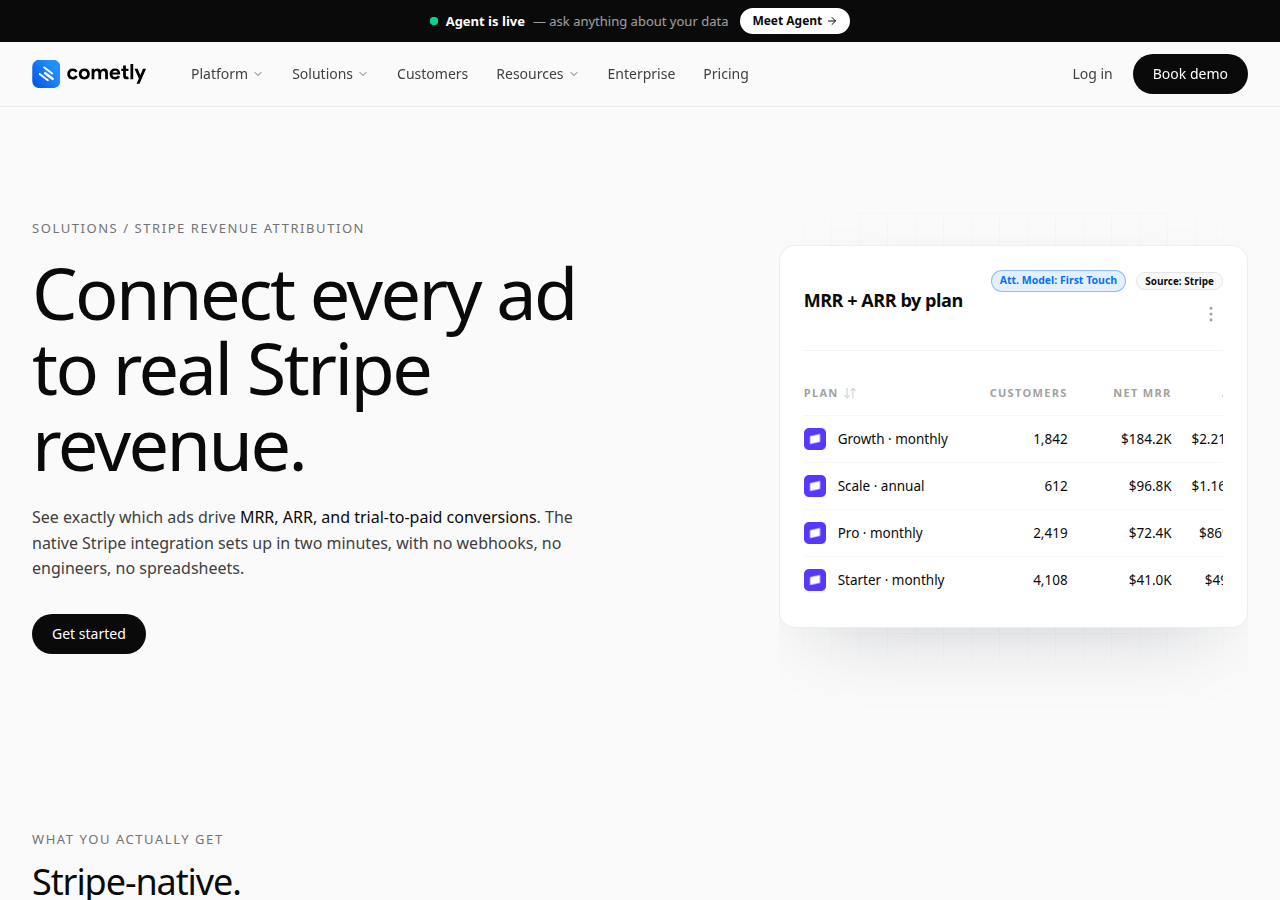
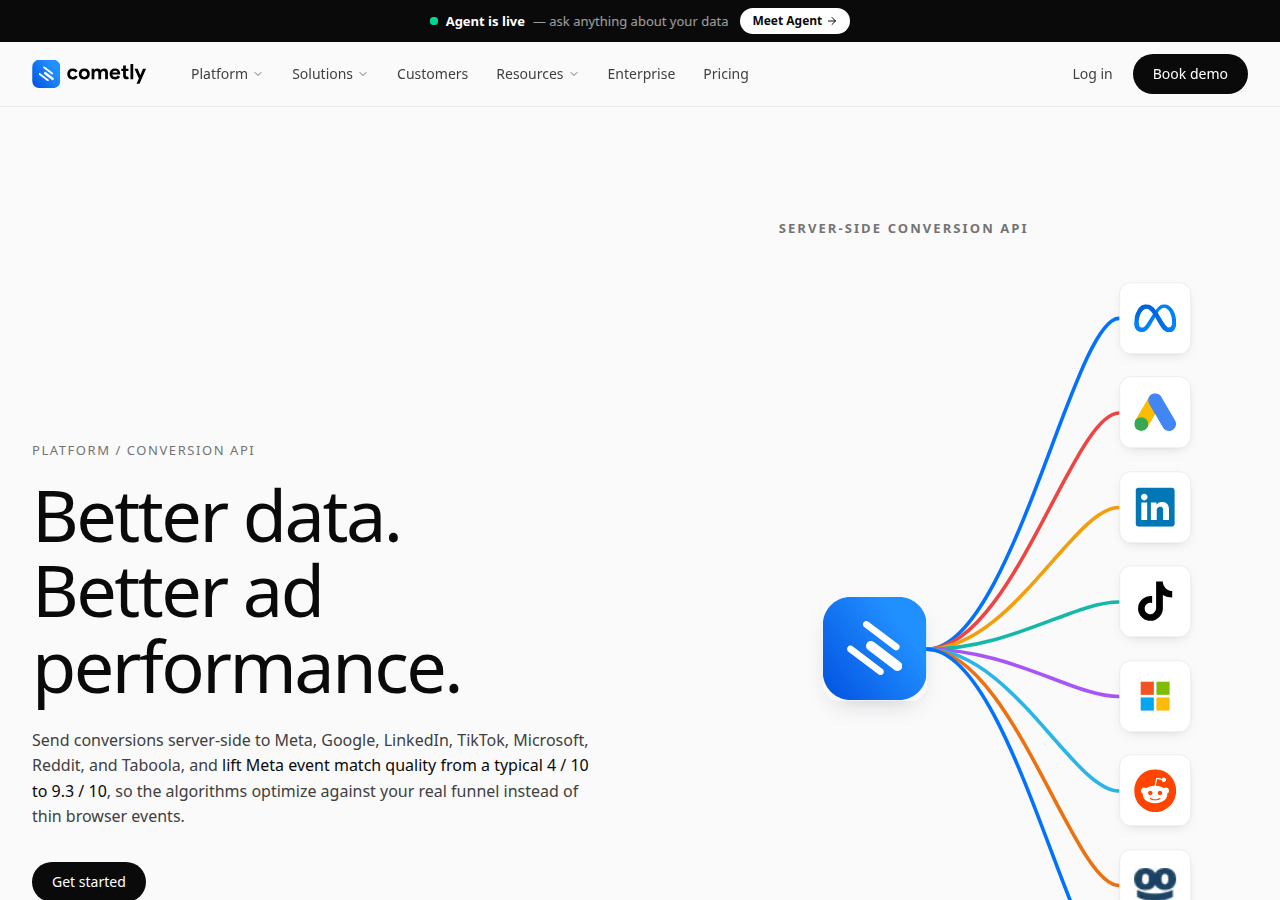
Cometly is a marketing attribution platform. You install its Comet Pixel with one line, and it captures every visitor cookielessly and across devices, records the conversion server-side so ad blockers and iOS restrictions do not drop it, and models the full multi-touch journey back to the campaign, ad and creative that drove it. Its headline job in 2026 is revenue attribution: a native Stripe integration ties trials, new customers, recurring revenue and LTV to the originating ad, and lifecycle stages from HubSpot or Salesforce map onto the same touchpoints. It then pushes those attributed conversions back to Meta, Google, LinkedIn and TikTok through their Conversion APIs, so the ad platforms optimize on your real funnel instead of thin browser events.
It is run by Comet LLC and has tracked paid spend for years, so the first question a nervous buyer asks has an easy answer: yes, it is a real, established product, not an app that appeared last quarter. It carries named case studies and a mid-30s G2 review base at 4.8 out of 5, alongside a larger Trustpilot profile at 3.6 out of 5 across 92 reviews.
Who it is for now, and who should skip it
Cometly today is built for B2B SaaS. If you sell software on a trial-to-paid or a demo-to-closed motion, run paid acquisition into it, and want one report that connects Meta and Google spend to MRR, CAC payback and closed-won ARR that finance will defend, this is squarely the tool. The Stripe and CRM plumbing is the part that earns its keep.
Skip it if you are a DTC or ecommerce brand. Cometly's own site now names Triple Whale as the ecommerce option and positions itself away from that market. Shopify still integrates, but reviewers report weaker matching on cash-on-delivery and email-less orders, so do not assume the ecom fit its older reputation implies. Skip it too if you are an affiliate or media buyer who routes many offers through a redirect and needs the tracker itself to rotate offers and split landers. That is Voluum, RedTrack and Binom territory, and Cometly does not do it.
Is it real, and will you regret it?
Real, yes. The strength users independently confirm is server-side accuracy. On r/FacebookAds, buyers report Cometly's Conversion API sending more matched data to Meta than other trackers they had run, and the vendor states customers typically reach a 9.3 out of 10 Meta event match quality where a manual setup averages 4 to 5. That is a concrete, checkable claim, and it is the reason to look.
The regret, when it comes, is about fit and expectations rather than capability. Cometly is an attribution layer, not a fix for a broken funnel, and its numbers only agree with your backend once identity data is passed cleanly. The recurring complaints in the long-running r/FacebookAds thread are support replies measured in business days and difficulty seeing the full pre-purchase journey or getting purchases captured fast enough. The sample is small, so treat it as a checklist for the demo, not a verdict: watch response times and event latency before you move a whole operation across.
What you cannot see before you buy
Cometly no longer publishes prices and no longer runs a free trial. Both plans, Core and Enterprise, are usage-based on your monthly pageviews and quoted on a call, with annual billing saving 20%. The vendor's reasoning is that attribution needs CRM and ad-platform setup to be useful, so it pairs new accounts with a paid onboarding specialist instead of a self-serve trial. That is defensible for an enterprise sale, but it means you cannot test against your own numbers before you pay, and you cannot compare the sticker price against the self-serve trackers on this list. One G2 reviewer accepted what they called a fair offer but still wanted more transparent negotiation and flagged pricing changes over time.