Head-to-head
Triple Whale vs PeerClick
Triple Whale and PeerClick both track paid traffic and both feed conversions back to the ad platforms, so they land on the same shortlist. They do almost opposite jobs. Triple Whale is a profit dashboard that sits on top of a Shopify store; PeerClick is an in-path tracker that routes affiliate traffic to offers and optimizes it every minute. Which one you need is decided by whether you own the store or route the traffic.
By Marcus Flynn, tracking and attribution editor. Updated 30 September 2026.
Pick Triple Whale if you run a Shopify store or DTC brand and need one dashboard for blended ROAS, profit and attribution across your channels; pick PeerClick if you buy and route affiliate, native, pop or push traffic to offers and want an in-path tracker that redistributes that traffic toward the winners every minute.
Quick answer
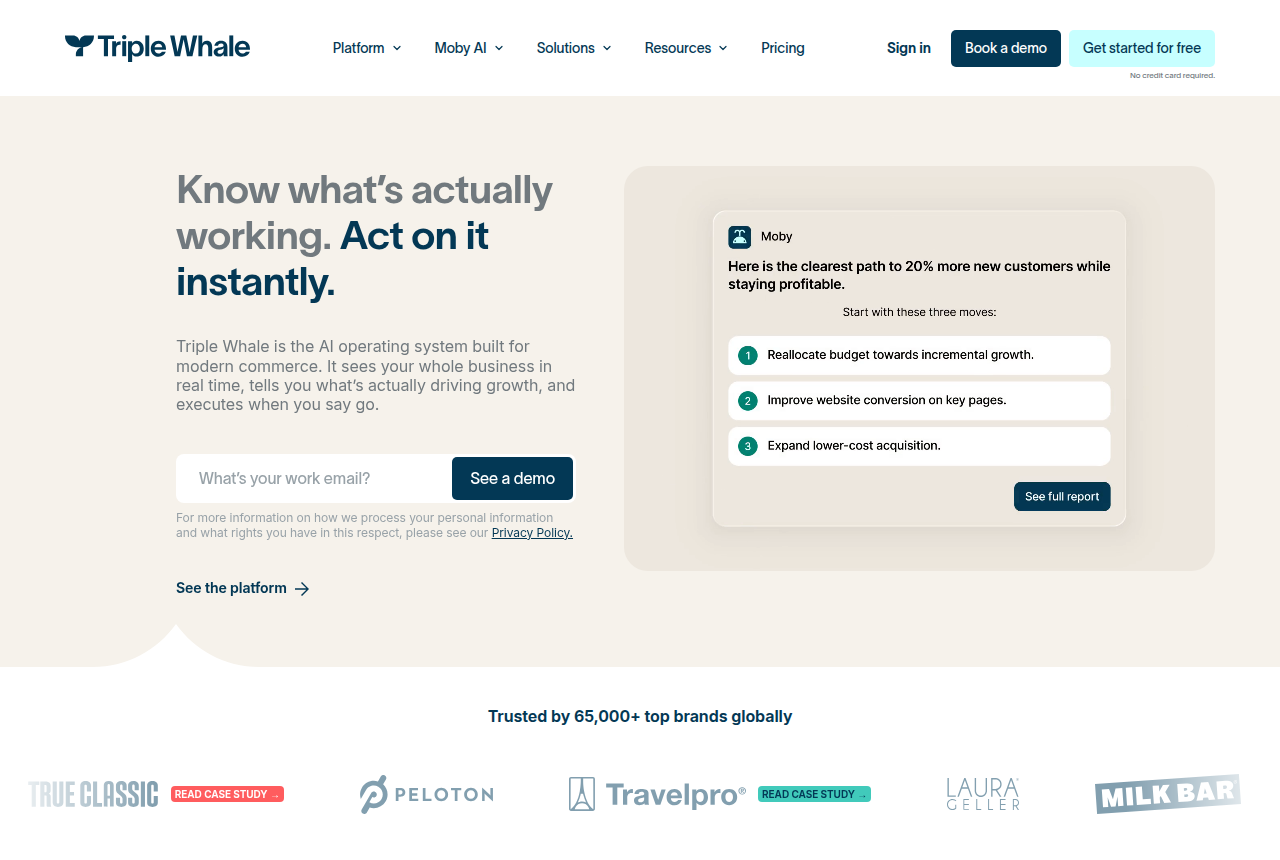
Triple Whale is our top pick for most people. For a Shopify or DTC brand, Triple Whale is the pick: it pulls your store, ad accounts, email and SMS into one real-time view of blended ROAS, CAC, LTV and profit, and Moby, its AI layer, is free to try with no card. Read its pixel-based numbers as a cross-check against platform reporting rather than gospel, and budget for paid tiers that are quoted after a walkthrough and climb with your revenue. It is not built to route traffic across offers, so an affiliate media buyer should look at PeerClick instead.
- Triple Whale. Best for Shopify DTC brands wanting attribution and profit in one dashboard. Has a free tier.
- PeerClick. Best for Affiliate and iGaming media buyers who want automation-heavy click tracking. From $99/mo.
Side by side
| Tool | Core job | Routes traffic | Feeds ad platforms | Best fit | From |
|---|---|---|---|---|---|
| 1. Triple Whale | Shopify profit dashboard | No, measures only | Sonar pixel, first-party | Shopify DTC brands | Free tier |
| 2. PeerClick | In-path click tracker | Yes, per-minute AI | Meta, Google, TikTok | Affiliate and iGaming buyers | $99/mo |
Triple Whale: pros and cons
What works
- Pulls Shopify, Meta, Google, TikTok, email and SMS into one real-time view of blended ROAS, CAC, LTV and profit once you enter your costs, and agencies call that profitability picture the main reason to keep it.
- Its Sonar pixel adds first-party and server-side signal, and operators at $100k a month and up say that alone, set up properly, more than covers the platform's cost.
- Runs several attribution models side by side, so the channel overlap the ad platforms hide becomes visible.
- Moby, its AI layer, is included from a free plan that needs no credit card, so you can point it at your own store and judge the numbers before paying anything.
What to watch
- Pixel-based attribution routinely reports a lower ROAS than Meta, so users say they cannot tell which number to trust. It is a cross-check to reconcile, not a source of truth.
- Paid Foundation, Automate and Enterprise tiers are quoted after a walkthrough and scale with your store revenue, so there is no public price to plan against.
- Below scale it is hard to justify: users say platform reporting or a spreadsheet covers it under roughly $50k a month.
- Long-time users say it drifted from simple to as convoluted as Google Analytics, so the breadth carries a real learning curve.
PeerClick: pros and cons
What works
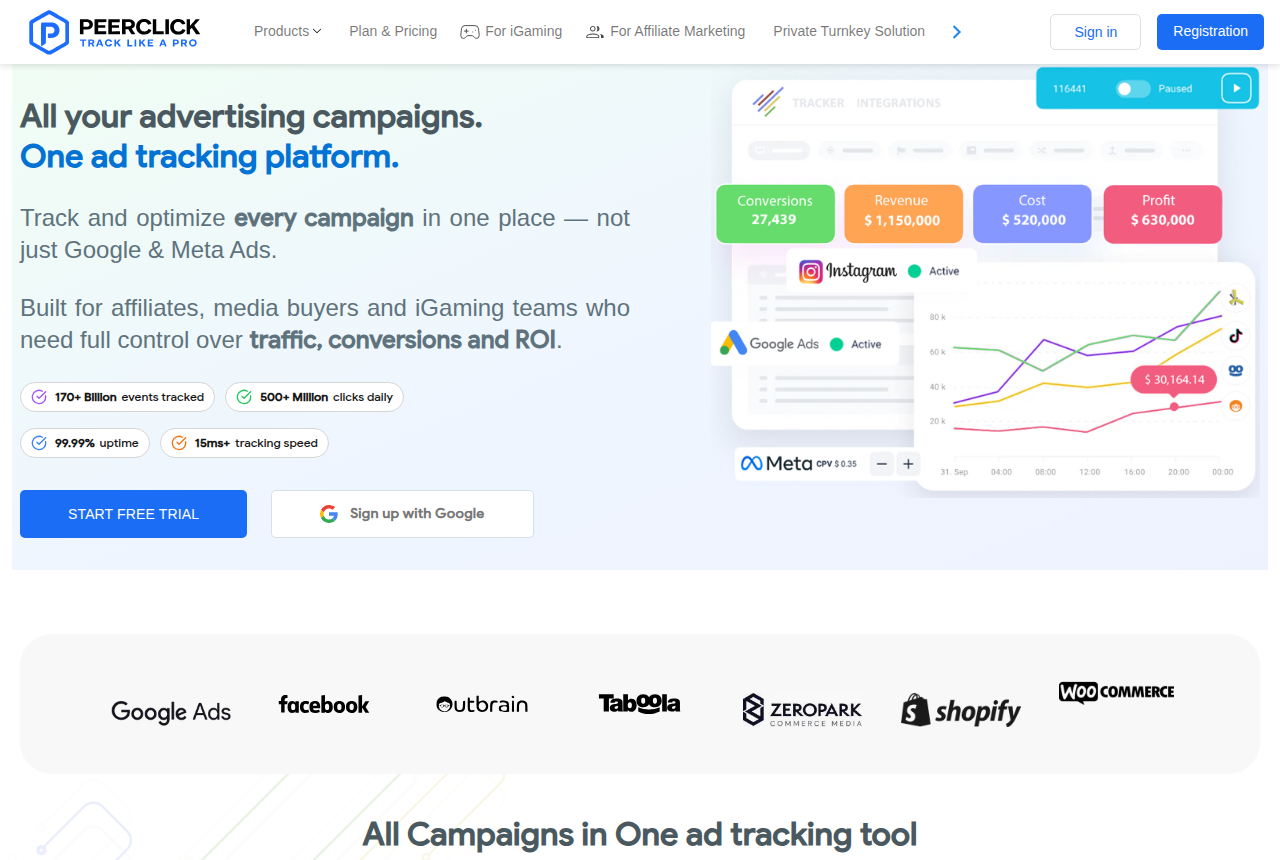
- Traffic Distribution AI re-weights offers, landers and paths every minute toward your chosen metric (ROI, earnings per visit, or conversion rate). That is real automation, not another dashboard.
- Cookieless server-to-server tracking with native CAPI to Facebook, Google Enhanced Conversions and TikTok, so attribution holds up under iOS restrictions and ad blockers.
- Built for redirect-style affiliate and iGaming flows: incoming and outgoing postbacks, FTD and RevShare tracking, offer routing, A/B testing and 100-plus integrations.
- Operators call the reports fast and campaign setup intuitive, and rate the tracker reliable and fairly priced for what it does.
What to watch
- Outside proof is thin. One Trustpilot review, no G2 footprint, and most write-ups are affiliate-network blog posts rather than candid operator threads.
- Support reads as a coin flip. One buyer praised a named rep as helpful; another called support terrible and said the tracker just stopped working.
- Billing is strict. No refunds, a card required to access the panel, and cancellation is a request a technician processes within three business days.
- The anti-fraud kit is gated to the $399 Advanced plan and above, and events over the plan cap bill as per-1,000 overage on top.
The real differences
Two tools that solve two different problems
Put Triple Whale and PeerClick on a feature list and they look like rivals: both track paid traffic, both send conversions back to the ad platforms, both promise to tell you what is working. Stand them next to a real funnel and the overlap almost disappears. They sit in different places, they measure different things, and they are built for different businesses.
Triple Whale is an analytics and attribution app for ecommerce brands, most of them on Shopify. It connects your store, ad accounts, email and SMS and turns the lot into one real-time view of blended ROAS, CAC, LTV and profit once you enter your costs. Its job is measurement: give a brand owner one number instead of five dashboards that never agree.
PeerClick is a cloud ad tracker that sits in the click path. You route your paid clicks through it, and it decides where each click lands, records the offer, lander and source behind every conversion, and its Traffic Distribution AI shifts weight toward the winners every minute. Its job is routing and optimization for affiliate, native, pop, push and iGaming media buyers, usually running offers they do not own.
So the real question is not which tracker is better. It is which job you have.
Where each one sits in your funnel
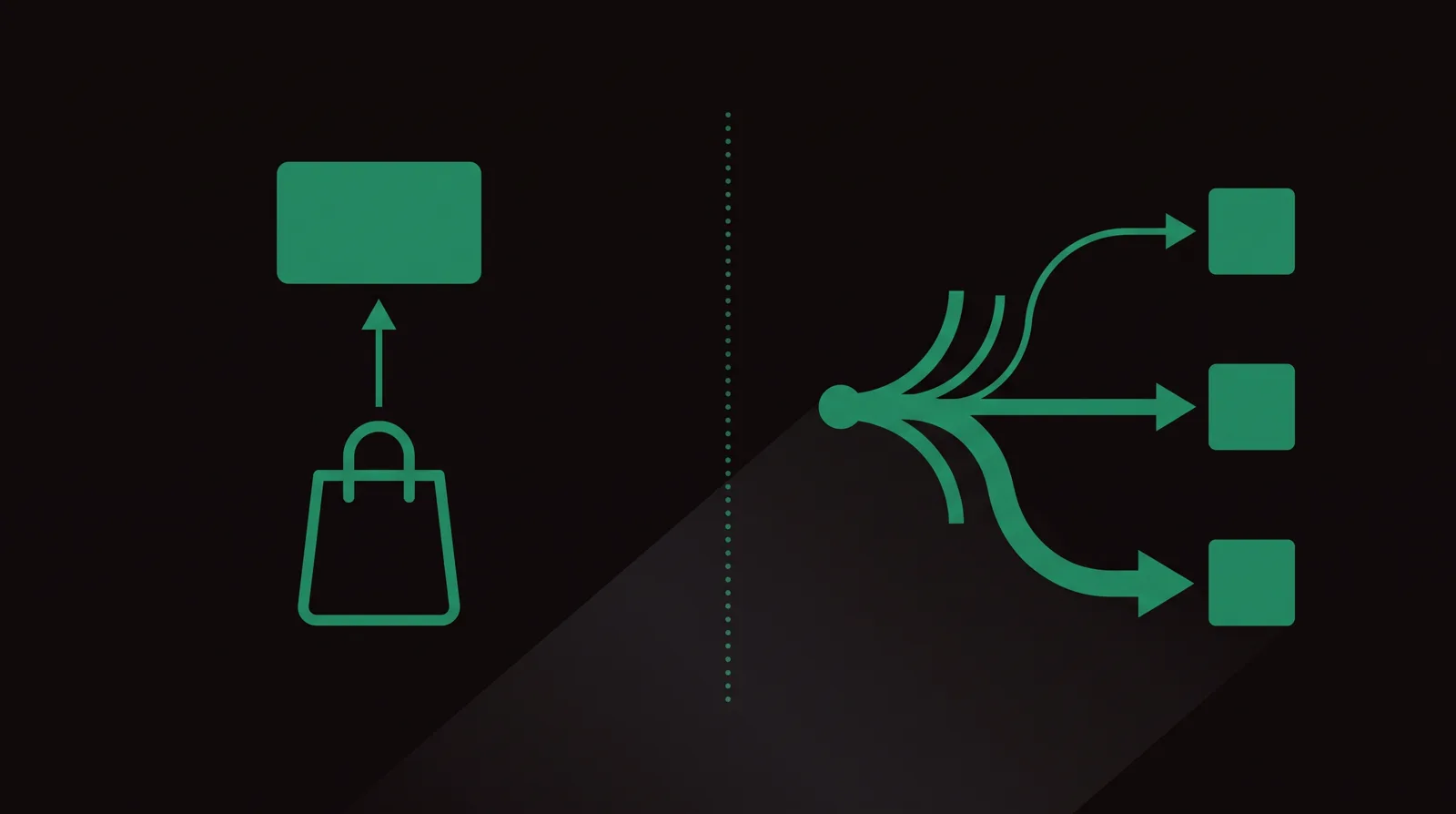
Triple Whale sits on top of a store you already run. Nothing routes through it. It reads your Shopify orders, pulls spend from Meta, Google and TikTok, and layers its Sonar pixel over the top for first-party and server-side signal. You look at it to decide budget, not to move traffic. Agencies say that blended profit picture is the main reason they keep it, and operators at $100k a month and up say Sonar alone, set up properly, more than pays for the platform.
PeerClick sits in the middle of the path. Traffic goes in, PeerClick decides which offer and lander each visitor sees, and it optimizes that decision on the metric you choose: ROI, earnings per visit, or conversion rate. That is a different discipline. You are not reading a dashboard once a day, you are handing the tracker your distribution and letting it redistribute in real time. That is worth a lot to a media buyer running many offers, and close to nothing to a single-store brand owner with one funnel and one checkout.
How far to trust each one's numbers
Both feed the ad platforms, but they disagree on what they can prove.
Triple Whale's attribution is pixel-based, and its numbers routinely read lower than Meta's own. That is partly the point, since it is trying to cut through platform-inflated ROAS, but it unsettles people, and users repeatedly say they cannot tell which figure to trust. Treat it as a cross-check to reconcile against platform reporting, not as a single source of truth. Long-time users also warn it drifted from simple to as convoluted as Google Analytics as it added surface area, so the breadth now carries a real learning curve.
PeerClick runs cookieless server-to-server tracking with native CAPI to Facebook, Google Enhanced Conversions and TikTok, so attribution holds up under iOS restrictions and ad blockers. The catch is outside proof: one Trustpilot review, no G2 footprint, and most write-ups are affiliate-network blog posts rather than candid operator threads. Support reads as a coin flip in the threads that do exist. Run the trial hard before you trust it with a real budget, and read the billing terms first: no refunds, a card required to reach the panel, and cancellation processed by a technician within three business days.
When neither is quite the shape of your problem
Notice what both tools leave to you: the pages and the checkout. Triple Whale measures a Shopify store; PeerClick routes traffic to a lander. Neither builds the funnel. If the gap you actually feel is that your pages, split tests, checkout, CRM and attribution live in four separate tools you reconcile by hand, a funnel platform is a different answer to the question.
ElasticFunnels is one. It replaces the stack a paid-traffic team usually stitches together: it builds the pages, split-tests variants under one URL so Meta and Google never reset their learning, hosts the checkout with order bumps and multi-MID routing, and keeps the click, the order, the rebill and the refund on one record alongside its own CRM and attribution. Every feature is on every plan and plans differ by traffic: Starter is $97 a month, Growth $197 and Scale $497, on a 14-day free trial that takes no card. The honest caveat is that it is newer than the platforms it competes with, and there is very little independent third-party review coverage to check its claims against, so until you run real volume through it you are largely taking the vendor's word for it. That is what you would expect of a platform this new, and it weighs less if you are the kind of operator who trials a tool on your own funnel before committing paid spend to it.
TrackPlay is worth a look if your funnel is a video sales letter. It hosts the VSL behind one embed, draws per-second retention split into buyers and non-buyers, and posts the cart-verified sale back to Meta, TikTok and GA4 on the exact play that earned it, so split tests are decided on revenue rather than clicks. Paid plans start at $29 a month, with a no-card free tier of 1,000 plays. It is narrow by design: built for paid-traffic VSL conversion, it is not a general video host or a B2B content library, so it has none of the channels, SEO pages or webinar tooling of a Wistia and is a poor fit if the video's job is content marketing rather than a direct-response sale.
Which one for you
If you run a Shopify store or a DTC brand and the pain is that Meta, Google, GA4 and your P&L each tell a different story, Triple Whale is the pick. It is the more validated tool, it is broadly used across DTC, and Moby is free to try with no card, so you can judge the numbers against your own store before paying anything. Budget for the fact that paid tiers are quoted after a walkthrough and scale with your revenue, and below roughly $50k a month many operators find platform reporting or a spreadsheet covers what they need.
If you buy and route affiliate, native, pop or push traffic to offers, Triple Whale does not fit your model and PeerClick is the answer. It is built for exactly that path, its per-minute AI distribution is real automation rather than another dashboard, and it starts at $99 a month. Prove it on the trial first, because the independent track record is thin and the billing is unforgiving.
What each one costs
Triple Whale. There is a genuinely free plan built around Moby, its AI layer, that takes no credit card, so you can connect your store and judge the numbers before paying. The paid Foundation, Automate and Enterprise tiers are quoted after a walkthrough and scale with your store revenue, so there is no public price to plan against and the cost climbs as you grow. Below roughly $50k a month, many operators find platform reporting or a spreadsheet covers what they need, and one four-year user quit calling it a waste of money under about $10 million a year.
PeerClick. Priced by events, from $99 a month on Starter. The Traffic Distribution AI that is the main reason to choose it needs the $199 Basic+ tier, and the anti-fraud kit is gated to the $399 Advanced tier and above, so the plan you would actually run is likely higher than the sticker. Annual billing takes off about 20%, and events over your cap bill as per-1,000 overage on top. A card is required to reach the panel and there are no refunds, so treat the first month as the real trial.
Prices and buying terms checked on each vendor's own pages, current as of 27 September 2026.
Our pick
Triple Whale
For a Shopify or DTC brand, Triple Whale is the pick: it pulls your store, ad accounts, email and SMS into one real-time view of blended ROAS, CAC, LTV and profit, and Moby, its AI layer, is free to try with no card. Read its pixel-based numbers as a cross-check against platform reporting rather than gospel, and budget for paid tiers that are quoted after a walkthrough and climb with your revenue. It is not built to route traffic across offers, so an affiliate media buyer should look at PeerClick instead.
Frequently asked questions
Triple Whale or PeerClick: which should I pick?
Do Triple Whale and PeerClick do the same thing?
Which one is better for a Shopify brand?
Is Triple Whale or PeerClick cheaper?
Sources
From Triple Whale and PeerClick
- https://www.triplewhale.com/
- https://www.triplewhale.com/pricing
- https://peerclick.com/
- https://help-center.peerclick.com/en/articles/5973039-subscription-payments
- https://elasticfunnels.io/
- https://trackplay.io/
Other sources
5 discussions and reviews read for this page. Quotes are excerpts; open a link to read the original in context.
- [tw-threshold] Is Triple Whale worth it thread
- [tw-complexity] Triple Whale over time thread
- [pc-afflift-fast] PeerClick ratings on affLIFT
- [pc-afflift-support] PeerClick ratings on affLIFT
- [pc-trustpilot] PeerClick on Trustpilot
How we compared these
We do not run paid campaigns through either tool. We read each vendor's own documentation and pricing, verify every number against the source, and weigh the long-term reports of operators who run them at real spend. The full rubric is on the methodology page.