Head-to-head
Northbeam vs Measured
You are down to two measurement platforms that both threw out platform-reported ROAS, and the choice is hard because they overlap so much. Northbeam and Measured both sit over your whole media mix, both refuse to trust a single ad platform's numbers, both are sold after a demo, and both run media-mix modeling. What splits them is method and feedback. Northbeam follows real clicks with its own first-party tracking, models on top, and feeds conversions back into Meta and AppLovin through Apex. Measured fires no pixel and follows no click: it runs live geo holdout experiments to prove causal lift, then calibrates its model against those tests. The pick turns on whether you need attribution you can act on at the creative level with a feedback loop, or finance-grade causal proof across a wider channel mix.
By Marcus Flynn, tracking and attribution editor. Updated 28 September 2026.
Pick Northbeam if you are spending six or seven figures a month and want click-aware multi-touch attribution and media-mix modeling in one platform, with Apex feeding first-party conversions back into Meta and AppLovin so you can act at the campaign and creative level; pick Measured if you spend across a wide channel mix that reaches connected TV, podcasts and offline, and you need causal geo holdout experiments to prove lift before you move budget.
Quick answer
Northbeam is our top pick for most people. Northbeam is a marketing measurement platform for scaled direct-to-consumer ecommerce: click-aware multi-touch attribution and media-mix modeling in one system, with an Apex layer that pipes first-party conversions back into Meta and AppLovin. It is real and well regarded, but it is priced for brands already spending six or seven figures a month, and its numbers are a directional cross-channel read, not a single source of truth.
- Northbeam. Best for Scaled DTC ecommerce brands that want click-aware attribution they can act on, plus a feedback loop into the ad platforms. From $1,500/mo.
- Measured. Best for Mid-market and enterprise brands spending six figures a month across many channels that need causal measurement, not platform ROAS.
Side by side
| Tool | Core job | Method | Feeds ad platforms | Built for | From |
|---|---|---|---|---|---|
| Northbeam | Attribution + MMM | Multi-touch, click-aware | Yes, via Apex | Scaled DTC ecommerce | $1,500/mo |
| Measured | Causal lift + MMM | Geo experiments | None | Six-figure spend | Not listed |
Northbeam: pros and cons
What works
- Independent, cross-channel attribution built for direct-to-consumer brands: it stitches Meta, Google, TikTok, email and more into one first-party view instead of trusting each platform's self-reported ROAS.
- Northbeam Apex sends first-party conversion data straight into Meta and AppLovin ad algorithms, a step past a standard conversions API, with no dev work to wire it up.
- Goes beyond clicks: long lookback windows, view-through revenue via Clicks and Deterministic Views, and optional budget forecasting and incrementality, so top-of-funnel spend gets credited.
- Agencies running it for clients recommend it and single out its flexible, variable billing structure.
What to watch
- Priced for scale and quoted after a demo. Published starting rates are $1,500/mo (Starter) and $3,500/mo (Professional), and buyers report real costs near $30,000 to $50,000 a year. Below high six or seven-figure monthly spend the ROI rarely covers it.
- No free trial and no free tier. You book a demo and get a custom quote tied to your ad spend, so there is no cheap way to try it before committing.
- Its numbers will disagree with Meta and Google by design. That independent read is the value, but it means reconciling models and windows against backend revenue, not one ROAS you can take as truth.
- Built for DTC ecommerce, and mostly Shopify below the Professional tier. It is not a click tracker for affiliate, pop, push or native redirect traffic; media buyers promoting network offers want Voluum or a self-hosted tracker instead.
Measured: pros and cons
What works
- Triangulated measurement on one platform: geo incrementality experiments calibrate the media mix model, so a budget decision is cross-checked against a real causal read rather than trusted from a single modeled number.
- Measures questions a click tracker or pixel cannot answer: causal lift by channel including upper-funnel and offline media, saturation curves that show where added spend stops paying off, and a Media Plan Optimizer that recommends where and how much to spend.
- Serviced rather than self-serve: guided onboarding, weekly model refreshes and peer benchmarks mean a lean marketing team is not left to run causal experiments alone.
- Well regarded by the enterprise brands that run it, with recognisable customers and strong review scores.
What to watch
- No public price and no free trial. The only way in is a booked demo on an annual contract that scales with media spend and channel count, so you cannot validate it on your own data before you sign.
- The practical floor is high: third-party analysis flags a high minimum spend barrier, with a working threshold around six figures of monthly media. Below that the ROI rarely covers the cost.
- Onboarding and data work are heavy and front-loaded: connecting spend and conversion data across every network is manual and slow, which weighs most on a team without dedicated data ops.
- Its numbers are modeled and experimental, so they will not match Meta, GA4 or Shopify, and it sends nothing back to the ad platforms.
The real differences
What each one actually is
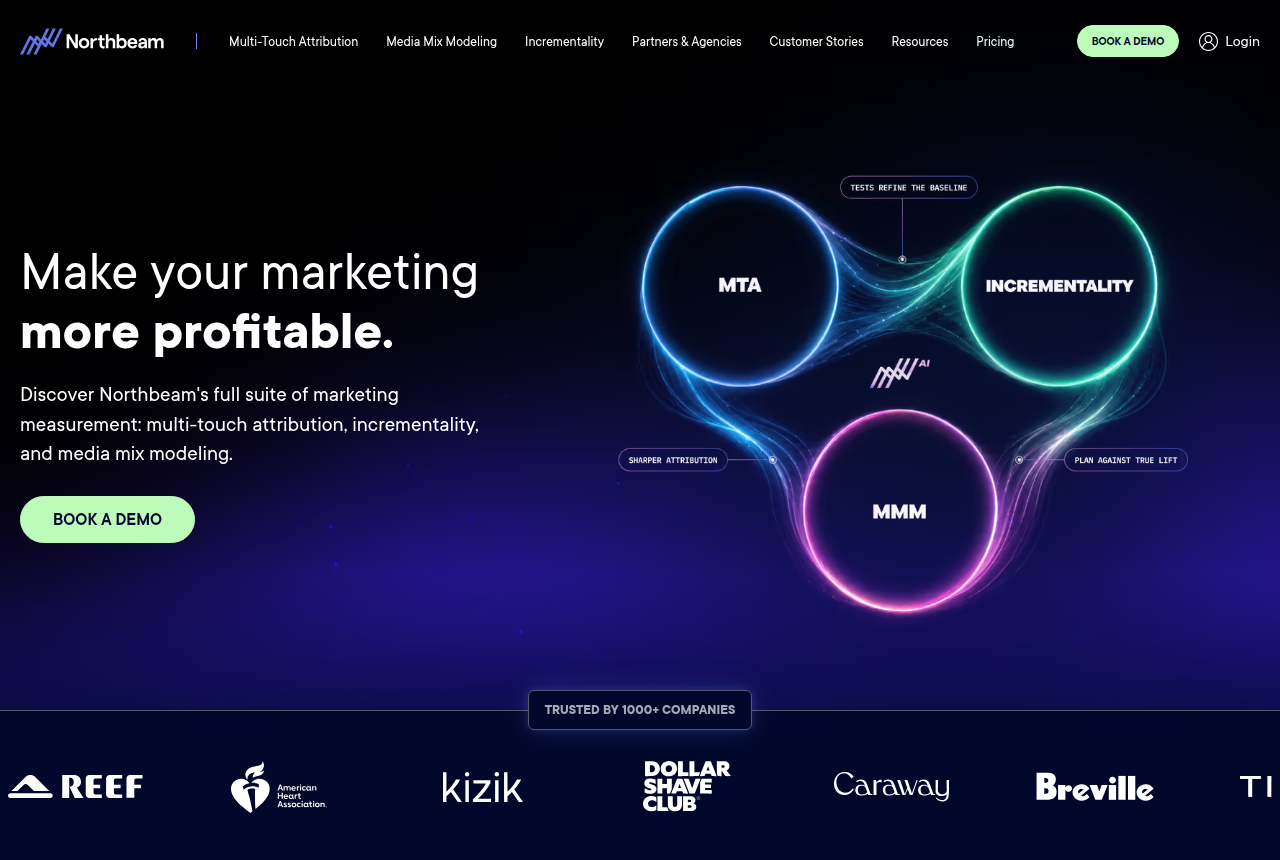
Northbeam is a marketing measurement platform for scaled direct-to-consumer ecommerce. It sits over your whole paid-media mix and answers one question: across Meta, Google, TikTok, YouTube, email and the rest, which channels and creatives are actually driving new revenue, and which are taking credit for sales that would have happened anyway. Three parts do the work. Multi-touch attribution stitches every touchpoint into one first-party view, with lookback windows long enough to credit an ad that pays off weeks later. Media-mix modeling forecasts revenue by budget scenario and values the spend clicks alone cannot see. And Northbeam Apex feeds that first-party conversion data straight back into the Meta and AppLovin ad algorithms, a step past a standard conversions API.
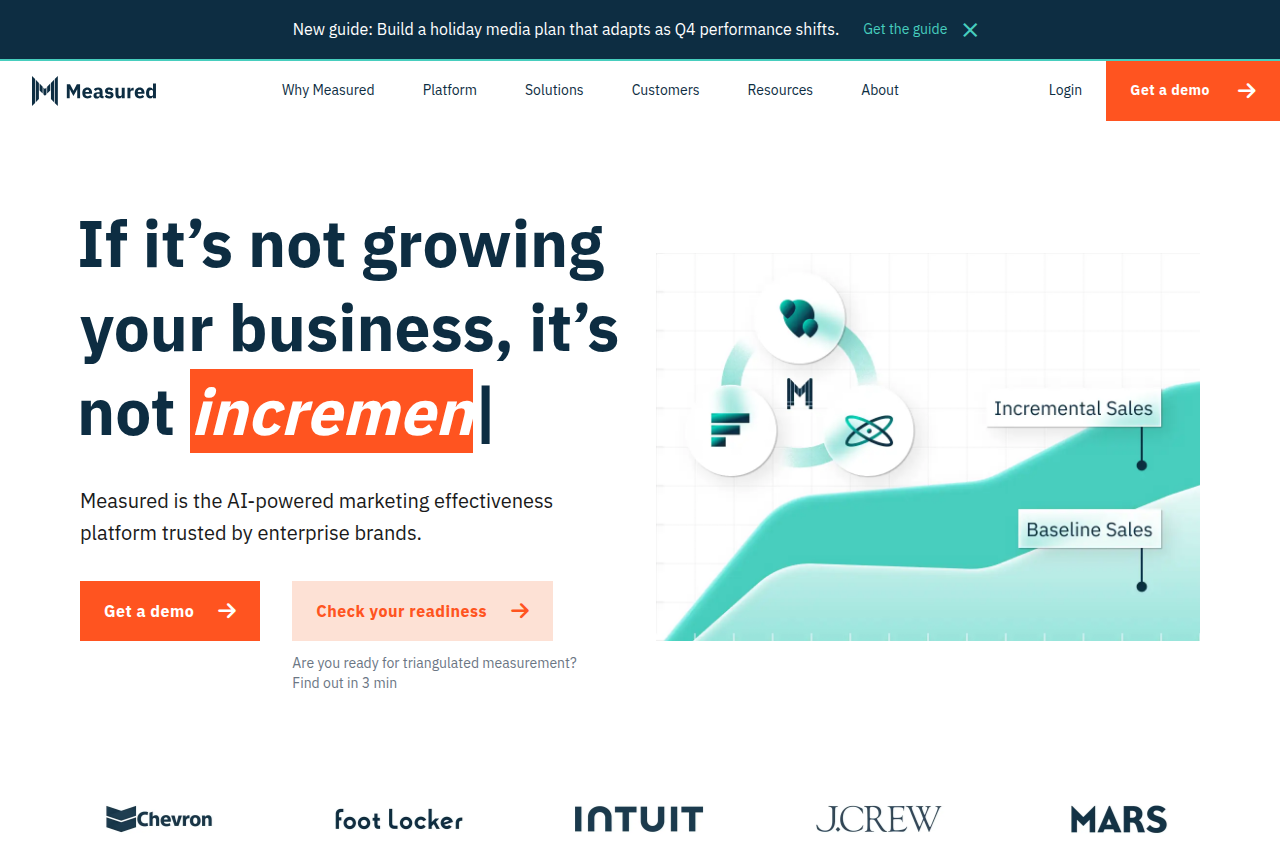
Measured is a media-effectiveness platform for mid-market and enterprise brands, and it reaches a similar goal by a stricter method. It fires no pixel and follows no individual user. What sets it apart is that it runs live geo holdout experiments, turning spend off in some regions and leaving it on in others, to measure the causal lift a channel produces, then calibrates a media-mix model against those real tests. On top sit a Media Plan Optimizer that recommends where and how much to spend, saturation curves that show where added budget stops paying off, and peer benchmarks. The vendor calls it triangulated measurement: it combines causal experiments with media mix modeling to turn complex media portfolios into clear, accountable growth programs. Where Northbeam follows the click and models on top, Measured tries to prove the mix with experiments first.
Click-aware attribution versus causal experiments
This is the split under everything else. Northbeam is click-aware. It uses its own first-party tracking to follow real touchpoints, then layers modeling on top, so it can tell you not just that Meta deserves more credit than Meta claims, but which campaign and creative inside Meta earned it. That granularity is why a paid-media operator pays for it: the read goes down to the ad, not just the channel, and you can cut or scale a specific creative this afternoon.
Measured earns its credibility a different way. It runs actual incrementality experiments, geo-based holdouts that measure what a channel contributes by removing it and watching what happens to sales, then uses those results to calibrate its media-mix model rather than trusting a modeled number on its own. AdExchanger covered the revamped platform as one that blends automation, incrementality and MMM, and that blend is the point. It is the closest thing this category offers to proof, and it is why a brand with a finance team challenging every ROAS number pays for it. The cost is time and money. Experiments take weeks to stand up, and the read is at the channel level, not the individual creative, so it will not tell you which of thirty Meta ads to kill today.
Neither method is better in the abstract. Click-aware attribution is right when you need to act on individual campaigns and creatives and want a feedback loop into the platforms. Causal experiments are right when the stakes on a budget decision are high enough that a modeled estimate is not enough and you need to prove lift before you move the money.
What each one can see
The channel maps are where the difference shows. Northbeam is built around a direct-to-consumer brand's own store and its digital paid mix: Meta, Google, TikTok, YouTube, email and the rest, read down to the creative. That is the footprint of most performance ecommerce budgets, and Northbeam reads it in fine detail. Below the Professional tier it is mostly a Shopify story.
Measured casts a wider net across media types. Its causal read extends to connected TV, podcasts, offline and upper-funnel media, the channels where a click never happens and a pixel has nothing to catch. For a brand whose spend has grown past paid social and search into brand, streaming and offline budgets, that breadth is what a click-anchored platform structurally cannot give. The trade is that this reach is aimed at a bigger, broader advertiser, and it does not read down to the individual creative the way Northbeam does. If your budget is mostly Meta and Google performance spend, Northbeam sees it in more detail; if a growing slice sits in connected TV and offline, Measured is the one that can measure it at all.
The feedback loop: Apex versus nothing
Here the two stop mirroring each other. Northbeam's Apex is the part with no equivalent on Measured: it pipes first-party conversions back into the Meta and AppLovin algorithms, so the platforms optimize on a cleaner signal than the browser pixel gives them. If closing that loop is central to how you buy, it is a real reason to lean Northbeam.
Measured sends nothing back to the ad platforms. It is a measurement layer, not a conversion-API pipe: it tells you where to put the next budget dollar, but it does not feed the platforms to help them spend it. A click tracker like RedTrack posts the closed sale back to Meta, Google and TikTok; Measured does not. Scope that limit, though: Measured's job is proving lift, not optimizing bids, and for a brand that sets budgets from causal tests on a monthly or quarterly cycle, the missing pixel-feed matters far less than it does to a buyer optimizing daily. A brand that needs both the causal read and the feedback loop runs Measured alongside a tracker that feeds the platforms.
Why your numbers will not match Meta or Shopify
Expect either tool to report fewer conversions than Meta or Google, sometimes far fewer, and to differ from Shopify too. That is not a bug in either one. The ad platforms each count a sale if someone clicked in a window or merely viewed an ad and later bought, so they all claim the same order. Northbeam and Measured each apply one independent read across every channel, and the gap between that and the platforms is the over-attribution you are paying to see. The difference is what you reconcile against. Northbeam's numbers are click-anchored, so they line up more naturally with your ad accounts and can be checked campaign by campaign, though its docs require its tracking parameters on every ad. Measured's numbers are modeled estimates with confidence intervals from live experiments, so they will not match Meta, GA4 or Shopify to the cent, and that is the point. Whichever you buy, set a standing rule for which source wins when they disagree, and reconcile weekly against backend Shopify revenue rather than treating either as a single source of truth.
Who each one is for
Northbeam is the fit when your core pain is attribution you can act on at the campaign and creative level, and you want the platform to feed the ad algorithms too. If you are spending six or seven figures a month across Meta, Google, TikTok and more, and the question that costs you money is which creative actually drove new revenue and where the next dollar should go, its multi-touch model, media-mix modeling and Apex feedback earn their quote. It also gives you a published starting price to plan against. Its ceiling is reach and method: below the Professional tier it is mostly Shopify, it does not measure connected TV or offline the way Measured does, and its attribution is click-anchored rather than proven with live experiments. See the full Northbeam review, how it reads against a pixel-free modeling platform in Northbeam vs Fospha, or the alternatives to Northbeam.
Measured is the fit when you spend across a wide channel mix that reaches into connected TV, podcasts and offline, and a finance team is challenging marketing's numbers. Its geo holdout experiments give you a defensible, causal read that a click-based model alone cannot, and the serviced onboarding means a lean team is not left to run tests by itself. Its ceiling is cost, commitment and speed: no public price, an annual contract that scales with spend, heavy front-loaded data work, and no feedback loop back to the platforms. See the full Measured review, how it reads against an accessible click tracker in RedTrack vs Measured, or the alternatives to Measured. One caveat covers both. Below roughly $100,000 a month of spend, both are overkill, and clean server-side events with blended MER and new-customer CAC do most of the job for far less. Neither fixes a weak offer, a broken pixel setup or a low conversion rate. They make the numbers clearer. They do not make the funnel better. For the full field, see the best ad tracking and attribution software.
Changelog. 28 September 2026: first published, with pricing verified against each vendor's own pages and Measured's causal-experiment positioning confirmed on measured.com.
What each one costs
Northbeam publishes a floor. Starter is $1,500 a month and Professional is $3,500 a month, both quoted after a demo and scaled to the size of the brand, with no free tier and no self-serve trial. Northbeam frames its entry tier for brands spending under $1.5m a year on ads who want laser-accurate attribution, and buyers report real annual costs near $30,000 to $50,000.
Measured publishes nothing. G2 records that the company has not provided pricing information, so you book a demo and get a quote. Contracts are annual and scale with your media spend and the number of channels you measure, and third-party analysis flags a high minimum spend barrier, with a working floor around six figures of monthly media. Those spend figures are third-party estimates, not the vendor's, so treat them as directional.
Northbeam at least gives you a number to plan against and a shorter path to a result; Measured is a committed annual platform whose causal experiments take longer to stand up and cost more to run. The decision is not the lower line item. It is whether click-aware attribution with a feedback loop or finance-grade causal proof is what your business actually needs. Below roughly $100,000 a month of spend, both are overkill, and clean server-side events with blended MER and new-customer CAC do most of the job for far less.
Prices read from each vendor's own pricing page, current as of 28 September 2026.
Our pick
Northbeam
Northbeam is a marketing measurement platform for scaled direct-to-consumer ecommerce: click-aware multi-touch attribution and media-mix modeling in one system, with an Apex layer that pipes first-party conversions back into Meta and AppLovin. It is real and well regarded, but it is priced for brands already spending six or seven figures a month, and its numbers are a directional cross-channel read, not a single source of truth.
Frequently asked questions
Northbeam or Measured: which should I pick?
What is the real difference between Northbeam and Measured?
Does Northbeam or Measured send conversions back to Meta and Google?
Is Northbeam or Measured cheaper?
What is incrementality testing, and does Northbeam do it?
Sources
Other sources
6 discussions and reviews read for this page. Quotes are excerpts; open a link to read the original in context.
- [nb-home] Northbeam - The marketing intelligence platform for profitable growth
- [nb-pricing] Northbeam - Pricing
- [measured-home] Measured | Media Effectiveness Platform
- [measured-adex] Measured's Revamped Platform Blends Automation, Incrementality And MMM
- [measured-pricing] Measured Media Mix Modeling & Incrementality Pricing
- [measured-spend] 9 Best Measured Alternatives & Competitors for Incrementality Testing in 2026
How we compared these
We do not run paid campaigns through either tool. We read each vendor's own documentation and pricing, verify every number against the source, and weigh the long-term reports of operators who run them at real spend. The full rubric is on the methodology page.