Head-to-head
ClickMagick vs Measured
ClickMagick and Measured both challenge the numbers inside ad platforms, but they do it at different levels. ClickMagick records the path from an individual paid click to a conversion and can send that result back to Meta, Google and TikTok. Measured runs controlled lift tests and calibrates a media mix model so an enterprise brand can decide how much budget each channel deserves. One helps a buyer optimize the next campaign. The other helps a leadership team prove which channels caused growth.
By Marcus Flynn, tracking and attribution editor. Updated 28 September 2026.
Pick ClickMagick if you buy paid traffic to funnels you own and need click-level attribution plus conversion feedback to Meta, Google and TikTok; pick Measured if you manage a large cross-channel media portfolio and need causal lift tests plus media mix modeling to set budgets.
Quick answer
ClickMagick is our top pick for most people. A first-party ad tracker built for the solo advertiser and small team who buy paid traffic to offers they own. You get accurate click-level attribution, server-side conversions fed back to Meta, Google and TikTok, and a flat price that is not tied to your revenue. It has tracked traffic since 2014 and its support is the thing buyers praise most. It is real and it works. You will regret it only if you expected a magic fix, needed a route-through campaign tracker for rotating offers, or only wanted a cheap link counter.
- ClickMagick. Best for Solo advertisers and small teams buying paid traffic to offers they own. From $79/mo.
- Measured. Best for Enterprise brands that need causal cross-channel measurement and media planning.
Side by side
| Tool | Core job | Method | Ad feedback | Best fit | From |
|---|---|---|---|---|---|
| 1. ClickMagick | Click attribution | First-party tracking | CAPI on all plans | Owned paid funnels | $79/mo |
| 2. Measured | Causal lift + MMM | Geo experiments | Planning only | Enterprise media mix | Not listed |
ClickMagick: pros and cons
What works
- Accurate first-party tracking that survives iOS and ad blockers. Conversions are captured on your own domain and posted back to Meta, Google, TikTok and more through Audience Optimization, so the ad platform's optimization gets a cleaner signal. Buyers keep it to see where conversions really come from when GA4 and the pixel disagree.
- Flat monthly pricing that is not a share of your revenue, with no mandatory sales call. Buyers who left Hyros describe it as the same job done cheaper, and moving up to Standard or Pro buys capacity rather than unlocking the core feature set.
- Support is the single most repeated piece of praise. Trustpilot sits at 4.1 out of 5 across 679 reviews, about 90% five-star, and users report fast replies that often include a screen-recording walking through the exact fix.
- Built for the paid-traffic shape a solo operator actually runs: sub-IDs and server-to-server postbacks into 100-plus affiliate networks, a custom first-party tracking domain, bot and click-fraud filtering, cross-device tracking, automatic ad-cost sync, and a daily insights email that flags what to scale, pause or fix.
What to watch
- It is not a route-through campaign tracker. You point traffic at your own pages and it attributes the result. It does not rotate offers, split traffic across landers by rule, or distribute clicks the way Voluum, RedTrack or Binom do. That matters most to affiliate media buyers running many offers through a redirect; a solo advertiser sending traffic to one funnel does not need routing.
- The marketing promises more than the setup delivers on its own. ClickMagick is a tracking layer, not a magic fix, and accuracy still depends on passing click IDs cleanly and configuring postbacks correctly. Skip that work and the numbers will not agree with your backend.
- It is not a cheap link tracker. The $79 entry is steep if all you need is to cloak and count links, and quotas are counted in tracked visitors, so a high-traffic, low-converting funnel can be pushed onto the next plan. Watch your visitor count before you scale traffic.
- Independent third-party proof is thinner than the wall of on-site testimonials suggests. There is no meaningful G2 or Capterra presence, and ClickMagick says it no longer actively maintains its Trustpilot profile and disputes some recent negative reviews. Weigh it against your own trial, not the testimonial count.
Measured: pros and cons
What works
- Triangulated measurement on one platform. Geo-based incrementality experiments calibrate the media mix model, so a budget decision is cross-checked against a real causal read rather than trusted from a single modeled number. AdExchanger covered the revamped platform blending automation, incrementality and MMM, and voted it #1 Measurement/Analytics.
- Well regarded by the enterprise brands that run it: 4.9 out of 5 on G2, with recognisable customers such as Dermalogica, Overstock, Steve Madden and MARS. Buyers repeatedly credit the Measured team for knowing the methodology better than anyone and for making onboarding feel comfortable.
- Measures questions a click tracker or pixel cannot answer: causal lift by channel including upper-funnel and offline media, saturation and diminishing-return curves that show where added spend stops paying off, and a Media Plan Optimizer that recommends where and how much to spend. Machine-learning market selection and built-in geo and audience splitting let tests launch in days.
- Serviced rather than self-serve. Guided onboarding, help winning internal buy-in, weekly model refreshes and peer benchmarks mean a lean marketing team is not left to run causal experiments alone. That hand-holding is a real part of what you pay for.
What to watch
- No public price and no free trial. The only way in is a booked demo on an annual contract that scales with media spend and channel count. G2 states Measured has not provided pricing information, and you cannot validate it on your own data before you sign, so ask for two or three references from brands like yours first.
- The practical floor is high. Third-party analysis flags a high minimum spend barrier that locks out smaller brands, with a working threshold around six figures of monthly media. Below that the ROI rarely covers the cost, though at real spend the wasted budget it uncovers can pay for it many times over.
- Onboarding and data work are heavy and front-loaded. Connecting spend and conversion data across every network is manual and slow: one G2 reviewer called it an absolute nightmare and described pulling reports from every single network to share with Measured. That weighs most on a team without dedicated data ops; a brand with an analyst who owns it will find the ramp worth it.
- Its numbers are modeled and experimental, so they will not match Meta, GA4 or Shopify. A mix model and a lift test produce estimates and confidence intervals, not deterministic user-level counts. That independent read is what you are paying for, but your team needs a rule for which source to trust and clean conversion data for the models to work.
The real differences
They answer different questions
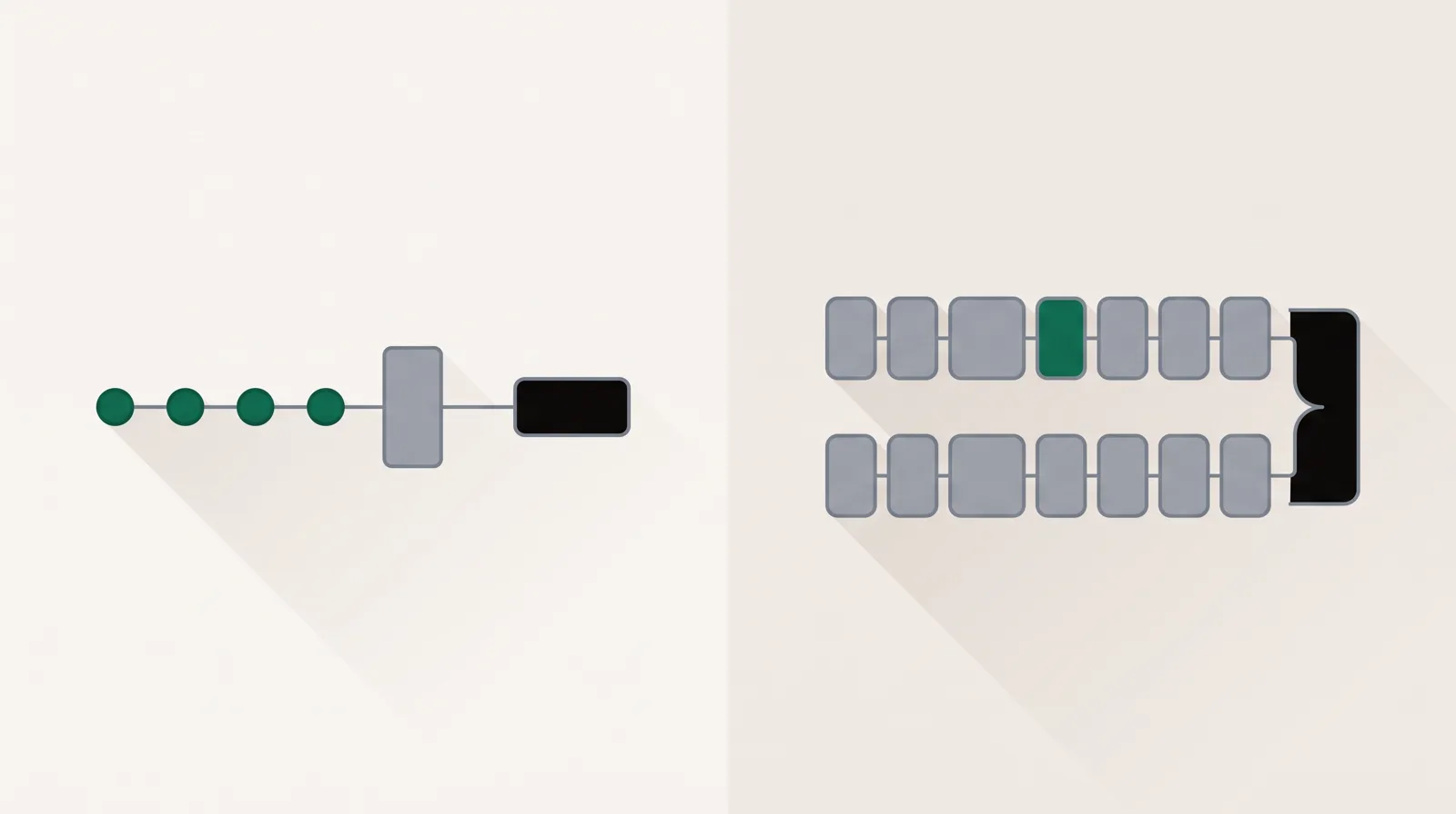
ClickMagick is a first-party ad tracker. Put its tracking code on pages you control, use a custom tracking domain, preserve the click ID through the funnel, and return the conversion through a browser event or server-to-server postback. The result is a deterministic record that ties a sale or lead back to a specific source, ad and click. Its daily value is tactical. You can cut a losing ad, inspect a weak funnel step, filter junk clicks, or send a cleaner conversion signal back to the platform that buys the next impression.
Measured is a media-effectiveness platform. It does not need to claim that one person saw one ad and later bought. Instead, it designs geo or audience holdouts, compares exposed and control groups, and measures the extra sales caused by the media. Those experiments then calibrate a media mix model, which estimates how a whole portfolio contributes to business outcomes over time. Its daily value is strategic. A team can decide whether another dollar belongs in paid social, connected TV, audio, search or an offline channel.
That distinction decides most of this comparison. ClickMagick tells you which tracked path converted. Measured tells you whether a channel created sales that would not have happened without the spend. If you are choosing between them, first write down the decision you need to make. “Which ad should I scale today?” points to ClickMagick. “Did this channel cause enough lift to deserve next quarter’s budget?” points to Measured.
Attribution records a path; incrementality proves lift
ClickMagick’s evidence starts with an observed path. A click carries an identifier, the visitor moves through pages on a first-party domain, and the sale returns with enough information to match it to that click. That gives a media buyer granular reporting by ad, keyword, link, page and offer. Cross-device tracking and multi-touch models add context, but the foundation is still an observed customer journey.
The strength is specificity. When three ads send traffic to one funnel, ClickMagick can show which tracked clicks produced sales. The limit is causality. A matched click proves that the click appeared on the path. It does not prove the customer would not have bought without that ad. Retargeting and branded search often receive credit for demand another channel created.
Measured starts with the causality problem. Its incrementality tests create a control by reducing or withholding spend in matched regions or audiences, then compare outcomes with the exposed group. The difference estimates the sales caused by the media. Measured uses those causal results to constrain its media mix model, rather than asking a model to settle the whole question by itself.
The strength is a defensible budget read across channels that do not produce a neat click path. The limit is granularity. A geo test can tell a brand that a channel produced lift, but it will not diagnose one broken landing page or tell a solo buyer which sub-ID converted at 10:42 this morning.
Only ClickMagick closes the ad-platform feedback loop
ClickMagick’s Audience Optimization feature sends captured conversions back to Meta, Google and TikTok through server-side connections. The point is not merely to produce a cleaner report. It gives the bidding system a better event to optimize against when a browser pixel misses or misattributes the sale. That feedback is available on every current plan. Click Shield, automatic cost updates and daily performance prompts sit around the same operating loop.
Measured does not send conversions back to ad platforms. It is independent measurement and planning software, not a conversion API pipe. Its output is a causal read, saturation curves and a plan for reallocating spend. A buyer or agency still makes the change, and the ad platform keeps optimizing on its own event data unless another tracking layer feeds it.
This is the clearest practical win for ClickMagick. An owner-led funnel team normally needs the measurement to affect tomorrow’s buying. Measured can change a quarterly media plan, but it will not improve the event Meta sees for the next auction. A large brand can run both kinds of system: a tracker or customer-data layer for event feedback, with Measured above it for causal budget decisions. The products are substitutes only when the budget can support one measurement layer and the team has to pick which question matters more.

Measured sees channels a click tracker cannot
ClickMagick is strongest where a trackable paid click reaches a page you control. That covers the usual direct-response path through Meta, Google, TikTok, email and affiliate links. It can track phone and offline sales on Standard and Pro when the team returns the outcome with the right identifier. It also supports server-to-server postbacks with affiliate networks. What it cannot do is infer the contribution of media that never produced a click or never reached the owned funnel in a traceable way.
Measured is built for that blind spot. A geo experiment can estimate the effect of connected TV, podcasts, retail media, direct mail or broad awareness spend because the method compares business outcomes, not user-level click trails. The media mix model then places those channels alongside digital spend and shows where returns begin to flatten.
The trade-off is actionability. Measured can say a channel created incremental sales and that its next dollar is likely less productive. It cannot hand a media buyer the exact creative, placement or click that caused the change. ClickMagick can expose that tactical detail inside trackable traffic, but it cannot value an offline impression that left no identifier. Pick the level at which you can actually act.
Setup burden looks different
ClickMagick is self-serve, but it is not automatic. You need to install its code, configure a first-party tracking domain, preserve parameters, map conversion events and check the result against your checkout. The vendor provides a setup wizard and support, and user reports praise support when a configuration goes wrong. Still, a tracking layer only reports what the implementation sends. If the click ID disappears before checkout, the dashboard cannot reconstruct it.
Measured is serviced, yet the data burden is larger. A useful model and a valid experiment need complete spend, outcome and channel data. User reviews describe pulling reports from individual networks during onboarding, while positive reports credit the team for teaching the method and helping stakeholders trust the result. That is a different kind of effort: less tag troubleshooting, more data collection, taxonomy work and internal agreement about the outcome the business will optimize.
A small team with one funnel can usually validate ClickMagick inside its 14-day trial. A large brand evaluating Measured should treat the demo as the start of diligence, not a product tour. Ask which data sources are required, who cleans them, how long the first experiment takes, how the control regions are selected, and which decisions the first model will support.
Who should pick each one
Pick ClickMagick when you own the pages and checkout, buy trackable paid traffic, and need an operational answer at the ad, click or funnel-step level. It fits solo advertisers, agencies and small teams that want first-party attribution, fraud filtering and server-side conversion feedback without an enterprise contract. It is not a route-through tracker for rotating several offers and landing pages by rule. If that is your job, compare it with RedTrack, Voluum or Binom instead.
Pick Measured when you manage a broad media mix, spend enough for holdout tests to produce useful signal, and need finance or leadership to trust a causal read across digital and offline channels. It fits enterprise brands with analysts, stable conversion volume and the authority to move budget between channels. It is a poor fit when one buyer needs creative-level answers or when the data team cannot support onboarding.
Neither tool should be used as a scoreboard that has to match Meta, GA4 or the checkout exactly. ClickMagick deliberately applies its own first-party tracking logic. Measured deliberately estimates causal contribution rather than counting user paths. Reconcile both against backend revenue, document which system answers which question, and decide in advance what happens when two reports disagree.
What each one costs
ClickMagick publishes three monthly plans. Starter is $79 a month for 10,000 tracked visitors, one user, one site or store and one ad account per platform. Standard is $199 a month for 100,000 tracked visitors and adds advanced attribution, phone and offline sales tracking, more users and Click Shield fraud protection. Pro is $349 a month for 1,000,000 tracked visitors, unlimited team members and unlimited ad accounts. Annual billing is $790, $1,990 or $3,490, equal to two months free. The 14-day trial is available without a card.
Measured publishes no plan table or price. The vendor sends buyers to a demo request and does not advertise a self-serve trial on the home, incrementality or demo pages we checked. Third-party coverage also flags a high minimum spend barrier. Treat it as an enterprise procurement decision and ask for the platform fee, onboarding work, included experiments, channel limits, data requirements and renewal terms in writing.
This is not a close price comparison. ClickMagick can be trialed and budgeted before a call. Measured has to justify a sales process and a heavier implementation. That difference reflects the product shape: one tracks owned paid traffic; the other runs experiments and modeling across an enterprise media portfolio.
Prices and buying terms checked on each vendor's own pages, current as of 28 September 2026.
Our pick
ClickMagick
A first-party ad tracker built for the solo advertiser and small team who buy paid traffic to offers they own. You get accurate click-level attribution, server-side conversions fed back to Meta, Google and TikTok, and a flat price that is not tied to your revenue. It has tracked traffic since 2014 and its support is the thing buyers praise most. It is real and it works. You will regret it only if you expected a magic fix, needed a route-through campaign tracker for rotating offers, or only wanted a cheap link counter.
Frequently asked questions
ClickMagick or Measured: which should I pick?
Are ClickMagick and Measured direct competitors?
What is the main difference between attribution and incrementality?
Which tool sends conversions back to Meta, Google and TikTok?
Which one is cheaper?
Can Measured replace a click tracker?
Sources
From ClickMagick and Measured
- https://www.clickmagick.com/
- https://www.clickmagick.com/pricing/
- https://www.measured.com/
- https://www.measured.com/incrementality-testing/
- https://www.measured.com/request-demo/
Other sources
7 discussions and reviews read for this page. Quotes are excerpts; open a link to read the original in context.
- [cm-attribution] ClickMagick use for attribution
- [cm-skepticism] ClickMagick setup skepticism
- [cm-price] ClickMagick entry-price complaint
- [measured-onboarding] Measured reviews
- [measured-team] Measured platform review
- [measured-method] Measured platform coverage
- [measured-spend] Measured alternatives analysis
How we compared these
We do not run paid campaigns through either tool. We read each vendor's own documentation and pricing, verify every number against the source, and weigh the long-term reports of operators who run them at real spend. The full rubric is on the methodology page.