Head-to-head
ClickMagick vs ClickMeter for link tracking
Two names for affiliate link tracking, and only one still accepts new users.
By Marcus Flynn, tracking and attribution editor. Updated 22 October 2026.
Choose ClickMagick if you buy traffic to pages you own. Use a ClickMeter login only if that account is already running your rotators and postbacks.
Quick answer
Pick ClickMagick if you run paid traffic to funnels you own and need first-party attribution with Audience Optimization feeding Meta, Google and TikTok on every plan; pick ClickMeter only if you still rely on a legacy ClickMeter account for link rotators and S2S postbacks, because clickmeter.com now sends new visitors to Rebrandly.
ElasticFunnels keeps the page, the checkout, and the order on one timeline. TrackPlay sends a cart-verified video sale to Meta, TikTok, and GA4.
- ClickMagick. Paid traffic to funnels you own, with Audience Optimization on Starter.
- ClickMeter. An existing account that still runs rotators and server-to-server postbacks.
- ElasticFunnels. Pages, checkout, and the order on one timeline.
- TrackPlay. A VSL play tied to a cart-verified sale.
See the ClickMagick pricing breakdown
Side by side
| Tool | Primary job | Conversions | Ad platforms | Meter | Start | Free or trial | From |
|---|---|---|---|---|---|---|---|
| ClickMagick | Ad tracker | Network postbacks | Meta, Google, TikTok | Tracked visitors | Paid Starter | Trial included | Not listed |
| ClickMeter | Legacy links | Old-account postbacks | Not on this domain | Unpublished | Opens Rebrandly | No signup page | Not listed |
| ElasticFunnels | Funnel and checkout | Affiliate postbacks | Order reporting | Page views | Published plans | No card required | Not listed |
| TrackPlay | VSL player | Cart-verified sale | Meta, TikTok, GA4 | Plays | Paid entry | Free plan | Free tier |
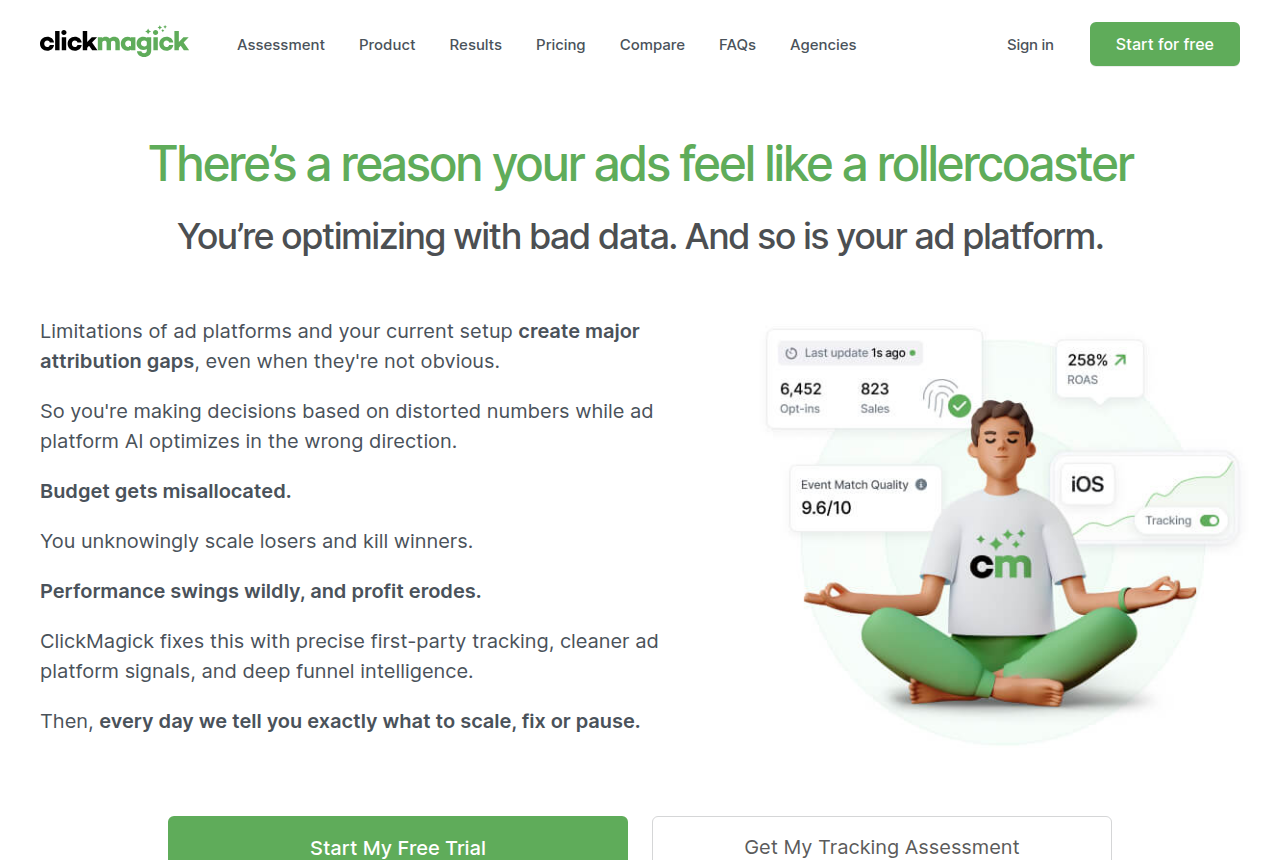
ClickMagick: pros and cons
What works
- Accurate first-party tracking that survives iOS and ad blockers. Conversions are captured on your own domain and posted back to Meta, Google, TikTok and more through Audience Optimization, so the ad platform's optimization gets a cleaner signal. Buyers keep it to see where conversions really come from when GA4 and the pixel disagree.
- You pay a flat monthly fee, and the price is published without a sales call. Buyers who left Hyros say they pay less for the same tracking job. Standard and Pro increase the tracked-visitor cap, and the core tracking features are already included on Starter.
- Support is the feature buyers praise most often. Trustpilot sits at 4.1 out of 5 across 679 reviews, about 90% five-star, and users report fast replies that often include a screen-recording walking through the exact fix.
- It matches the campaigns a solo operator actually runs: sub-IDs and server-to-server postbacks into 100-plus affiliate networks, a custom first-party tracking domain, bot and click-fraud filtering, cross-device tracking, automatic ad-cost sync, and a daily insights email that flags what to scale, pause or fix.
What to watch
- ClickMagick attributes the conversion on pages you send traffic to. Voluum, RedTrack, and Binom are tools that rotate offers and split clicks across landers by rule. Affiliate buyers running many offers through a redirect are the ones who feel that difference. Someone with a single funnel is already driving traffic to their own pages.
- The marketing promises more than the setup delivers on its own. ClickMagick is a tracking layer, and accuracy still depends on passing click IDs cleanly and configuring postbacks correctly. Skip that work and the numbers will disagree with your backend.
- Paying $79 a month just to cloak a link and count clicks is steep when that is the whole job. The cap counts tracked visitors, so a funnel with heavy traffic and few sales can push you into the next tier. The visitor count is what to watch before you scale spend.
- Independent third-party proof is thinner than the wall of on-site testimonials suggests. There is little meaningful G2 or Capterra coverage, and ClickMagick says it no longer actively maintains its Trustpilot profile and disputes some recent negative reviews. Weigh the on-site testimonials against your own trial, because the outside review record is thinner.
ClickMeter: pros and cons
What works
- Operators who used it describe plain link tracking, plus postbacks and an API. One affiliate said those two features were why they switched from ClickMagick.
- Rebrandly's history of URL shorteners dates ClickMeter's start to January 2012, as web analytics for marketing links, conversions, and click fraud.
- An account you already run can still hold the rotators and the server-to-server postbacks, which is the situation where this name still matters.
What to watch
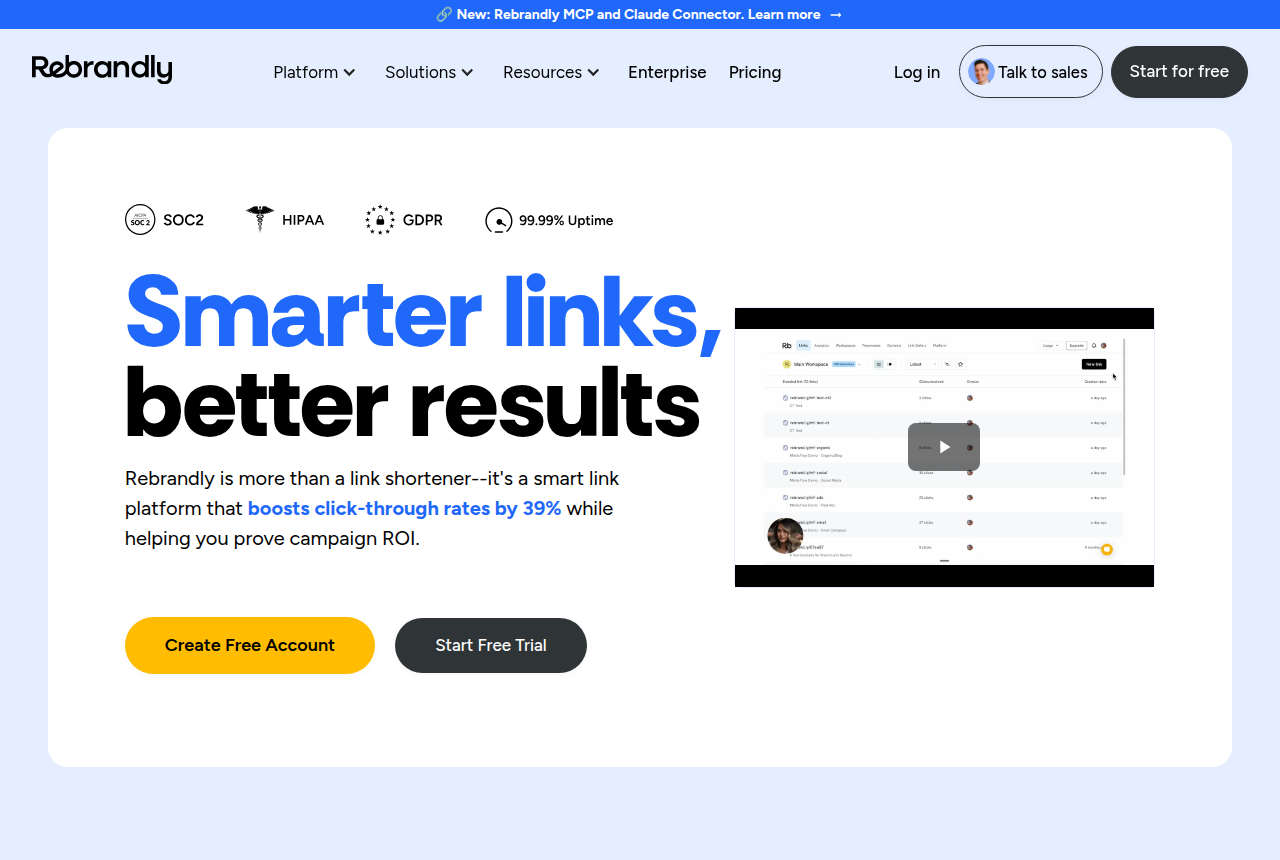
- clickmeter.com and its pricing page both redirect to Rebrandly. A new visitor does not reach a ClickMeter feature list or a plan table on the ClickMeter domain.
- In March 2023 a developer wrote that ClickMeter would shut down soon, and that Rebrandly did not match the old tool.
- No ClickMeter pricing is published on clickmeter.com. Rebrandly's plans belong to Rebrandly.
The real differences
What each name is in 2026
ClickMagick is a cloud tracker aimed at performance marketers since 2014. Its pricing page states that it has helped performance marketers see what is working. The tracking page presents it as first-party TrueTracking for ad attribution. You send traffic to pages you control, the visit is recorded there, and a sale can be sent on to the ad account.
ClickMeter is the other name people still type. Rebrandly's history of URL shorteners dates ClickMeter to January 2012, when it monitored marketing campaigns, tracked conversions, and fought click fraud. That is the product people still associate with the name.
clickmeter.com and its pricing URL both redirect to Rebrandly. A new visitor lands on a link platform. The account you can still create for funnel attribution is ClickMagick.
Where ClickMagick fits paid traffic
The knowledge base defines a postback as the automatic notice an affiliate network sends to your ClickMagick postback URL when a transaction occurs. The network reports the sale. Audience Optimization, included on Starter, is what passes that conversion to Meta, Google, and TikTok.
The tracking page frames the product as attribution on traffic you send to your own pages. Operators in an affiliate thread on click trackers describe ClickMagick as easy to set up but limited, and many switch to Voluum or RedTrack as traffic grows. RedTrack vs ClickMagick is that step up. ClickMagick vs AdsBridge is the comparison when the other tool's job is to rotate the click.
The numbers stay accurate only when the click ID arrives intact and the postback is configured. Skip that work and the tracker will disagree with the network. Starter is also a poor trade when the whole job is a cloaked link and a click count. ClickMagick vs AnyTrack is the nearby page if you are weighing another cloud tracker that posts conversions to the ad platforms.
ClickMeter vs ClickMagick if you already have an account
In a thread about postback platforms, one affiliate said they left ClickMagick for ClickMeter because ClickMeter handled postbacks and had an API. That report describes an account that already existed. Someone who visits the ClickMeter address now is sent to Rebrandly.
In March 2023, a developer posted that ClickMeter would shut down soon, and that a suitable replacement was hard to find. The same post said Rebrandly fell short of the old tool. A commenter on that thread recommended ClickMagick and misspelled the name in the comment.
Rebrandly's conversion tracking is built around your links. An SDK sits on the destination page, and the attribution windows are 7, 14, and 30 days. That is link ROI on the destination. ClickMagick records the visit on your funnel and can send the conversion to the ad platforms. The public link between the two brands is ClickMeter's 2012 launch on Rebrandly's history page, and that 2023 post.
Keep the ClickMeter login when that account is still firing the rotators and the server-to-server postbacks you already depend on. For a new account, the ClickMagick pricing breakdown lists the visitor caps and the trial. If the job is branded links and an SDK on the destination, judge Rebrandly on Rebrandly's own pricing page.
ElasticFunnels, when the page and the order are one record
ElasticFunnels is a funnel platform for teams that buy traffic. It builds the pages, including an AI builder that can start from a prompt or clone a page from a URL, and it split-tests variants under one URL so the ad keeps a single destination. The checkout, the CRM, and the reporting sit on that same account. A click, an order, a rebill, and a refund share one timeline, so the sale the report uses is the sale the account already took.
Buyers choosing a funnel platform usually set it beside ClickFunnels for the pages and beside GoHighLevel when they also want a CRM. ClickMagick still records the click when the offer lives on a network and the tracker has to catch the postback. ElasticFunnels is the layer when you host the page and the checkout yourself. The stack picker sorts that layer against the tracker and the video player.
A weighted split of the first sale runs across your own NMI merchant accounts, with rules for card brand, product, and amount, and a daily cap on each account. Upsells and rebills stay on the account that took the sale. Stripe, PayPal, Klarna, and Authorize.net each stay on their own single account. The checkout can also send a buyer to ClickBank, JVZoo, BuyGoods, Digistore24, Shopify Checkout, Shop Pay, or Cartpanda.
ElasticFunnels is newer than ClickFunnels and GoHighLevel, and independent reviews are still very thin, so until real volume runs through the account you are largely taking the vendor's word for how that reporting behaves. That is what you would expect from a platform that has been around since 2023. The pages, the same-URL tests, and the checkout are already there to try. What you cannot yet check from outside is a long run of independent write-ups.
TrackPlay, when the sale happens on the video
TrackPlay hosts the video for a paid-traffic VSL. One embed holds the player. The cart posts the verified sale onto the play that earned it, and TrackPlay sends that conversion server-side to Meta, TikTok, and GA4. Teams comparing VSL hosts usually set it beside Vidalytics.
A click that has to line up with an affiliate network stays a ClickMagick job. TrackPlay is the player for a funnel where the sale happens on the video.
It is narrow by design. Built for a direct-response VSL, it has none of the channels, SEO pages, or webinar tooling of a Wistia, so a video whose job is content marketing is a poor fit. A sales video still gets the player, the retention curve split between buyers and everyone else, and the cart postback.
For someone judging the player, outside proof is thin. The testimonials sit on TrackPlay's own site, and sign-up asks for an invitation code. That limit applies when you are deciding whether to put paid traffic on this video host. The tracker choice above stands on its own.
What each one costs
ClickMagick meters tracked visitors and publishes three paid tiers. ClickMeter has no pricing page on its own domain, because that address redirects to Rebrandly. Rebrandly Essentials is a link plan, listed here so you can see what a new visitor is offered, and it is a different product.
- ClickMagick Starter. $79 a month, or $66 a month on an annual bill of $790. The cap is 10,000 tracked visitors. Audience Optimization is included on this tier, and the pricing page offers a 14-day free trial.
- ClickMagick Standard. $199 a month, or $166 a month if you pay for the year. The cap is 100,000 tracked visitors, with unlimited affiliate campaigns and Click Shield.
- ClickMagick Pro. $349 a month, or $291 a month when the year is prepaid. The cap is 1,000,000 tracked visitors.
- ClickMeter. No plan table on clickmeter.com. The address redirects to Rebrandly.
- Rebrandly Essentials. $11 a month on the annual bill, or $16 a month paid monthly. That is Rebrandly's link plan, which is where the ClickMeter URL redirects.
- ElasticFunnels Starter. $97 a month, or $937 for the year. 50,000 page views, 3 brands, 5 custom domains, 10 team members, and 10,000 automation runs. Growth is $197 a month ($1,891 for the year): 250,000 page views, 10 brands, 15 domains, 20 seats, 50,000 runs. Scale is $497 a month ($4,771 for the year): 500,000 page views, unlimited brands, 50 domains, unlimited seats, 200,000 runs. The feature set is the same on each plan. The trial is 14 days and needs no card. A 0.5% fee applies to revenue through ElasticFunnels' own gateways (Stripe, NMI, PayPal, Klarna, Authorize.net). Sales through ClickBank, BuyGoods, Digistore24, Shopify Checkout, and Shop Pay are outside that fee.
- TrackPlay. Paid plans start at $29 a month. You are billed by video plays, and the full feature set is included on each paid plan. A no-card free plan is offered, plus a 14-day trial of the paid features.
Our pick
ClickMagick
ClickMagick is the pick when you buy traffic to funnels you own and the conversion has to land in the tracker and on the ad platform. ClickMeter matters when you already have an account that still runs rotators and server-to-server postbacks. A new buyer should open ClickMagick, or judge Rebrandly on its own if the job is branded links.
Frequently asked questions
Is ClickMeter still something you can buy?
Does ClickMagick take network postbacks?
Can Rebrandly stand in for both?
What if the traffic outgrows ClickMagick?
Sources
From ClickMagick and ClickMeter
- https://www.clickmagick.com/pricing/
- https://www.clickmagick.com/product/?tab=tracking
- https://www.clickmagick.com/kb/kb.cgi?answer=119
- https://www.clickmeter.com/
- https://www.rebrandly.com/conversion-tracking
- https://www.rebrandly.com/pricing/
- https://www.rebrandly.com/pt-br/blog/the-history-of-url-shorteners
Other sources
4 discussions and reviews read for this page. Quotes are excerpts; open a link to read the original in context.
How we compared these
We do not run paid campaigns through either tool. We read each vendor's documentation and pricing pages, verify the figures there, and weigh long-term reports from operators. The full rubric is on the methodology page.
Related reading
- ClickMagick review
- ClickMagick pricing breakdown
- ClickMeter review
- ClickMagick vs AdsBridge
- ClickMagick vs AnyTrack
- RedTrack vs ClickMagick
- Stack picker for tracker, checkout, and VSL
- All head-to-head comparisons
Comments
No comments yet. Questions and your own experience are welcome.
Thank you. Your comment will appear once it has been reviewed.