Head-to-head
Checkout Champ vs Konnektive
Hosted funnel pages with a price on the site, or the CRM you wire to landers you already own.
By Marcus Flynn, tracking and attribution editor. Updated 17 October 2026.
You are down to two billing stacks that share an engine. One hosts the funnel and prints a price. The other hands you form code for pages you already run, and the account turns on after the contract is paid.
Quick answer
Pick Checkout Champ if you want hosted funnel pages, a published $300/mo + 1% price card and the Konnektive-class billing stack without wiring form code yourself; pick Konnektive if you already control the landers and need the widest processor and call-center back office on a quoted prepaid contract.
ElasticFunnels is the hosted platform when you want same-URL split tests and a checkout on a plan you can read before a sales call. The opening charge can be split across your NMI accounts.
- Checkout Champ. Hosted funnel pages, with a price card you can read before the call.
- Konnektive. Landers you already control, and a call-center back office on a prepaid contract.
- ElasticFunnels. Published plans, same-URL tests and a hosted checkout.
Side by side
| Tool | Pages | Gateways | Price | Start | Calls | From |
|---|---|---|---|---|---|---|
| Checkout Champ | Hosted builder | 270+ | Base plus a percent | Demo, then a manager | Pages and billing | $300/mo |
| Konnektive | Form code you embed | 250+ processors | Quoted, prepaid | Schedule a call | Order entry and ops | Not listed |
| ElasticFunnels | Builder and cloner | NMI split, first sale | Plan plus 0.5% | Published plans | Same order record | $97/mo |
Checkout Champ: pros and cons
What works
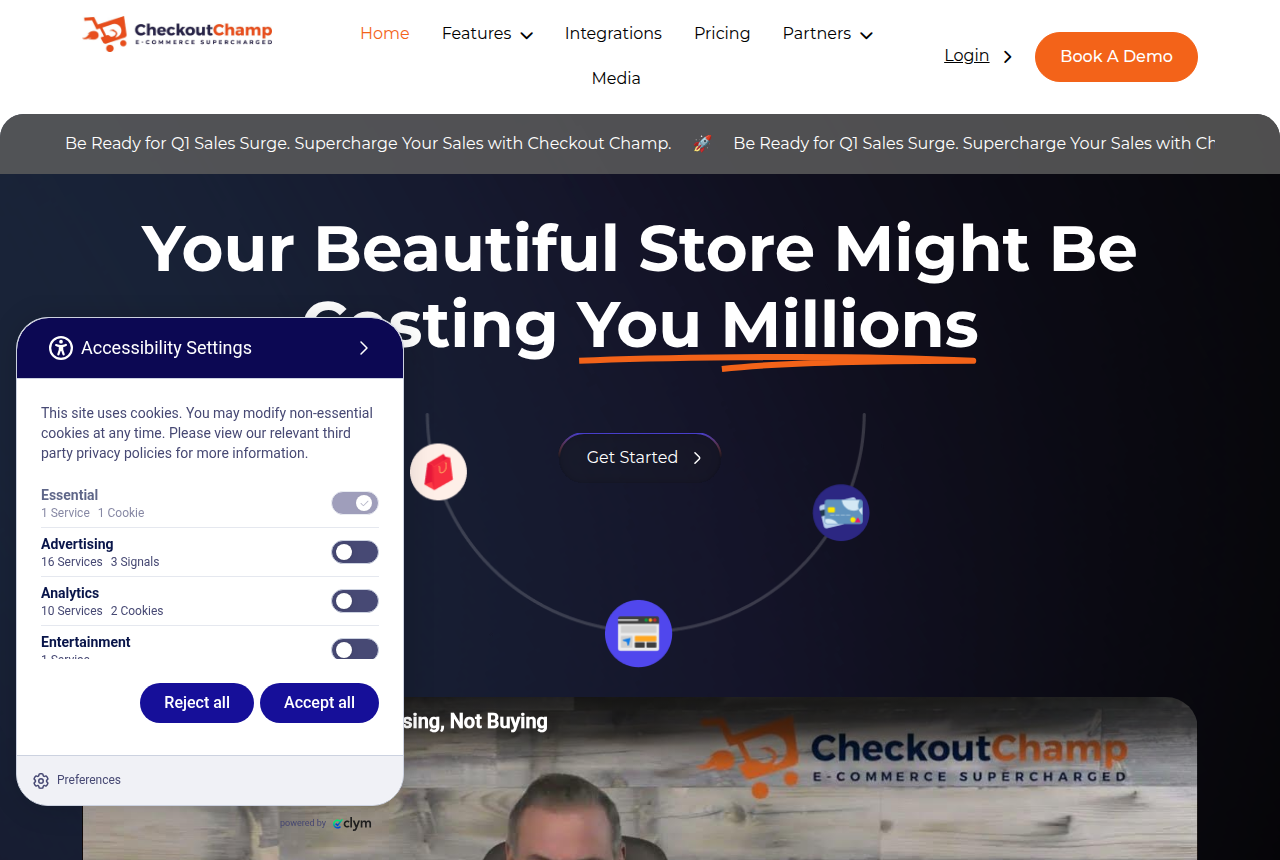
- It is real, established and built for volume. The vendor reports more than $7 billion processed, over 200 million transactions a year and 60,000-plus active users, on an engine licensed from Konnektive that direct-response operators have run for years. If your question is whether it is real and will handle scale, the answer is yes.
- Recurring billing is the standout. It manages subscriptions on any merchant account with no extra per-rebill fee and routes transactions across more than 270 payment gateways and currencies. For a continuity business, processing redundancy and clean rebill handling are what long-term users praise most, with one G2 reviewer calling its subscription billing the best in the market.
- It replaces a browse-first store checkout with pages built for buying. Order bumps at checkout, true one-click upsells after the sale, and four-way A/B/C/D split testing on pages, prices, products and even gateways, run from one dashboard. That is exactly what paid traffic needs and what a stock Shopify or WooCommerce checkout lacks.
- One platform instead of a plugin stack. Checkout, upsells, subscriptions, CRM, a customer portal, fulfillment and reporting run on one data layer, so there are no connectors to keep in sync between the cart and the numbers. Multi-store owners run hundreds of storefronts and thousands of SKUs from a single login with no extra charge for more funnels, domains or users.
What to watch
- Pricing scales with your revenue. It is $300 a month plus 1% of gross sales on the Growth plan, so the bill grows as you do, where flat-rate tools do not. That 1% matters most to high-volume, high-margin brands watching their cost of sale, and Enterprise replaces the flat percentage with volume-based reductions, so the sting eases exactly where it would otherwise hurt most.
- No free trial, and onboarding is sales-led. You book a demo and an assigned account manager sets you up over a 60-day period; there is no self-serve trial to test it first. That fits a brand committing to a platform more than an operator who wants to try a funnel for a weekend. Use the demo to make them build your exact funnel before you sign.
- The builder shows its age. Reviewers who praise the billing still call the page and checkout builder dated next to newer funnel tools, and teams need time to learn it. Budget setup time and lean on the account manager. It matters less once the funnel is live and the billing engine is carrying the load.
- Independent proof is thin. G2 shows about 11 reviews, Capterra shows one listing, and Trustpilot has no profile for it. A lot of the public praise comes from the vendor or from its affiliate program. That reflects a niche, sales-led product rather than a verdict on the software; weigh the independent reviews you can find more heavily and verify the fit on your demo.
Konnektive: pros and cons
What works
- It has a long track record. Konnektive has sold its CRM since 2010 and bills large continuity books, so whether it can carry your volume is a question its history already answers.
- Merchant accounts are part of the core product. Programmable MID selection, load balancing and unlimited merchant accounts let you spread first sales and rebills over many processors without bolting on a router.
- One back office for the whole order. Subscriptions, upsells, affiliate tracking, call-center work, fulfillment and reporting share one customer record, so your numbers do not depend on connectors between a cart and a separate CRM.
- Support earns real praise. Trustpilot reviewers single out how quickly the support team answers, which counts when a gateway or a rebill run breaks in the middle of a campaign.
- A documented way in from Sticky.io. The official plugin imports your Sticky.io history over the API, which lowers the cost of switching from the platform buyers most often weigh it against.
What to watch
- You cannot see a price before a sales call. There is no pricing page, only a booking form. That is common for contract back-office software at this volume, and it means you compare quotes side by side instead of list prices.
- What you pay stays paid. Accounts are prepaid before activation. Subscription and service fees are never refunded or prorated, and cancelling takes an email plus a call with the cancellation team, so get the contract terms in writing before the first charge.
- The interface takes time to learn. G2 reviewers say you click through a lot of screens before the report you want shows up. Teams who work in it every day get past it, and G2 holds only a handful of reviews, so weigh that against your own demo.
- You supply the pages. Konnektive sells no visual funnel builder, so budget for a developer or a page tool on top of the licence. An operator who already runs coded landers loses nothing here.
- The bill tracks your volume. Under the EULA, fees are calculated on customers or transactions, whichever is greater, and can rise by up to 5% a year, so a good quarter raises the invoice along with revenue.
The real differences
Checkout Champ licensed the engine and sells its own product
Checkout Champ's about page says the company licensed the Konnektive engine and built a new ecommerce product on it. The CRM page says Checkout Champ is built on top of Konnektive and keeps the data in one dashboard. A buyer takes one licence. The Checkout Champ review and the Konnektive review cover each product on its own, and the Checkout Champ alternatives page is where you go if you reject the hosted builder.
In Konnektive vs Checkout Champ, one of them hosts the page
Checkout Champ sells the pages. Its pricing page says the funnel builder can run an A/B/C/D test on a funnel page, covering price points, products, upsell flows and payment gateways. Each account gets an account manager. Setup can finish on the kickoff call when the credentials are ready, and the pricing FAQ refers to a 60-day setup period. Subscription billing on any merchant account is listed on that card with no extra fee.
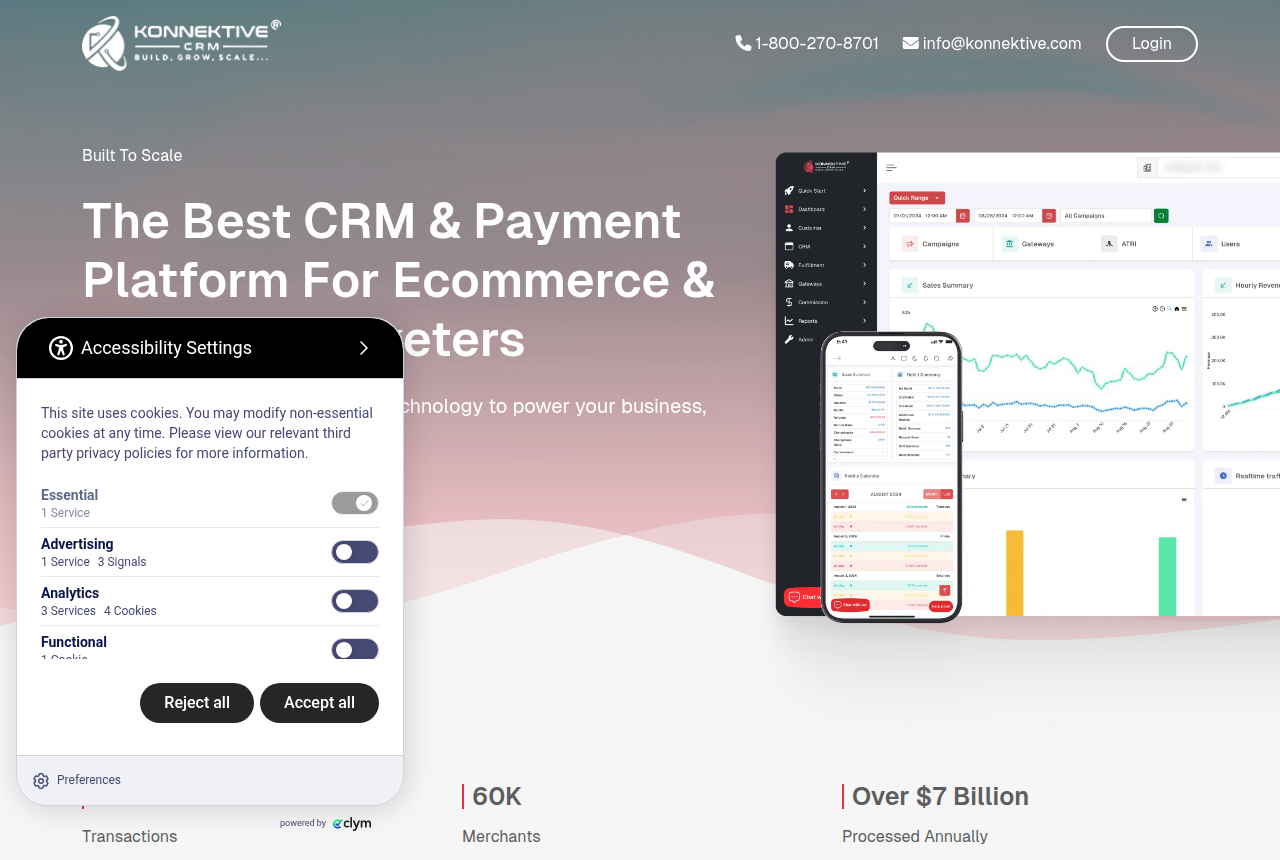
Konnektive expects the pages to be yours. The homepage says to create form code for your pages and capture partial data in real time. That page also lists an order entry system and call center operations. The homepage says its user data security is HIPAA-compliant for telemedicine, pharmacy and other health services. The gateway column is the other half of the pitch: Konnektive advertises 250+ payment processors and native support for 100+ currencies, and Checkout Champ's pricing page lists over 270 gateways.
A G2 reviewer wrote, "Learning curve is a little bit high, there are a lot of screens and pages to navigate to see the information you are looking for." A Trustpilot reviewer wrote, "the customer service being so responsive is what sets them apart completely from the competition."
Both homepages publish a scale line in the same range. Konnektive cites 200M+ transactions and 60K merchants. Checkout Champ's homepage cites 200M+ transactions a year and 60K+ active users. Read each line as that vendor's claim.
ElasticFunnels when the plan has to be public
ElasticFunnels is a funnel platform for teams that run paid traffic. It builds the pages, including a builder that generates a page from a prompt or clones one from a URL, and it rotates variants server-side under one campaign link so Meta, Google and TikTok keep that link. The checkout charges through Stripe, NMI, PayPal, Klarna or Authorize.net, and it can send a buyer on to ClickBank, JVZoo, BuyGoods, Digistore24, Shopify Checkout, Shop Pay or Cartpanda. Multi-MID routing splits the opening charge across that merchant's NMI accounts by weight. You can filter by card brand, product and amount, and each account can carry a daily cap. Upsells and rebills stay on the account that took the opening charge. Stripe, PayPal, Klarna and Authorize.net are one account each.
A click, an order, a rebill and a refund stay on one record, with the CRM, automations and a call center on that same data. Every feature is on every plan. Plans differ by page-view caps, brands, domains, seats and automation runs. The ElasticFunnels review is the long write-up. Buyers who want a headless back office set this platform next to Konnektive. The Konnektive alternatives page lists that kind of move.
It is newer than Checkout Champ and Konnektive, and there is very little independent third-party review coverage to check its claims against. Until you run real volume through it you are largely taking the vendor's word for it. That is what you would expect of a platform that has been around since 2023. The pages, the checkout and the trial are still yours to run on your own traffic.
What each one costs
Checkout Champ's pricing page prints Growth as a monthly base plus 1% of gross sales, on the card that lists 50k+ monthly sales. At $100,000 gross in a month, that 1% is $1,000, so the platform line is $1,300 before add-ons billed on their own. Enterprise keeps that monthly base and replaces the flat percent with a scale-based reduction, on the card that lists 1M+ monthly sales. The percentage steps are unpublished, so get them in the quote. The card is also on our Checkout Champ pricing page.
Konnektive prints no card on its site. The billing policy says every account is prepaid, and payment has to arrive before a billable product is activated. Subscription and service fees are non-refundable and will not be prorated. Email the cancellation request to admin@konnektive.com. The cancellation team has to close it. Our Konnektive pricing page records a directory starting point. That figure is a directory listing, and konnektive.com does not print it. If Sticky.io is the other continuity CRM you are weighing, read Konnektive vs Sticky.io.
ElasticFunnels publishes the plans. Starter is the From figure in the table. Growth is $197 a month and Scale is $497. Yearly bills are $937, $1,891 and $4,771. A 0.5% fee applies to revenue through its own gateways: Stripe, NMI, PayPal, Klarna or Authorize.net. Sales sent to ClickBank, BuyGoods, Digistore24, Shopify Checkout or Shop Pay sit outside that fee. The meter counts page views. Bots, datacenter hits and test runs are left off it. When usage goes over a limit, that extra usage is billed as an overage and you stay on the same plan. Pages, funnels and a custom domain can be set up during the trial named in the table. The plan table is on our ElasticFunnels pricing page.
Our pick
Checkout Champ
Checkout Champ is the pick when the pages need to be live and the price is already printed on the site, before a sales call. Konnektive is the one to buy when the landers already exist and the team wants the call-center back office.
Frequently asked questions
Is Checkout Champ the same product as Konnektive?
Can one team run Checkout Champ and Konnektive together?
Which one costs less at high volume?
Does either one offer a free trial?
Will Konnektive landers drop into the Checkout Champ builder?
Sources
From Checkout Champ and Konnektive
- https://checkoutchamp.com/features/crm
- https://checkoutchamp.com/about-us
- https://checkoutchamp.com/pricing
- https://checkoutchamp.com/
- https://konnektive.com/
- https://konnektive.com/terms/billing-policy.html
Other sources
3 discussions and reviews read for this page. Quotes are excerpts; open a link to read the original in context.
- [g2-k] Konnektive reviews on G2
- [g2-cc] Checkout Champ reviews on G2
- [tp-k] Konnektive on Trustpilot
How we compared these
We do not run paid campaigns through either tool. We read each vendor's documentation and pricing pages, verify the figures there, and weigh long-term reports from operators. The full rubric is on the methodology page.
Related reading
- Checkout Champ review
- Checkout Champ pricing
- Konnektive review
- Konnektive pricing
- Checkout Champ alternatives
- Konnektive alternatives
- Konnektive vs Sticky.io
- ElasticFunnels review
- ElasticFunnels pricing
- All head-to-head comparisons
- How we evaluate software
Comments
No comments yet. Questions and your own experience are welcome.
Thank you. Your comment will appear once it has been reviewed.