Head-to-head
RedTrack vs Voluum: paid social or native traffic
Start with the traffic you already buy. Social ads need the sale posted back to the ad account. Native, pop and push need each click sent to the right offer. Filter the junk first, or you pay for visits that were never going to convert.
By Marcus Flynn, tracking and attribution editor. Updated 23 October 2026.
Pick RedTrack when the spend is on Meta, TikTok or Google and the first plan has to post the conversion server-side and sync spend to the ad. Pick Voluum when you are cutting zones and publishers and you need fraud filtering on that traffic.
Quick answer
Pick RedTrack if you run paid social and need server-side CAPI plus ad-level spend sync on the plan you start on. Pick Voluum if you buy native, pop or push and need heavy click routing and fraud filtering.
- RedTrack. Paid social, with CAPI and spend sync on Solo
- Voluum. Feed traffic, with zone and publisher routing
Side by side
| Tool | Traffic | CAPI | Event | Entry plan | Trial | From |
|---|---|---|---|---|---|---|
| RedTrack | Paid social | Included on Solo | Clicks and conversions | Solo | 14-day trial | $169/mo |
| Voluum | Native, pop, push | On higher plans | Includes impressions | Profit | 14 days, no card | $119/mo |
RedTrack: pros and cons
What works
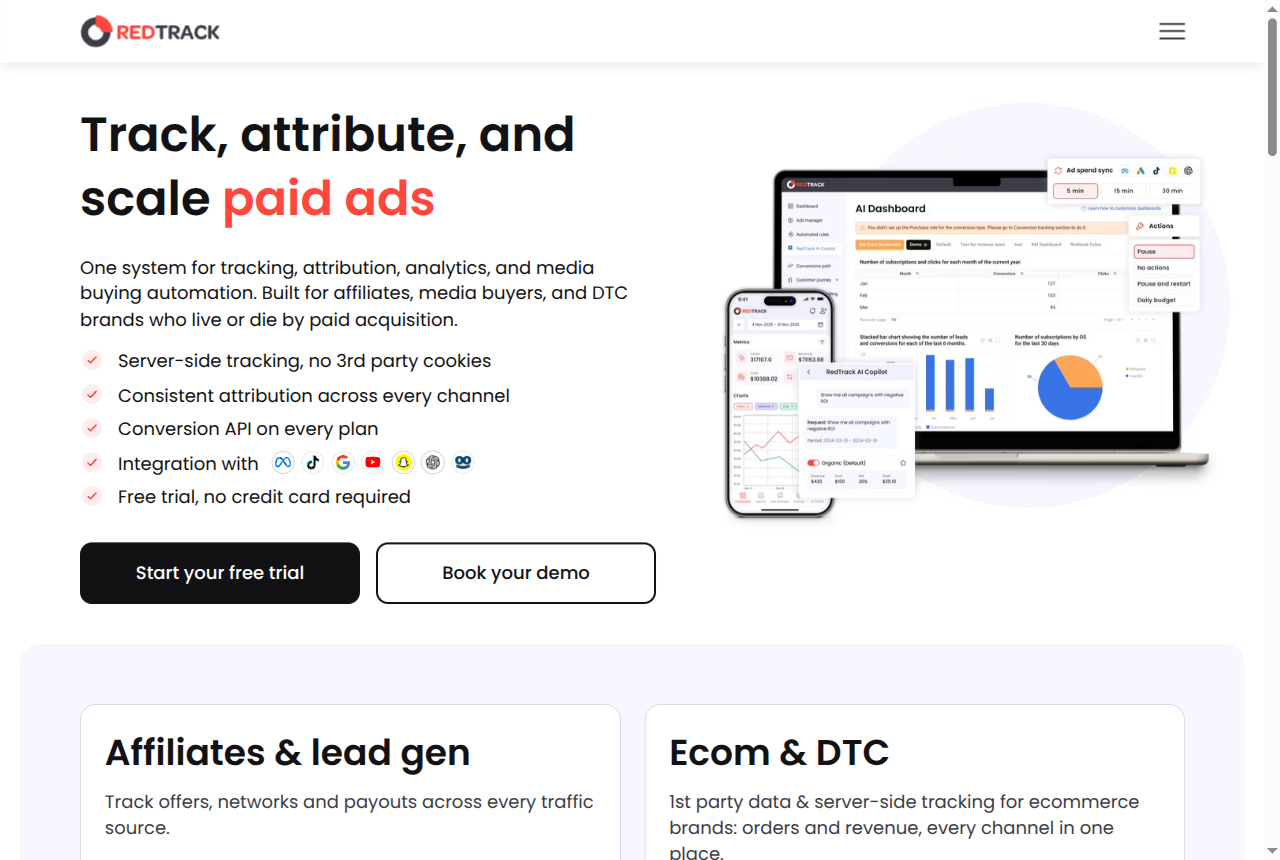
- Server-side CAPI for Meta, TikTok, Google and Snapchat is included on Solo.
- Ad-spend sync down to the ad level keeps ROAS and CPA tied to current spend instead of a figure hours out of date.
- One account can track affiliate offers and an owned store.
- The published tiers run from Solo through Enterprise, and the ecommerce line adds an Agency plan, so you can forecast the bill as seats and events grow.
What to watch
- Faster ad-spend sync, every 5 or 15 minutes, and the Ads Manager control layer are paid add-ons on top of the plan, so the real monthly cost at scale runs above the headline price.
- It is built as a media-buying tracker. Hyros is the better tool when the sale closes on a phone call weeks later.
- You supply the UTMs, the pixel and the CAPI setup. RedTrack shows what is broken and leaves the repair to you.
Voluum: pros and cons
What works
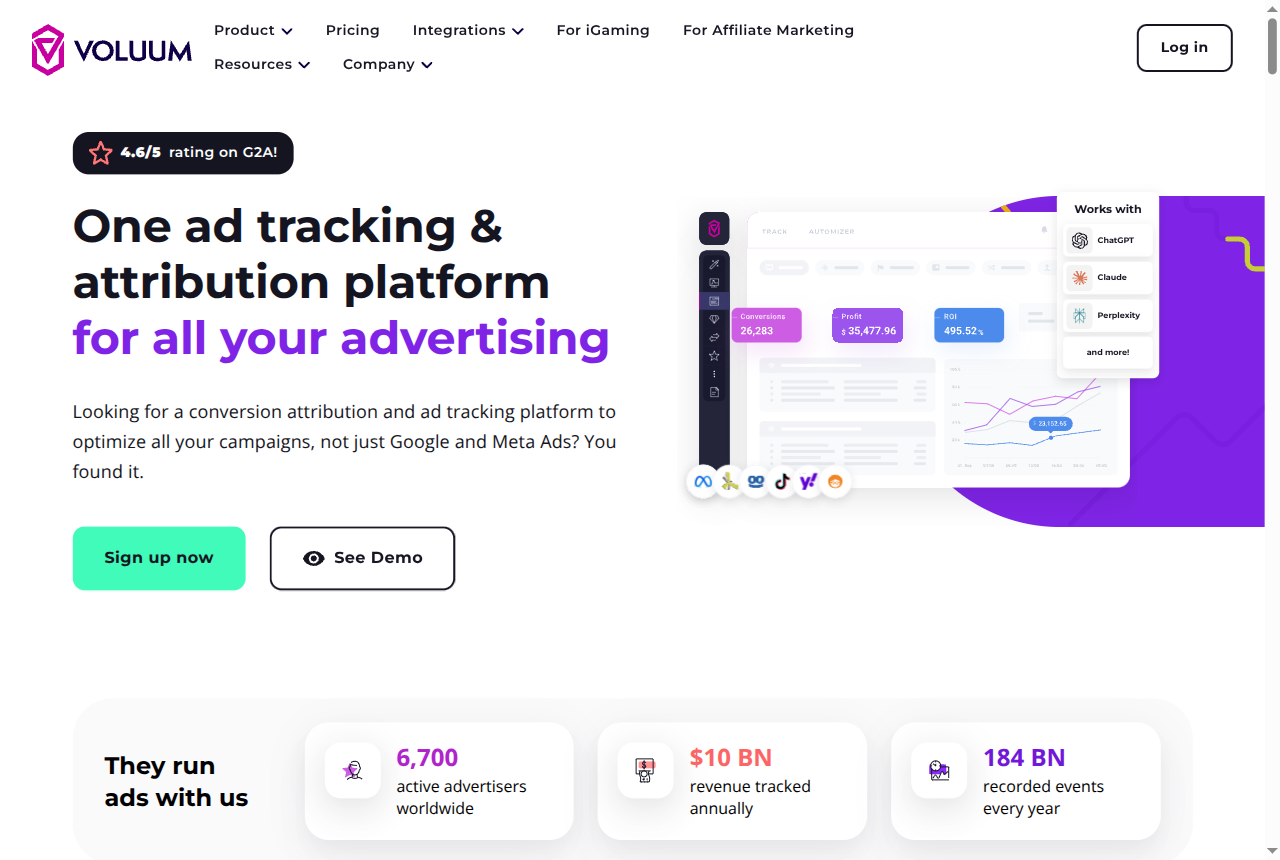
- Routing rules split traffic by zone, publisher, country, device and sub-ID.
- Cookieless tracking and server-to-server postbacks hold up on affiliate redirects, where a browser pixel often fails.
- The Anti-Fraud Kit flags suspicious traffic on its own, which matters most on native and pop inventory.
- It is cloud-hosted. Moving off an old tracker is built in, so you do not run a server.
What to watch
- Automizer, the automation layer, is billed on top of the plan.
- The deeper Meta integration is a higher-plan feature.
- The work it is built for is routing clicks and swapping offers and landing pages.
The real differences
Where the click is bought
RedTrack is for spend on Meta, TikTok and Google, where you read CPA in the ad account. Spend is pulled down to the individual ad every 60 minutes on Solo, and every 30 minutes on Team and Enterprise.
Voluum is the tracker for feed inventory. Rules route each visit by zone, publisher, country, device and sub-ID. The Anti-Fraud Kit is built for that traffic.
What gets posted back
Server-side CAPI for Meta, TikTok, Google and Snapchat is included on Solo, so a new RedTrack account can send conversions without moving up a tier. Voluum records a sale on an offer you do not own with a server-to-server postback. On the higher Voluum plans, that conversion can also be sent to Meta from the server. Voluum's Facebook conversion guide walks through the setup.
How an event is counted
RedTrack treats clicks, conversions and postbacks as events. Voluum treats impressions, visits, clicks and conversions as events. A million events in one tool is not a million events in the other. The units are different.
Which account gets which tracker
I would open RedTrack on a Meta, TikTok or Google account and Voluum on feed traffic. One tracker per click, because a second postback will also claim the sale.
What each one costs
The affiliate plans are Solo, Team and Enterprise.
- Solo. The monthly price is $169. A year paid up front is $1,420, a 30% discount, and the pricing page keeps that price when the year renews. The plan includes 5 million events, one user and five ad accounts on each ad platform. Overage is $0.04 per 1,000 events. RedTrack's pricing page lists these three plans.
- Team. Team costs $399 each month and $3,352 for the year. Coverage is 20 million events and five users. Extra events are $0.035 per 1,000.
- Enterprise. Enterprise is $999 monthly, or $8,392 billed once for the year. It covers 75 million events and 15 users. Past the cap, events are $0.025 per 1,000. Ads Manager and Scale Rules are included.
Each affiliate plan opens with a 14-day trial. Faster spend sync, and Ads Manager on Solo and Team, are add-ons. The add-on price depends on monthly ad spend.
Voluum Profit is $119 a month when the year is paid up front, with 1 million events, 20 active campaigns and $0.06 per 1,000 after the cap. Ten impressions count as one billable event. Scale is $299 a month on an annual bill. You get 14 days in Voluum before you pay, and signup skips payment details. Voluum's pricing page lists the plans.
Our pick
RedTrack
RedTrack is the pick if you buy Meta, TikTok or Google and need the conversion and the spend on the same ad. Voluum is the pick if the account is feed traffic and you cut visits by zone and publisher.
Frequently asked questions
Which one costs less to start?
Does RedTrack still sell a Builder plan?
Which tracker fits Facebook ads?
Does Voluum collect a card at signup?
What changed on this page
-
Builder is off the affiliate card. Plans are Solo, Team and Enterprise at the current list and annual rates. The pick stays RedTrack for paid social. Voluum has the lower published annual entry.
How we compared these
We do not run paid campaigns through either tool. We read each vendor's documentation and pricing pages, verify the figures there, and weigh long-term reports from operators. The full rubric is on the methodology page.
Related reading
Comments
No comments yet. Questions and your own experience are welcome.
Thank you. Your comment will appear once it has been reviewed.