Head-to-head
ClickFunnels vs GoHighLevel (2026)
Both are hosted all-in-ones whose entry plans cost the same each month. One is built around the checkout of an offer you own, the other around the CRM, texts and calls of a business that serves clients.
By Marcus Flynn, tracking and attribution editor. Updated 12 October 2026.
Pick ClickFunnels if you sell your own courses, coaching or digital products and want a checkout with order bumps and one-click upsells under one creator-focused login; pick GoHighLevel if you run an agency or a local business that lives in SMS, pipelines and separate client sub-accounts, and you will give it weeks of setup.
Quick answer
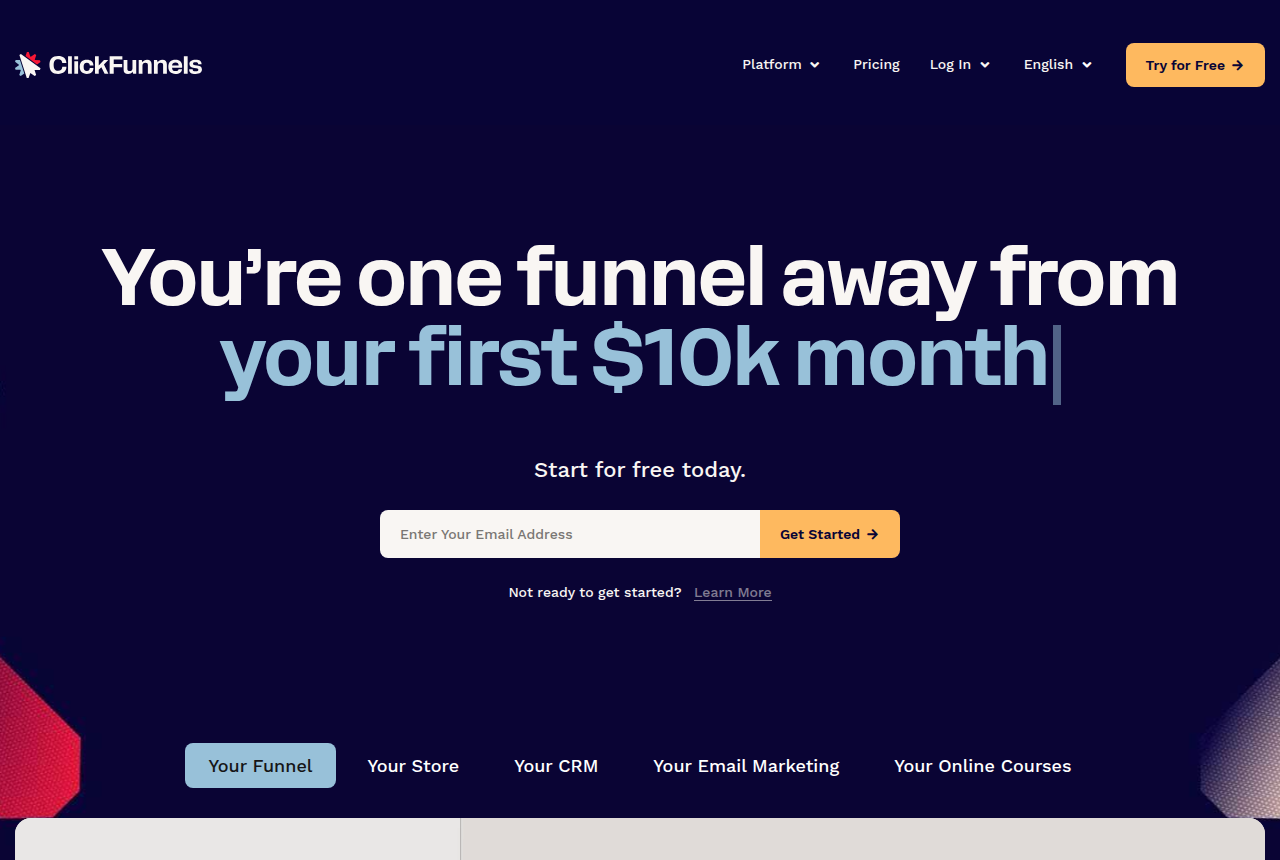
ClickFunnels is our top pick for most people. ClickFunnels is real and widely used: the vendor reports more than 100,000 users and over a million funnels built. The product you buy in 2026 is ClickFunnels 2.0, which puts hosted funnel pages, a checkout with order bumps and upsells, email, a CRM, courses and a community area in one account, with no cut of your sales. You will be glad you bought it if you sell courses, coaching or info products and want the whole funnel under one login. You may regret it if you expect the ease people remember from the Classic version, because long-term users report a steeper learning curve and bugs in 2.0, or if your list outgrows the contact cap on the plan you picked.
- ClickFunnels. Best for course creators, coaches and info-product sellers who want funnels, checkout, email and a member area in one hosted account. From $97/mo.
- GoHighLevel. Best for Agencies and service businesses that win clients through texts, calls and booked appointments. From $97/mo.
Side by side
| Tool | Built for | Contacts | Accounts | Extras | Trial | From |
|---|---|---|---|---|---|---|
| ClickFunnels | Creators selling their own offers | 10K on Launch, tiered up | 1 workspace on Launch | No cut of sales | Yes, length not stated | $97/mo |
| GoHighLevel | Agencies and service businesses | Unlimited on every plan | 3 on Starter, unlimited on higher plans | Usage wallet for SMS, calls, AI | 14 days | $97/mo |
ClickFunnels: pros and cons
What works
- Funnel sellers stay for the checkout. You get order bumps before the sale, one-click upsells and one-time offers after the buyer pays, and Smart Checkout pages in the account. Capterra reviewers name those features when they explain why they stay.
- One bill covers most of an info-product business. Funnels, a store, email marketing, automations, a CRM with pipelines, courses, community groups and appointment booking come in the same account, so a coach or course seller can drop three or four separate subscriptions.
- Your bill does not grow with your sales or your traffic. ClickFunnels takes no percentage of revenue, and every plan includes unlimited visitors and unlimited funnels, the second labelled a limited-time offer. The bill rises with contacts, emails, workspaces and team seats.
- You can try it before paying. Launch, Scale and Optimize each start with a free trial, and the pricing page promises your money back within 30 days, which lowers the cost of finding out it is the wrong fit.
What to watch
- ClickFunnels 2.0 is harder to learn than Classic and still has rough edges. G2 reviewers say the new version is harder to figure out, and long-term subscribers on Trustpilot describe bugs and workarounds for functions they expected at launch. Set aside time for setup, and build the funnel you actually sell during the trial. Someone new to ClickFunnels, with no Classic habits to unlearn, notices this the least.
- Contact caps move you to a higher plan. Launch allows 10,000 contacts, 50,000 emails a month, one workspace and two team members, so a growing list forces the move to Scale even when your funnels have not changed. A solo seller with a small contact list can stay on Launch for a long time.
- API access, webhooks and the custom code editor start on Scale. A team that wants to send orders into its own systems, or add its own scripts, needs Scale. The built-in third-party integrations are available on Launch too.
- The pitch, the training and the onboarding are written for creators launching a first funnel. Tying each sale to the ad that paid for it is a tracker's job, and paid-traffic teams usually run one beside ClickFunnels, as they do beside most funnel builders. A creator selling mainly to an email list may never need one.
GoHighLevel: pros and cons
What works
- One account covers what an agency usually pays several vendors for: a site and funnel builder, a CRM with pipelines, two-way SMS, calendars, payments, memberships and reputation management.
- Contacts and users are unlimited on every plan, Starter included, so a growing list or team leaves the price where it was.
- From the Unlimited plan up there is no cap on sub-accounts, so every client gets a workspace, and phone and email costs can be rebilled to clients at cost.
- Agency Pro adds SaaS mode, so an agency can resell the platform under its own brand with client sub-accounts created automatically.
- Sales run through gateways you already use, including Stripe, PayPal, NMI, Authorize.net, Square and Adyen, and none of the plans take a share of revenue.
- Small-agency owners on Reddit say it pays for itself once the setup hours are put in, and one credits it with saving the agency thousands in software.
What to watch
- Setup takes weeks. Long-term agency users warn it is far from a plug-and-play CRM, and pipelines and workflows have to be built before it earns its keep. Teams that arrive with a written follow-up process get there faster.
- The subscription is only part of the bill. SMS, voice, email and AI usage draw on a wallet, so an account that texts and calls leads every day pays more each month. Agencies on the two higher plans can pass those costs on to clients.
- Starter stops at three sub-accounts. A single business rarely needs more, and an agency moves up a tier when it signs its fourth client.
- Trustpilot reviewers report three faults: edits that only stick after a second save, another sub-account's data appearing after a switch, and automations firing minutes late. The late automations hurt speed-to-lead follow-up most.
- Ad attribution needs another tool. Meta and Google campaigns still need a tracker such as RedTrack to tie each sale to the click and campaign that paid for it.
- A solo operator with one offer gets a very large toolset to configure, and a hype-versus-reality thread calls it overkill and frustrating for a solo business.
The real differences
GoHighLevel vs ClickFunnels: what each one is built for
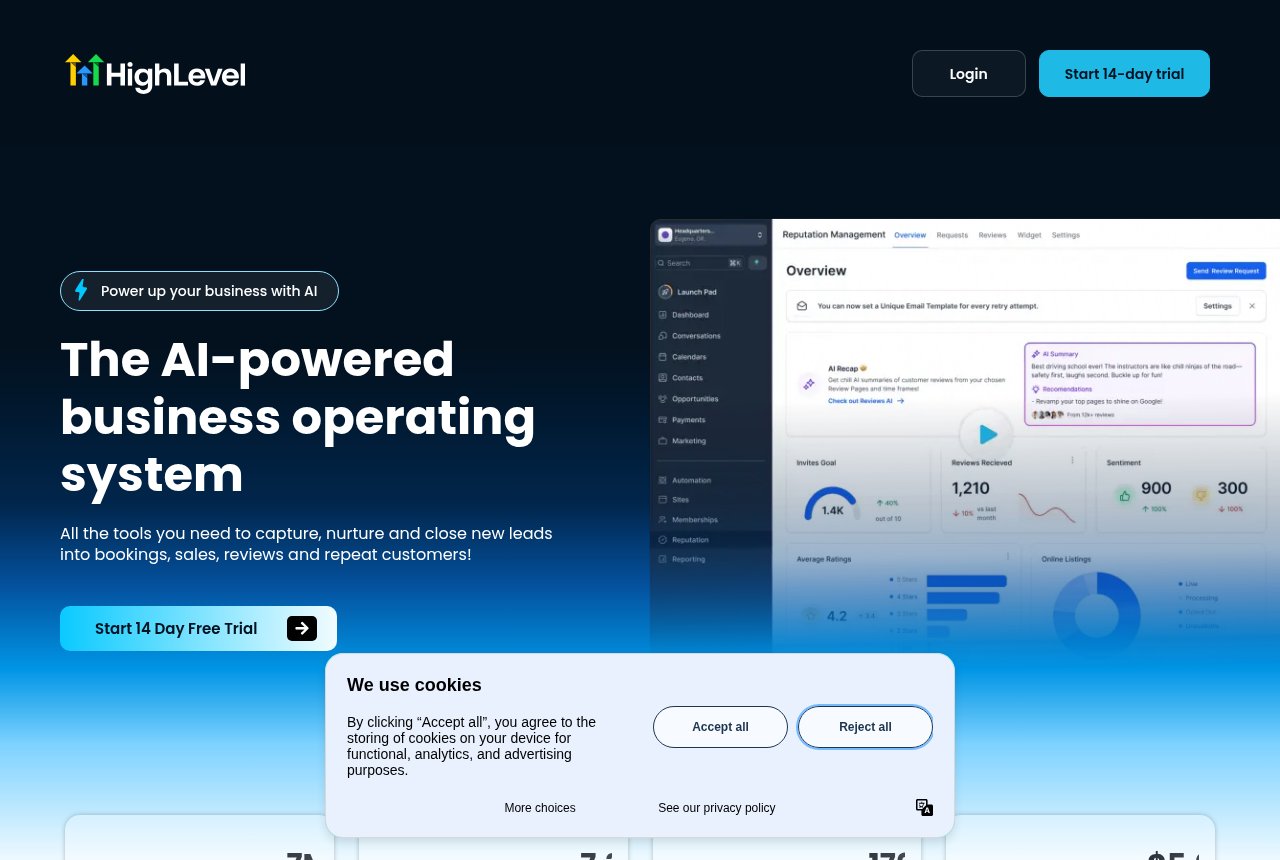
On a feature list the two overlap a lot. Both host funnel pages, take payments, send email, keep a CRM and run courses and communities. Their centre of gravity differs. ClickFunnels starts from the funnel and the checkout: Smart Checkout with an order bump before the sale and one-click upsells after it, built for a creator who owns the product. GoHighLevel starts from the lead: capture it, nurture it by email, text and phone, close it in a pipeline, then bring it back, which is how its own homepage describes the job.
Users who have weighed the two split them the same way. In one r/SaaS thread the advice was GoHighLevel for service businesses and ClickFunnels for info, education and digital businesses. That one line settles most readers before price comes up.
HighLevel vs ClickFunnels for agencies
If you build funnels for clients, GoHighLevel is the one designed for you. Each client gets a sub-account with its own contacts, pipelines and automations, and your team works across all of them from one agency login. Starter includes three sub-accounts. The Unlimited plan removes the cap and adds rebilling of phone and email at no markup. Agency Pro turns on SaaS mode, so you can sell the platform to clients under your own brand, with sub-accounts created automatically.
ClickFunnels counts workspaces instead: one on Launch, more on the higher plans. It is priced and trained around a business selling its own offers, and it has no equivalent of rebilling or reselling the software. An agency can run client funnels in it, but it will be managing them one workspace at a time.
The setup cost is the part agencies underrate. The r/gohighlevel thread titled after the thousands it saved one agency still calls it definitely not a plug-and-play CRM. Treat the 14-day trial as the time to build one client's real pipeline, end to end. Our GoHighLevel review covers who regrets it and why.
Funnels, checkout and follow-up
What happens after the opt-in decides most single-business cases. If the next step is a sale (a course, a coaching programme, a digital product), ClickFunnels puts more of its product into that moment. Order bumps, one-click upsells and one-time offers are part of every funnel, and they are what reviewers name when they explain why they stay.
If the next step is a conversation (a booked call, a quote, a reminder text, a review request), GoHighLevel puts that moment at the centre. Email, two-way SMS, calls, calendars and pipelines live on one contact timeline, and workflows move the lead from stage to stage. A dentist, a roofer or an agency running lead generation for either lives in that timeline all day.
If you buy your traffic
Neither tool is an ad tracker. Both record the sale, but tying each order to the campaign, ad set and ad that paid for it is the job of attribution software, and teams spending real money on Meta, Google or TikTok run one beside whichever builder they choose. Our ad tracking and attribution roundup ranks those tools.
Split testing deserves a check during the trial. None of the vendor pages we read describes testing page variants while the ad keeps pointing at one URL, so confirm how a test changes your ad links before you run one on live spend.
What users report after setup
Both have a learning curve, from different directions. ClickFunnels reviewers on G2 say the 2.0 version is a lot harder to figure out than Classic was, and long-term subscribers describe rough edges in the new build. GoHighLevel's complaints are about breadth: so many modules that the first weeks go into configuration rather than selling.
Bills grow on different triggers. ClickFunnels moves you up a plan when your list passes 10,000 contacts or 50,000 emails a month on Launch. GoHighLevel keeps contacts unlimited and charges for the texts, calls and AI you use. HighLevel's own comparison page leans on that difference, saying ClickFunnels 2.0 charges more as you grow. That is true of contacts, and it leaves out the usage wallet on its own side.
The full picture of ClickFunnels, plan by plan, is in our ClickFunnels review.
What each one costs
Both entry plans cost the same each month, and both vendors discount yearly billing. The table lines up the public plans of each.
| Plan | Monthly | Paid yearly | What changes at this tier |
|---|---|---|---|
| ClickFunnels Launch | $97/mo | $81/mo | 10K contacts, 50K emails a month, 1 workspace, 2 seats |
| ClickFunnels Scale | $197/mo | $164/mo | More contacts and workspaces, API and webhooks |
| ClickFunnels Optimize | $297/mo | $248/mo | Larger list, more workspaces and seats |
| GoHighLevel Starter | $97/mo | $970/yr | 3 sub-accounts, unlimited contacts and users |
| GoHighLevel Unlimited | $297/mo | $2,970/yr | Unlimited sub-accounts, rebilling at cost, basic API |
| GoHighLevel Agency Pro | $497/mo | $4,970/yr | SaaS mode, rebilling with markup, advanced API |
For one business the first year comes out almost level. ClickFunnels Launch is $1,164 at the monthly rate or about $972 paid yearly, and GoHighLevel Starter is $1,164 monthly or $970 for the year. The difference is in what pushes each bill higher.
ClickFunnels takes no percentage of your sales, so its bill moves only when you outgrow a plan's contacts, emails, workspaces or seats. GoHighLevel's plan price stays put as your list grows, while its wallet charges for every text, call, email send and premium AI action. A ClickFunnels team that needs the API moves up to Scale. Dominate, at $5,997 a year, is for large teams and is sold annually only.
On terms, GoHighLevel gives 14 days free on every plan and starts billing at the end unless you cancel. ClickFunnels offers a free trial on Launch, Scale and Optimize without stating its length, and refunds any plan within 30 days.
Prices and buying terms checked on each vendor's own pages, current as of 12 October 2026.
Our pick
ClickFunnels
ClickFunnels is real and widely used: the vendor reports more than 100,000 users and over a million funnels built. The product you buy in 2026 is ClickFunnels 2.0, which puts hosted funnel pages, a checkout with order bumps and upsells, email, a CRM, courses and a community area in one account, with no cut of your sales. You will be glad you bought it if you sell courses, coaching or info products and want the whole funnel under one login. You may regret it if you expect the ease people remember from the Classic version, because long-term users report a steeper learning curve and bugs in 2.0, or if your list outgrows the contact cap on the plan you picked.
Frequently asked questions
Can GoHighLevel replace ClickFunnels?
Which is cheaper on the entry plan?
Do I still need an ad tracker with either?
Is there a free trial on each?
Does ClickFunnels take a percentage of sales?
Sources
From ClickFunnels and GoHighLevel
- https://www.clickfunnels.com/pricing
- https://www.gohighlevel.com/
- https://www.gohighlevel.com/pricing
- https://www.gohighlevel.com/highlevel-vs-clickfunnels
Other sources
3 discussions and reviews read for this page. Quotes are excerpts; open a link to read the original in context.
How we compared these
We do not run paid campaigns through either tool. We read each vendor's documentation and pricing pages, verify the figures there, and weigh long-term reports from operators. The full rubric is on the methodology page.
Related reading
- ClickFunnels review for courses and info products
- ClickFunnels pricing, plan by plan
- ClickFunnels alternatives when neither tool fits
- SamCart vs ThriveCart if you only need checkout and upsells
- Builderall vs CartFlows, another funnel builder fork
- How we research these tools
- All head-to-head comparisons
Comments
No comments yet. Questions and your own experience are welcome.
Thank you. Your comment will appear once it has been reviewed.