Head-to-head
Rockerbox vs Measured
You are down to two enterprise measurement platforms, and on the surface they do the same job: both go past a last-click pixel, both are quoted after a demo, both reach offline media. The difference is which method they trust first, and how fine a number they hand you.
By Marcus Flynn, tracking and attribution editor. Updated 1 October 2026.
Pick Rockerbox if you want one platform that gives you a deduplicated, ad-level attribution read you can act on daily across a mostly-digital mix, cross-checked by marketing mix modeling and incrementality tests; pick Measured if your mandate is causal proof first and your budget leans on connected TV, audio and offline, where geo holdout experiments and a calibrated media mix model matter more than a per-campaign number.
Quick answer
Rockerbox is our top pick for most people. Our pick for the brand choosing between these two. Rockerbox is a unified measurement platform that puts multi-touch attribution, marketing mix modeling and managed incrementality tests on one SOC2-certified data foundation, now owned by DoubleVerify. The everyday layer is a deduplicated, user-level attribution read you act on daily and down to the campaign; the models are the proof behind it. The catch is a heavy, six-to-eight-week ramp, quote-based annual pricing, and numbers that are an independent estimate rather than a reconciliation to the ad platforms.
- Rockerbox. Best for Mid-market and enterprise brands running mostly-digital, cross-channel media that want one deduplicated attribution read cross-checked by models.
- Measured. Best for Mid-market and enterprise brands spending six figures a month across many channels that need causal measurement, not platform ROAS.
Side by side
| Tool | Core job | Method | Granularity | Track record | From |
|---|---|---|---|---|---|
| 1. Rockerbox | Unified measurement | User-level MTA, MMM & lift | Ad & campaign level | DoubleVerify-owned, 4.6/5 G2 | Not listed |
| 2. Measured | Causal measurement | Geo experiments + MMM | Channel level only | 4.9/5 G2, AdExchanger #1 | Not listed |
Rockerbox: pros and cons
What works
- Three measurement methods on one shared data foundation: MTA for daily optimization, MMM for budget planning and forecasting, and managed incrementality testing to prove causal lift. You cross-check a decision instead of trusting a single number.
- Reaches channels click trackers cannot. More than 100 integrations plus offline and hard-to-track media such as connected TV, linear TV, direct mail and podcasts, filled in with promo codes and post-purchase surveys.
- Independent, deduplicated, user-level attribution that reconciles the double-counting across Meta, Google and TikTok, exports the cleaned dataset to your own warehouse in BigQuery, Redshift or Snowflake, and is SOC2-certified.
- Credible and backed. Reviewers praise the cross-channel visibility and responsive support at 4.6 out of 5 on G2, the platform reports tracking billions in spend, and it is now owned by DoubleVerify.
What to watch
- Implementation is heavy and time-to-value is slow. Reviewers call the initial setup tedious and complicated, often needing developer or data support, and MTA or MMM take roughly six to eight weeks to become actionable. That weighs most on a lean team without dedicated data ops; a brand with an analyst who owns it will find the payoff worth the ramp.
- Quote-based enterprise pricing with no public price and no free trial. Contracts are annual and scale with your spend, and third-party benchmarks put a typical deal in the tens of thousands of dollars a year. Below meaningful multi-channel spend the ROI rarely covers it, though at scale the wasted spend it uncovers can.
- Its numbers will not match the ad platforms and can shift after the fact. Rockerbox's own docs treat variance under 10% as expected because of API revisions, delayed conversions and backfills. That independent read is the value, but it means reconciling models against backend revenue rather than taking one ROAS as truth.
- View-based, walled-garden channels like TikTok and YouTube are the hardest for it to measure cleanly, and some reviewers mention dashboard bugs and reporting glitches. That matters most if those view channels are your largest line items; for click-led channels the attribution is its strength.
Measured: pros and cons
What works
- Causal experiments and media mix modeling work together, so budget recommendations are checked against observed lift rather than trusted from one modeled number.
- Measures channels that may leave no useful click path, including connected television, audio, offline and upper-funnel media.
- The Media Plan Optimizer turns saturation and diminishing-return curves into channel-allocation recommendations.
- A serviced implementation gives the brand methodological support for experiment design, market selection and stakeholder adoption.
What to watch
- The vendor publishes no price, self-serve plan or free trial. Buyers start with a demo and need the full platform fee, experiment scope, onboarding work and contract terms in writing.
- Independent coverage flags a high entry barrier, so a small advertiser may not have enough spend, conversion volume or geographic spread for useful holdout tests.
- Onboarding is data-heavy. User reports describe substantial work gathering spend and outcome reports across networks before the first useful read.
- The output is modeled and experimental, so it will not reconcile to Meta, GA4 or Shopify. The vendor pages we checked do not promise to send conversions back to ad platforms.
The real differences
Two truth machines, one shared enemy
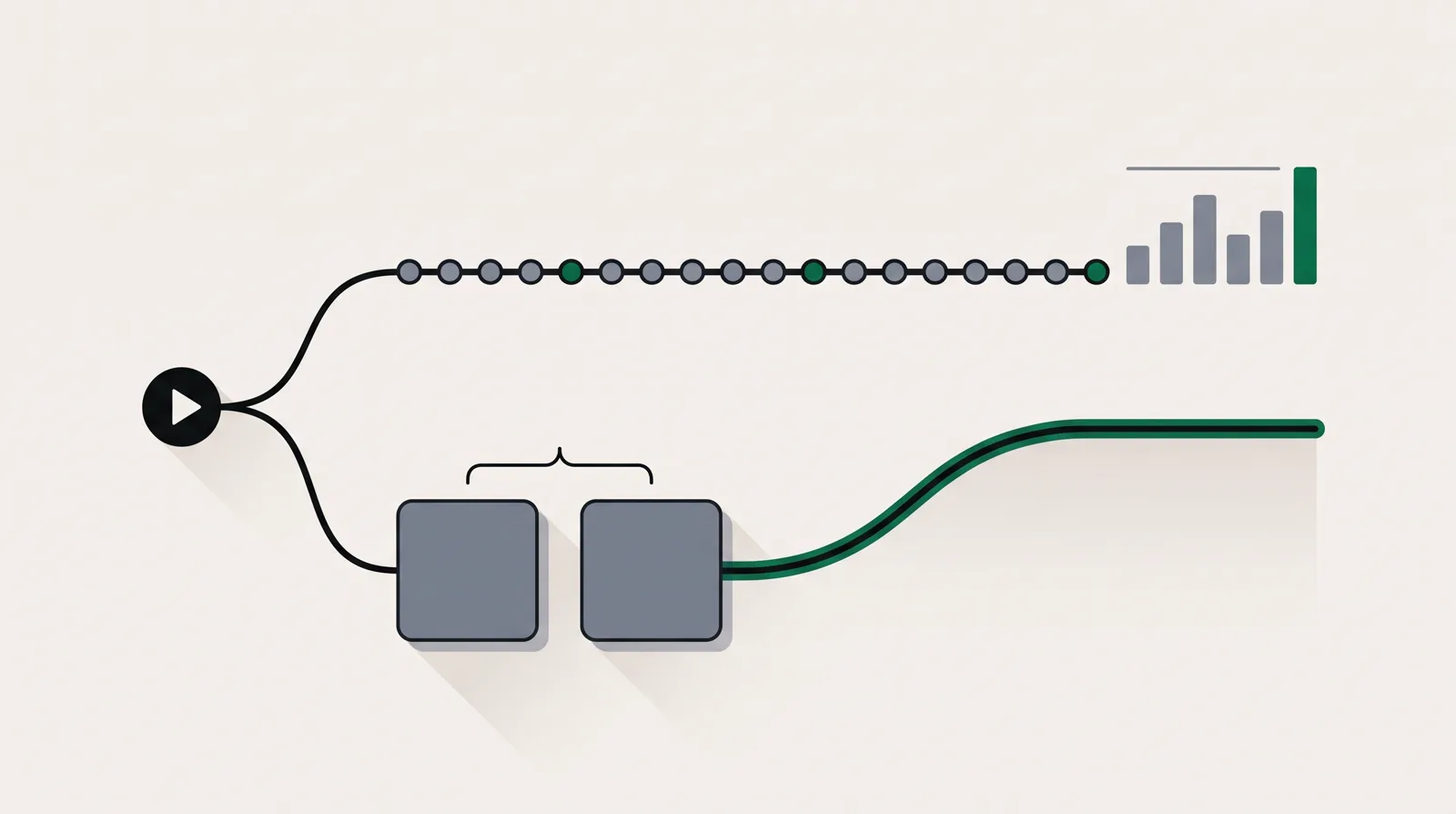
Both tools start from the same complaint: the conversions and ROAS your ad platforms report cannot be trusted, because iOS, ad blockers and cross-device journeys break the pixel and every channel claims the same sale. Both are sold after a demo, both reach media a click tracker never sees, and both are aimed at brands running many channels at once. The split is not whether they go past the pixel. It is which method they trust first, and how fine a number they hand you. Rockerbox leads with attribution: a deduplicated, user-level read of every touch, refreshed daily, that you act on this week, with marketing mix modeling and managed incrementality tests as the cross-checks. Measured refuses to lead with attribution at all. It trusts causal experiments first, calibrates a media mix model to them, and hands you a channel-level budget answer rather than a per-campaign one. That is the whole decision.
What Rockerbox is built to do
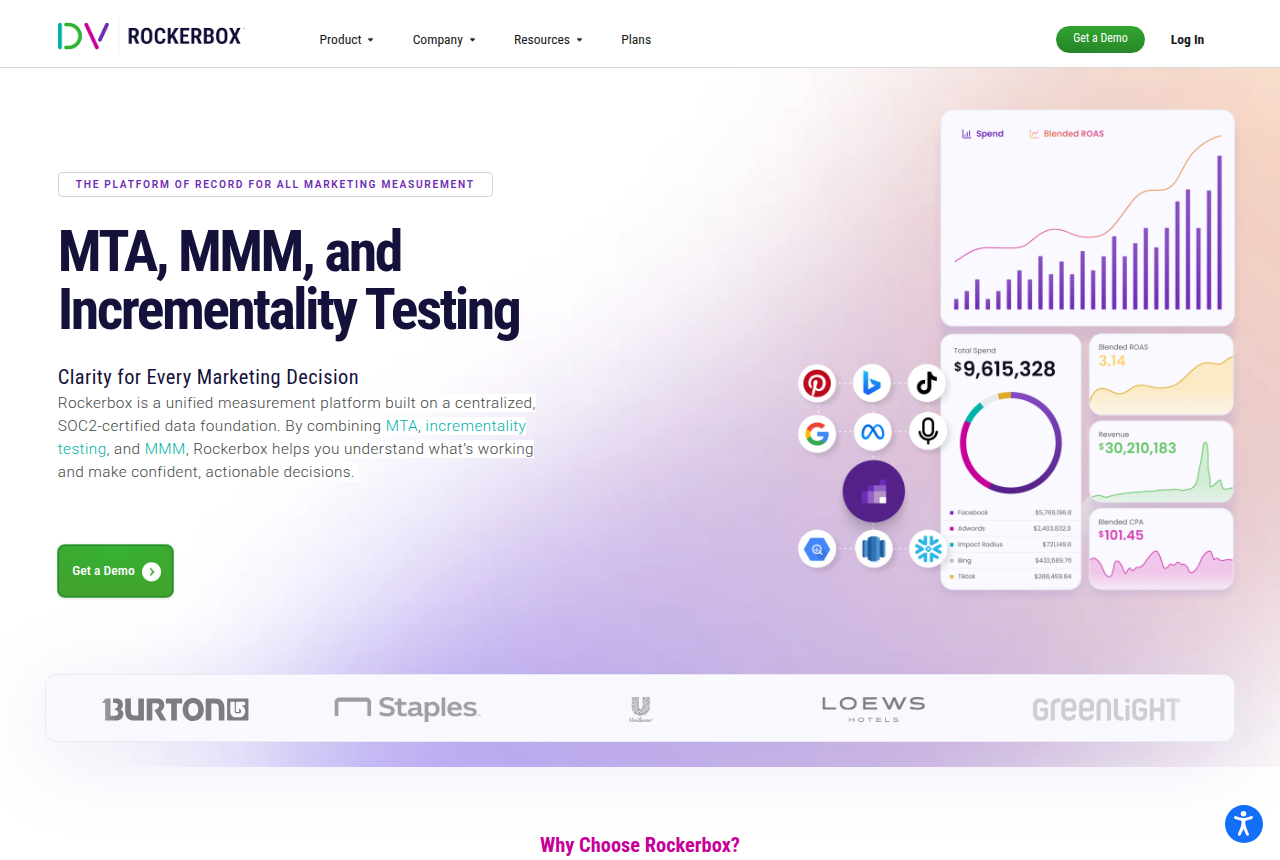
Rockerbox is a unified measurement platform, and it says so plainly: a "unified measurement platform built on a centralized, SOC2-certified data foundation." The everyday layer is multi-touch attribution. Its own words are "de-duplicated, user-level attribution that reconciles all touchpoints back to a single source of truth across your entire marketing mix," which means one deduplicated read across Meta, Google, TikTok, email and affiliates that resolves the double-counting, refreshed daily and granular to the ad and campaign. On top of that sit marketing mix modeling for budget planning and forecasting, and managed incrementality tests to prove causal lift, so a decision is cross-checked instead of trusted from a single number. It reaches beyond click channels with more than 100 integrations plus offline and hard-to-track media, connected TV, linear TV, direct mail and podcasts, filled in with promo codes and post-purchase surveys. It exports the cleaned dataset to your own BigQuery, Redshift or Snowflake warehouse, it is SOC2-certified, and it is now owned by DoubleVerify. Reviewers put it at 4.6 out of 5 on G2 and single out the cross-channel visibility and responsive support.
What Measured is built to do
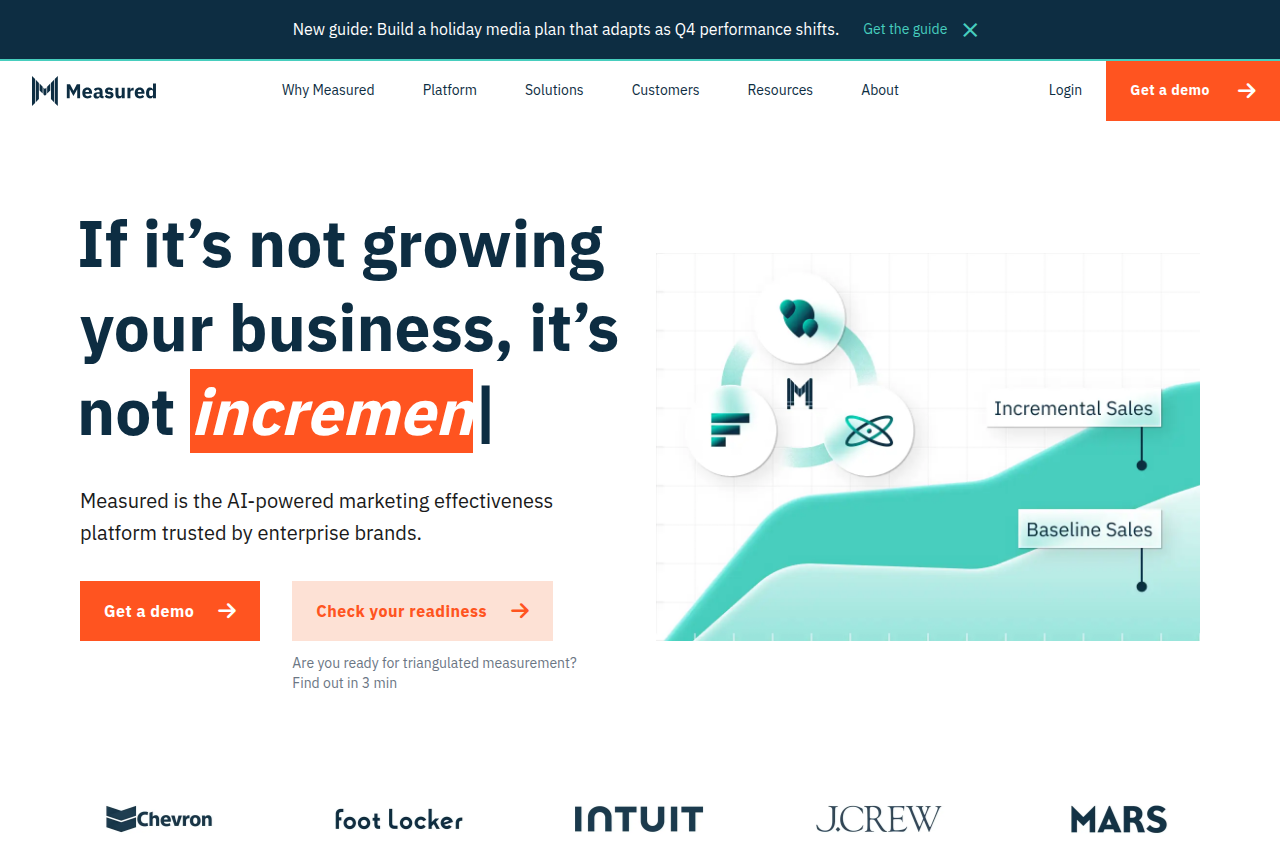
Measured is a media-effectiveness platform for mid-market and enterprise brands, and it fires no pixel and follows no user. It answers a harder question than any tracker: across Meta, Google, TikTok, connected TV, affiliates, email and offline, which channels are actually causing sales, and which are taking credit for sales that would have happened anyway. It does that with causal geo holdout experiments, feeds the results into a test-calibrated media mix model, then turns the model into channel-allocation guidance through its Media Plan Optimizer. Because it measures lift rather than touches, it can value channels that leave no useful click path at all, linear and connected TV, audio, offline and upper-funnel prospecting, and its saturation curves show where added spend stops paying off. The implementation is serviced, so a brand gets methodological help with experiment design, market selection and getting stakeholders to trust the read. AdExchanger voted its revamped platform first in measurement and analytics, and enterprise brands rate it 4.9 out of 5 on G2. What it does not do is give you a per-order number or send conversions back to the ad auctions; the vendor pages we read describe testing, modeling and planning, not a conversion feed.
The line that actually separates them
This is where two platforms that look like peers stop being interchangeable. Rockerbox hands you an attribution dashboard you act on daily, down to the campaign, and treats MMM and lift tests as the proof behind it. Its honest catch is that the number is an independent estimate, not a reconciliation: Rockerbox's own docs treat variance under 10% against the ad platforms as expected, because of API revisions, delayed conversions and backfills, and its view-based, walled-garden channels like TikTok and YouTube are the hardest for it to read cleanly. Measured starts from the opposite conviction, that only a controlled experiment proves a channel caused a sale, so it will not give you a per-touch number to act on this afternoon. Its experiments take weeks to read, and its output is channel-level, not ad-level. The trade is directness for defensibility. Rockerbox gives a granular answer fast that you refine; Measured gives a slower, boardroom-proof answer about where the budget should go, and nothing you can push into an auction.
Where scale and mix settle it
Both need real, multi-channel spend before either pays for itself, and neither is a fit for a small store that just wants a ROAS dashboard. Within that, the mix decides it. Rockerbox suits the mid-market brand whose spend is mostly digital and adding offline, that wants one deduplicated attribution read the whole team uses each week, cross-checked by models when a big budget call comes up, and that values broad integrations, a warehouse export and DoubleVerify's backing behind the number. The catch is the ramp: reviewers call setup tedious, and MTA or MMM take roughly six to eight weeks to become actionable, which weighs most on a lean team without data ops. Measured suits the larger advertiser whose mandate is causal proof first, whose mix leans on connected TV, audio and offline where per-touch attribution is impossible anyway, and who has enough spend and geographic spread for holdout tests to read; third-party analysis puts the practical floor around six figures of monthly media. On this site's roundup Rockerbox ranks ahead of Measured, and for the brand genuinely choosing between the two that is the right default, because it does more jobs on one foundation and gives an everyday number you can act on. Measured wins the narrower, larger mandate, where a modeled channel-level truth proven by experiment is exactly the deliverable.
When neither is the shape of your problem
Both tools here measure. Neither builds the page the traffic lands on or hosts the checkout that takes the money, and if the offer runs on a video sales letter, neither sees inside it. Two tools worth knowing sit on that side of the line.
ElasticFunnels is a funnel platform for teams running paid traffic: it builds the pages, hosts the checkout with order bumps, one-click upsells, subscriptions and multi-MID routing, and keeps the click, the order, the rebill and the refund on one data layer with a CRM and attribution. Its lead feature is same-URL split testing: variants rotate server-side under one campaign link, so Meta, Google and TikTok keep their learning and a test never resets the ad's optimization by sending traffic to a new address. It starts at $97 a month with a 14-day trial that takes no card, every feature is on every plan, and plans differ by traffic. The honest caveat is that it is newer than the measurement platforms here and there is very little independent third-party review coverage yet, which is what you would expect of a platform this recent, so until you run real volume through it you are largely weighing the vendor's own account rather than a stack of outside reports.
TrackPlay matters if the offer runs on a video sales letter, which both an attribution platform and a media mix model are blind to inside the video. It is a VSL player and analytics platform that ties every second watched to who actually bought, draws retention per second split into buyers and non-buyers, and posts the cart-verified sale back to Meta, TikTok and GA4 on the play that earned it. It has a no-card free tier of 1,000 plays a month and paid plans from $29 a month. It is narrow by design, though: built for paid-traffic VSL conversion, it is not a general video host or a B2B content library and has none of the channels or webinar tooling of a Wistia, so it is the wrong tool if the video's job is content marketing rather than a direct-response sale.
What each one costs
Rockerbox publishes no price and runs no free trial. You book a demo, the team scopes and installs it, and the quote is an annual contract that scales with your spend and channel count. Third-party benchmarks put a typical deal in the tens of thousands of dollars a year. Budget for the ramp as much as the licence: reviewers describe the initial setup as tedious, and MTA or MMM take roughly six to eight weeks to become actionable, which is real cost in analyst time before the platform earns its keep.
Measured is gated higher and just as opaque. G2 records that the company has not provided pricing information, so there is no headline number to compare; buying starts with a demo and an annual contract, and independent analysis flags a high minimum spend barrier, with a working threshold around six figures of monthly media. Below that the holdout tests do not have the spend or geographic spread to read cleanly, so the platform cannot do its job. Neither tool lets you validate it on your own data before you sign, so ask each for two or three references from brands like yours.
Prices and buying terms checked on each vendor's own pages, current as of 30 September 2026.
Our pick
Rockerbox
Our pick for the brand choosing between these two. Rockerbox is a unified measurement platform that puts multi-touch attribution, marketing mix modeling and managed incrementality tests on one SOC2-certified data foundation, now owned by DoubleVerify. The everyday layer is a deduplicated, user-level attribution read you act on daily and down to the campaign; the models are the proof behind it. The catch is a heavy, six-to-eight-week ramp, quote-based annual pricing, and numbers that are an independent estimate rather than a reconciliation to the ad platforms.
Frequently asked questions
Do Rockerbox and Measured send conversions back to the ad platforms?
Is Rockerbox or Measured cheaper?
What is the real difference in method?
Which handles offline and connected TV better?
Can I try either before I commit?
Sources
From Rockerbox and Measured
- https://www.rockerbox.com/
- https://www.measured.com
- https://www.measured.com/incrementality-testing/
- https://www.measured.com/media-plan-optimizer/
Other sources
3 discussions and reviews read for this page. Quotes are excerpts; open a link to read the original in context.
How we compared these
We do not run paid campaigns through either tool. We read each vendor's own documentation and pricing, verify every number against the source, and weigh the long-term reports of operators who run them at real spend. The full rubric is on the methodology page.