Head-to-head
ElasticFunnels vs Builderall
Two platforms, two very different bets. One builds paid-traffic funnels on a single data layer. The other bundles more than 25 marketing tools into one cheap login.

By Marcus Flynn, tracking and attribution editor. Updated 3 October 2026.
Pick ElasticFunnels if you run paid traffic and want your pages, same-URL split testing, checkout and attribution on one record; pick Builderall if you are a beginner or solopreneur who wants websites, email, courses and a basic funnel builder bundled cheaply under one login.
Quick answer
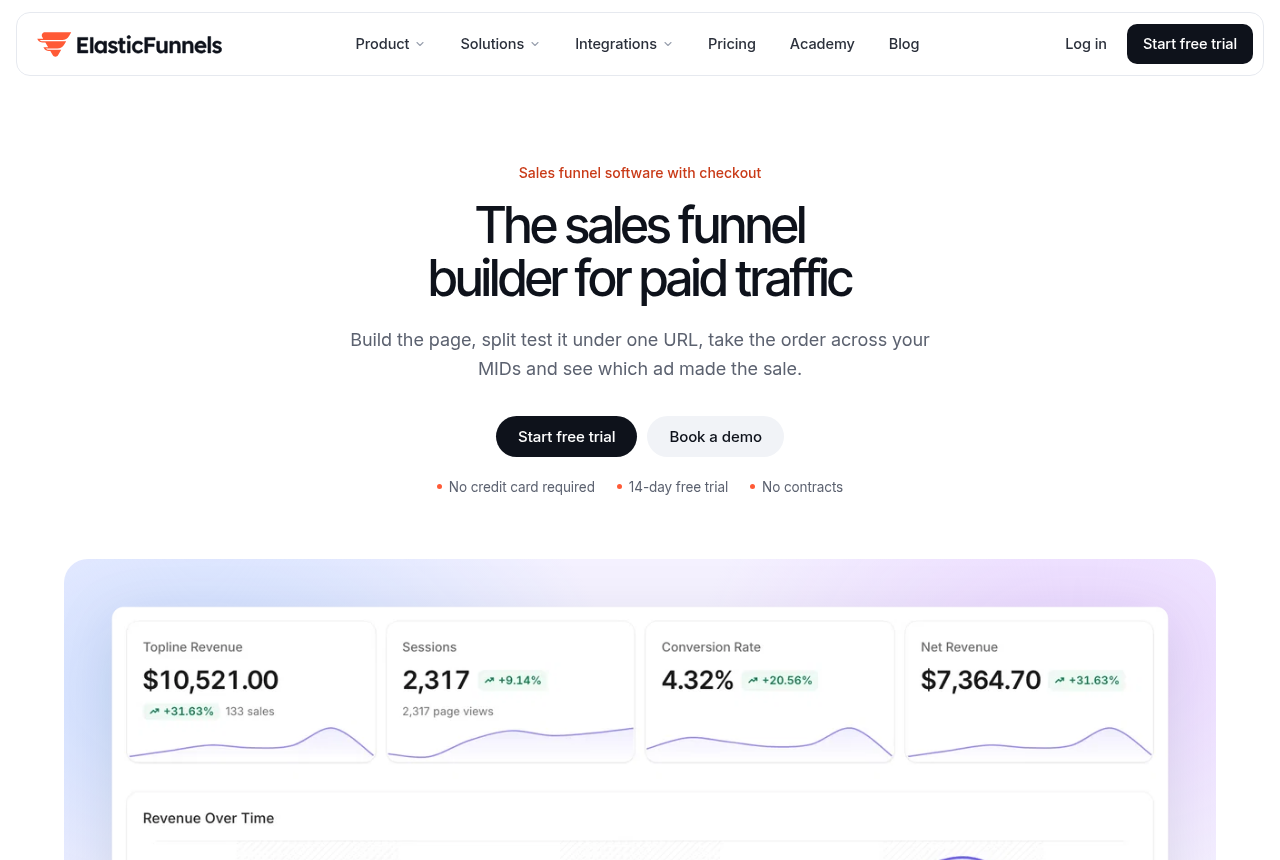
ElasticFunnels is our top pick for most people. ElasticFunnels is a funnel platform for teams that buy traffic. It builds the pages, split-tests them under one URL, hosts the checkout with order bumps and multi-MID routing, and keeps the CRM, automations and attribution on the same data layer. It tops this list for a reason a tracker bolted onto a separate stack cannot match: a click, an order, a rebill and a refund are one record, so revenue reports per ad, page and variant without stitching four exports together. It is the pick when you are building the funnel anyway and want the numbers to come from the same place the sale happened.
- ElasticFunnels. Best for Attribution built into the funnel. From $97/mo.
- Builderall. Best for beginners and solopreneurs who want one cheap platform that bundles websites, funnels, email and more instead of a stack of specialist tools.
Side by side
| Tool | Funnel builder | Checkout | CRM | Same URL | Free trial | From | |
|---|---|---|---|---|---|---|---|
| 1. ElasticFunnels | Yes | Multi-MID | Yes | Yes | Yes | 14 days | $97/mo |
| 23. Builderall | Advanced+ | Supercheckout | Advanced+ | MailingBoss | No | No | Not listed |
ElasticFunnels: pros and cons
What works
- Pages, split testing, checkout, CRM and attribution sit on one data layer, so a click, an order, a rebill and a refund are one record instead of four exports you reconcile by hand.
- Same-URL split testing rotates variants server-side under one campaign link, so Meta, Google and TikTok keep their learning and a test never sends the ad back through review.
- Revenue, EPC and ROAS report per ad, page and variant, and sales post back to Meta, Google and TikTok from the same record the order lives on.
- Every feature is on every plan. You pay by traffic, and the checkout, the CRM and the call center are not gated behind a higher tier.
What to watch
- Newer than the platforms it competes with, and there is very little independent third-party review coverage to check its claims against. Until you run real volume through it you are largely taking the vendor's word for it. That is what you would expect of a platform this new, so use the 14-day trial to verify the numbers on your own traffic before you commit a live campaign.
- Because it hosts the funnel, it fits teams building their pages and checkout here. If your pages and cart already live somewhere else and you only want a tracking layer on top, a standalone click tracker is the lighter buy for that job.
- EF-hosted checkouts carry a 0.5% fee on the revenue that runs through them. Sales on external platforms and affiliate networks such as ClickBank or BuyGoods are not charged.
Builderall: pros and cons
What works
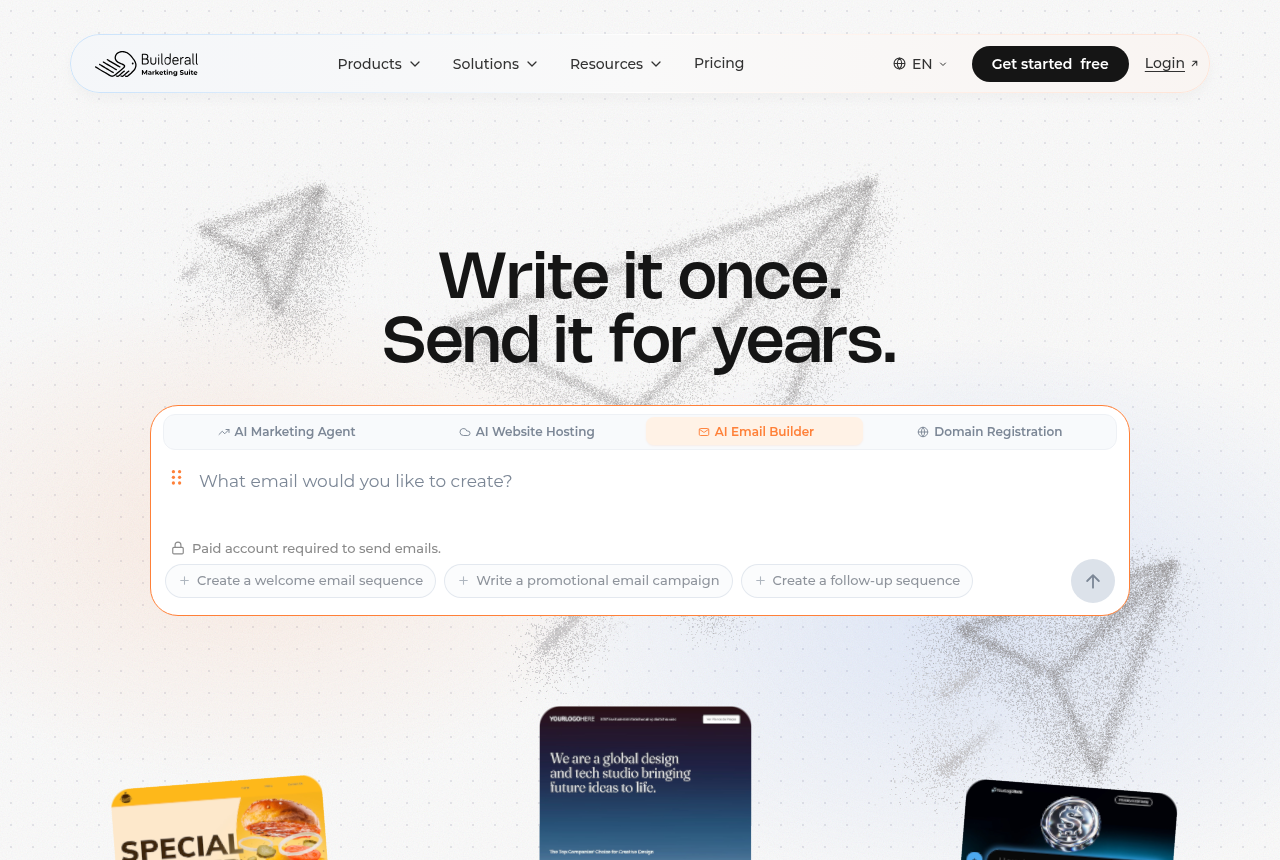
- A genuinely broad bundle at a low price. More than 25 tools on one login: website and funnel builder, MailingBoss email, Supercheckout, booking, chatbot, courses, and webinars on the top plan. Budget-conscious users report replacing a stack of separate subscriptions with one, and Capterra reviewers call it the one-stop place for their marketing tools. For a beginner who wants one bill instead of five, that consolidation is the real draw.
- It is a real, established platform, not vaporware. Builderall advertises more than two million accounts and a builder that has shipped for years, and value-for-money is its strongest score on Capterra even where support and ease-of-use lag. If your question is whether it is real and will still be here, the answer is yes.
- Email marketing is built in. MailingBoss ships inside the platform, so forms, funnels and checkouts feed the same list with no third-party sending fees and no connectors to maintain. For a solopreneur that removes a whole separate subscription from the stack.
- Every plan has a 30-day money-back guarantee. There is no free trial, but you can buy, build on the real product, and get a refund inside the window if it is not the right fit. Use it to test the specific tools you care about before you commit, because the guarantee is usable once per account.
What to watch
- Jack of all trades, master of none. Reviewers repeatedly describe the individual tools as adequate but not excellent, and one honest review estimates most buyers will not use the majority of the features because specialist tools do them better. If you need a top page builder, email platform or webinar tool, Builderall's version will feel like a compromise. It matters less to a beginner who values one place over depth in any single tool.
- Occasional bugs and slow performance. Independent reviews and verified users report glitches, slow page loads, and a dashboard that gets sluggish with many apps open, with one reviewer calling the email system a disaster. Budget for patch days. This hits a complex multi-step funnel harder than a simple one-page site.
- Support and billing are the loudest complaints. Support draws criticism for slow replies and tickets that drag on, and Trustpilot and Capterra carry repeated reports of charges continuing after cancellation and refunds being hard to get once the 30-day window closes. Cancel in writing well before renewal and keep the confirmation.
- An affiliate-recruitment-heavy business model. Builderall pushes its own affiliate program hard, and industry watchers place it in the marketing-tools MLM niche, with some affiliates reporting withheld recurring commissions. None of that stops the software working, but it means many of the glowing reviews online are written by people paid to promote it, so weigh the independent ones more heavily.
The real differences
Two platforms built for different people
If you are down to these two, the first thing to settle is that they are not really competing for the same buyer, whatever the words one platform on both home pages suggest. ElasticFunnels is a funnel platform for teams that run paid traffic: affiliates, product vendors, agencies and ecommerce brands. It builds the pages, including an AI builder that can generate a page from a prompt or clone one from a URL, split-tests those pages under a single URL, hosts the checkout, and keeps the CRM, automations and attribution on the same data layer as the sale. Builderall is a bundled marketing suite that packs more than 25 tools behind one login and one low bill: a website and funnel builder, MailingBoss email, Supercheckout, booking, a chatbot, courses, and on the top plan webinars and video hosting. One is built to make paid traffic convert; the other is built to replace a stack of starter subscriptions. See the full ElasticFunnels review and the full Builderall review for the detail on each.
Same-URL split testing is the real fork
This is the feature that separates ElasticFunnels from almost every bundled suite, Builderall included. Its variants rotate server-side under one campaign link, so Meta, Google and TikTok keep the learning they have built on that ad and a test never sends the creative back through review. For an operator spending real money on traffic, that is not a nice-to-have. A traditional split test that spins up a second URL resets the ad's learning and can trigger another review cycle, which costs you days and budget at exactly the wrong moment. Builderall does not advertise same-URL testing, so if your work is testing landers and angles at scale, this one capability can outweigh a lot of what is in the wider bundle.
Checkout, and keeping the money on one record
Both platforms host a checkout, but they are aimed at different jobs. ElasticFunnels hosts the cart itself with order bumps, one-click upsells, subscriptions and multi-MID routing, and because the pages, the cart and the reporting share one data layer, a click, an order, a rebill and a refund are a single record. That means revenue, EPC and ROAS report per ad, page and variant without reconciling four exports by hand, and sales post back to the ad platforms from the same record the order lives on. Builderall's Supercheckout handles payments and connects to its email and funnel tools, which is enough for a solopreneur selling a course or a simple product. What it does not do is the deeper direct-response checkout work, the multi-MID routing and chargeback handling, that a team processing serious volume leans on.
Breadth versus depth
Builderall's real strength is breadth at a price. More than 25 tools on one login and one bill is a genuine draw for a beginner or solopreneur who would otherwise wire together five separate subscriptions, and value-for-money is its strongest score on Capterra. The recurring knock from reviewers is the trade that breadth brings: jack of all trades, master of none. The individual tools are described as adequate rather than excellent, and one honest review estimates most buyers will not use the majority of the features because specialist tools do each job better. Independent reviews also report occasional bugs and slow performance, support that can be slow to reply, and billing complaints about charges continuing after cancellation. Weigh the online praise carefully, too: industry watchers place Builderall in the marketing-tools MLM niche, so a large share of the glowing reviews are written by affiliates paid to promote it.
ElasticFunnels narrows its scope on purpose. It is not trying to be your website host, your course platform and your webinar tool. It is trying to make a paid-traffic funnel convert and to show you which ad, page and variant made the money. The honest caveat is the other side of being focused and new: it is newer than the platforms it competes with, and there is very little independent third-party review coverage to check its claims against yet. Until you run real volume through it you are largely taking the vendor's word for it. That is what you would expect of a platform this new, and the 14-day trial with no card exists precisely so you can verify the numbers on your own traffic before you commit a campaign.
If the video is doing the selling
One gap neither platform fills squarely is the video sales letter. If your offer runs on a VSL, TrackPlay is worth a look alongside whichever platform you build on. It is a VSL player and analytics tool for paid-traffic funnels that draws per-second retention split into buyers and non-buyers, ties every play to the sale, and posts the cart-verified conversion back to Meta, TikTok and GA4 on the play that earned it. It drops into any funnel builder behind one embed, so it sits in front of an ElasticFunnels or a Builderall funnel alike. It is narrow by design, though: built for paid-traffic VSL conversion, it is not a general video host or a B2B content library, so it has none of the channels, SEO pages or webinar tooling of a Wistia, and it is a poor fit if the video's job is content marketing rather than a direct-response sale. It bills on plays and has a no-card free tier of 1,000 plays a month to try first.
Who each one is for
ElasticFunnels is the pick for an operator running real paid traffic who wants the build and the numbers in one place: same-URL split testing that protects ad learning, a direct-response checkout with multi-MID routing, and attribution that reports per ad and variant because the sale and the tracking share a data layer. Its cost is that it hosts the funnel, so it fits teams building their pages and cart here rather than bolting a layer onto a stack that already lives elsewhere, and it asks you to prove it on your own traffic because the outside proof is still thin. Builderall is the pick for a beginner or solopreneur who values one cheap bill and one place for a website, email, a course and a simple funnel over specialist depth, and who can live with the rough edges in support and billing. Start from the job, not the feature list.
Still weighing the wider field? See the best ad tracking and attribution software, browse every head-to-head, or read where Builderall's real rivals sit.
What each one costs
ElasticFunnels is priced by traffic, not by feature, and every feature is on every plan. Starter is $97 a month and includes 5 custom domains, 50,000 visits and 10,000 automation runs a month. Growth is $197 a month with 15 domains, 250,000 visits, 50,000 automation runs and priority support. Scale is $497 a month with 50 domains, 500,000 visits, 200,000 automation runs and a dedicated success manager. Crossing a limit bills overage rather than forcing an upgrade: extra visits are $1.20 per 1,000, extra domains $5 each a month, extra automation runs $3 per 1,000. Checkouts hosted on ElasticFunnels carry a 0.5% fee on the revenue that runs through them; sales on outside platforms and affiliate networks such as ClickBank or BuyGoods are not charged. There is a 14-day free trial with no credit card, and you can build pages, funnels and a custom domain inside it.
Builderall is priced by tier and by how many subscribers you hold, billed annually and quoted in euros with the currency localized by region. Core is about €7.50 a month, but that tier is a basic website only, with no email and no funnel builder. Essentials is about €21.75 a month and adds MailingBoss email for 3,000 subscribers, Supercheckout, booking and a chatbot. Advanced is about €45.75 a month and is the first tier with the funnel builder and CRM, plus eLearning and team access for 10,000 subscribers. Premium is about €117 a month and adds the Webinar Builder and video hosting for 100,000 subscribers. There is no free trial of the paid plans; instead there is a 30-day money-back guarantee, usable once per account.
The headline numbers point in opposite directions, and they measure different things. Builderall's entry price is far lower, but the funnel builder most buyers come for does not appear until the roughly €45.75 Advanced tier, so compare like for like. ElasticFunnels starts higher at $97 but puts the whole platform, checkout and attribution included, on every plan and scales on traffic rather than on which features you unlock. Neither price fixes a weak offer. Decide on the job first, then the tier.
Prices and buying terms checked on each vendor's own pages, current as of 3 October 2026.
Our pick
ElasticFunnels
ElasticFunnels is a funnel platform for teams that buy traffic. It builds the pages, split-tests them under one URL, hosts the checkout with order bumps and multi-MID routing, and keeps the CRM, automations and attribution on the same data layer. It tops this list for a reason a tracker bolted onto a separate stack cannot match: a click, an order, a rebill and a refund are one record, so revenue reports per ad, page and variant without stitching four exports together. It is the pick when you are building the funnel anyway and want the numbers to come from the same place the sale happened.
Frequently asked questions
Is ElasticFunnels or Builderall cheaper?
Which one is better for running paid traffic?
Does Builderall have same-URL split testing?
Is ElasticFunnels established enough to trust?
Sources
From ElasticFunnels and Builderall
How we compared these
We do not run paid campaigns through either tool. We read each vendor's own documentation and pricing, verify every number against the source, and weigh the long-term reports of operators who run them at real spend. The full rubric is on the methodology page.