Head-to-head
AdsBridge vs Measured
AdsBridge and Measured both promise to tell you what your advertising is doing, but they are not the same kind of tool and they are not bought by the same person. AdsBridge is a cloud ad tracker with a landing page builder attached: you route paid clicks through it, it stamps each one, sends the visitor to the right offer and lander, and reports which source and creative converted. Measured never touches your click path. It runs geo holdout experiments and a calibrated media mix model to prove, at the channel level, which of your channels actually cause sales. Pick AdsBridge if you run paid traffic to offers and need to route clicks, host the landing pages and see which source and creative converted, without a big budget or a sales call; pick Measured if you are a brand spending six figures a month across many channels and need causal proof of which channels really drive incremental sales.
By Marcus Flynn, tracking and attribution editor. Updated 1 October 2026.
Quick answer
AdsBridge is our top pick for most people. AdsBridge bundles click tracking, a landing page builder and Fraud-Guard bot filtering into one cloud tool that starts at $29 a month, which makes it one of the cheapest ways to run a real tracker and hosted landers together. It is legitimate and it has been around since 2013; the honest caveat is that independent proof is thin and its hosted landers lock to its servers.
- AdsBridge. Best for Budget affiliates who want tracking and landing pages in one tool. From $29/mo.
- Measured. Best for Mid-market and enterprise brands that need causal cross-channel measurement, not platform ROAS.
Side by side
| Tool | Core job | Method | Granularity | Entry price | From |
|---|---|---|---|---|---|
| 1. AdsBridge | Tracker + landers | In-path clicks | Click, creative | $29/mo, trial | $29/mo |
| 2. Measured | Causal measurement | Geo experiments | Channel-level | Quote only | Not listed |
AdsBridge: pros and cons
What works
- Cheap to start: $29/mo for 100,000 visits with a 14-day trial that needs no card, well below what Voluum or RedTrack charge to get going.
- A built-in landing page builder with visual and HTML editors, templates and CDN hosting, so your tracker and your landers live in one tool instead of two subscriptions.
- Cloud-hosted across seven AWS data centers in 160-plus countries, so there is no server to provision, patch or scale like Keitaro or Binom.
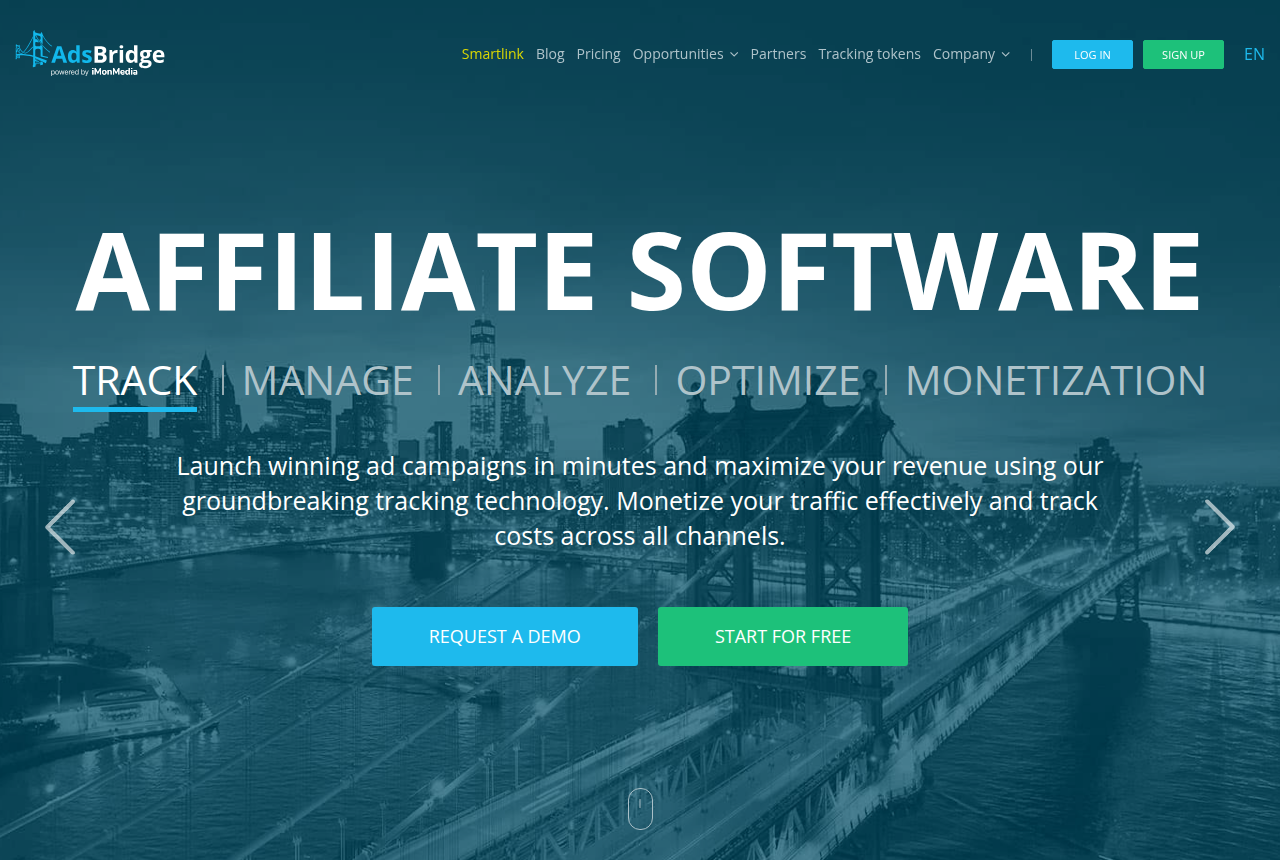
- The media-buyer basics are all present: a traffic distribution system with rules, split testing, S2S postbacks, tracking without redirects, and Fraud-Guard bot and proxy filtering.
- It has run under the same company since 2013, so it is an established tracker rather than a new arrival with no history.
What to watch
- Independent proof is thin and dated. G2 lists no reviews, Capterra has a handful, and most affiliate-forum praise is from 2014 to 2019, so you are largely trusting the vendor's own pages.
- Landing pages built in its editor are hosted on AdsBridge and cannot be downloaded, so switching trackers later means rebuilding those pages from scratch.
- Pricing is by monthly visits with per-1,000-visit overage, so a high-traffic pop or native campaign with a low conversion rate can push the real bill well past its tier.
- Cancellations get no refund under its own billing policy, so a mid-cycle change of mind costs you the rest of the month.
- Serious media buyers mostly shortlist Voluum, RedTrack or Keitaro, so there are fewer public setups and recent walkthroughs to copy when you get stuck.
Measured: pros and cons
What works
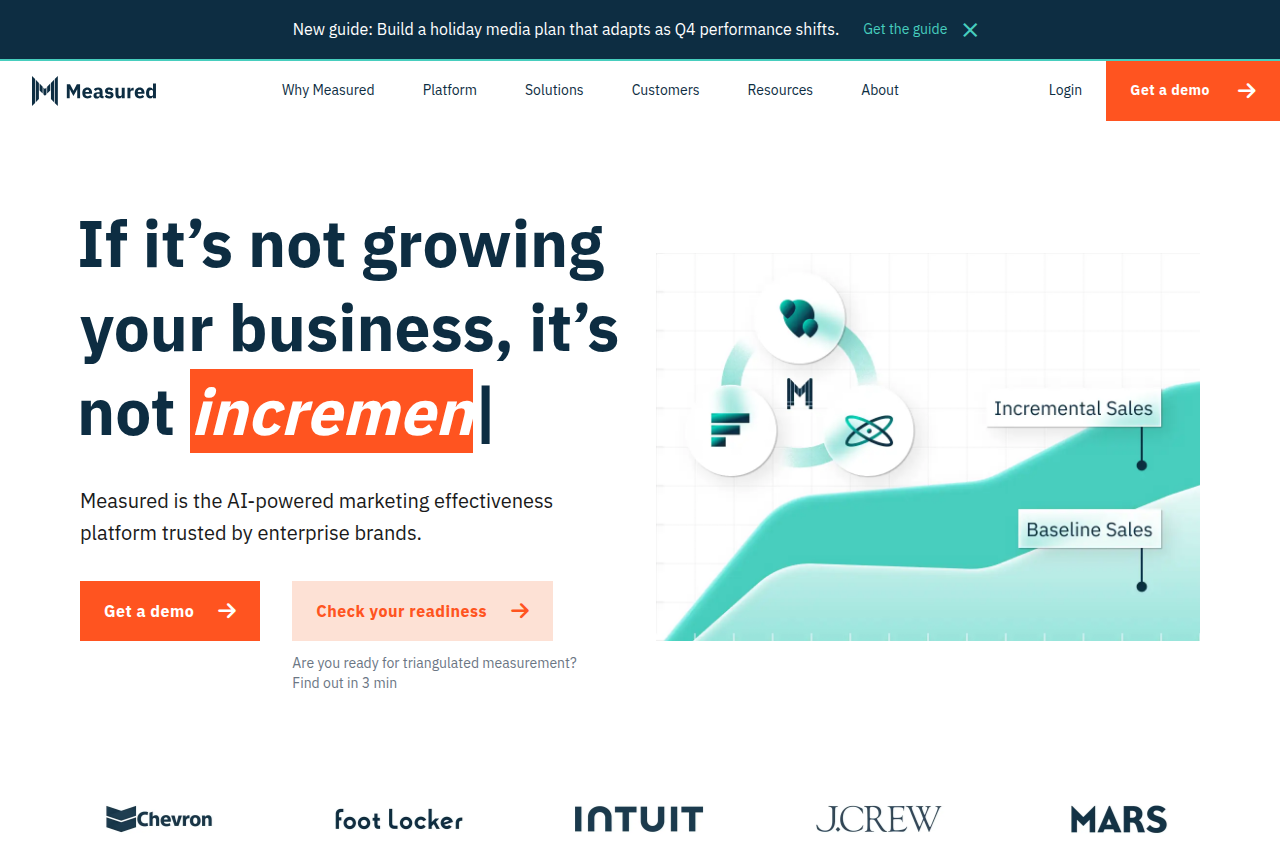
- Causal experiments and media mix modeling work together, so budget recommendations are checked against observed lift rather than trusted from one modeled number.
- Measures channels that may leave no useful click path, including connected television, audio, offline and upper-funnel media.
- The Media Plan Optimizer turns saturation and diminishing-return curves into channel-allocation recommendations.
- A serviced implementation gives the brand methodological support for experiment design, market selection and stakeholder adoption.
What to watch
- The vendor publishes no price, self-serve plan or free trial. Buyers start with a demo and need the full platform fee, experiment scope, onboarding work and contract terms in writing.
- Independent coverage flags a high entry barrier, so a small advertiser may not have enough spend, conversion volume or geographic spread for useful holdout tests.
- Onboarding is data-heavy. User reports describe substantial work gathering spend and outcome reports across networks before the first useful read.
- The output is modeled and experimental, so it will not reconcile to Meta, GA4 or Shopify. The vendor pages we checked do not promise to send conversions back to ad platforms.
The real differences
Two tools, two different questions
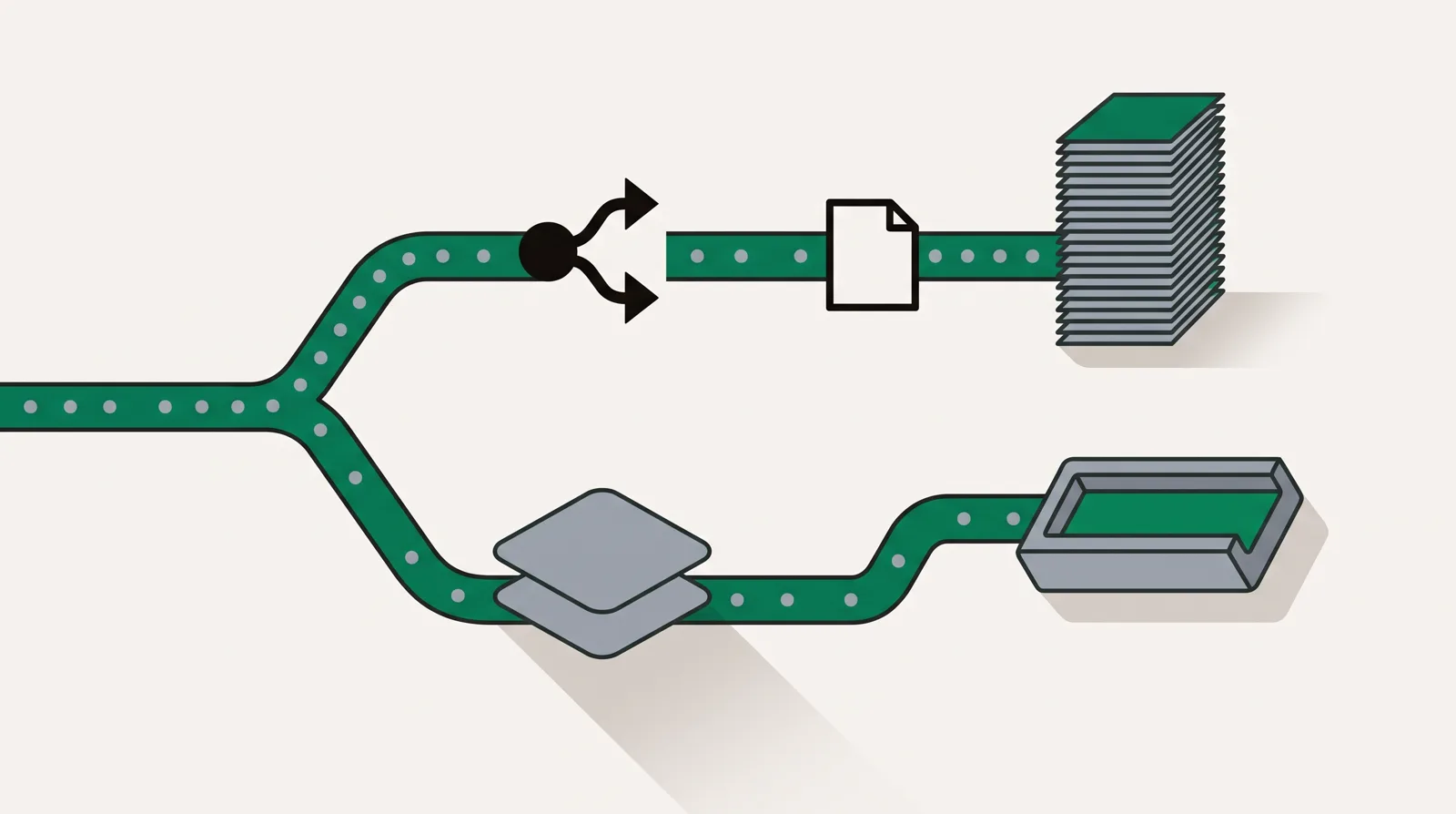
If you are genuinely down to these two, the first thing to settle is that they do not answer the same question. AdsBridge is a cloud ad tracker. You route your paid traffic through it, it stamps every click, sends the visitor to the right lander and offer, records the conversion your network or pixel posts back, and reports results by campaign, source and country. It sits in the path your clicks take. Measured does the opposite: it fires no pixel and follows no click. It runs controlled geo holdout experiments, turning some regions off a channel while comparable regions stay on, and feeds the result into a calibrated media mix model to estimate how many sales each channel actually caused. One tells you which creative and source converted a click today; the other tells you, next quarter, which whole channels were worth the money. Choosing between them is mostly choosing which of those questions is yours.
What AdsBridge is built to do
AdsBridge has run under the same company since 2013, and its pitch is that the tracker and the pages live in one tool. On the tracking side it covers the media-buyer basics: a traffic distribution system with rules, split testing, server-to-server postbacks, tracking without redirects, and Fraud-Guard bot and proxy filtering, hosted across seven AWS data centers in more than 160 countries so there is no server to run. What sets it apart from a pure tracker is the built-in landing page builder, with visual and HTML editors, a template library and CDN hosting, so the pages your traffic lands on are built and hosted inside the same subscription. And it is cheap: $29 a month for 100,000 visits, with a 14-day trial that needs no card. For a direct-response operator who would otherwise pay for a tracker and a page builder separately, that is one bill instead of two. The honest caveats are that its landers lock to its servers and cannot be downloaded, and that independent proof is thin, with no G2 footprint and most affiliate-forum write-ups dated 2014 to 2019.
What Measured is built to do
Measured is a media-effectiveness platform for mid-market and enterprise brands, and its method is causal rather than observational. Geo holdout experiments hold some markets back from a channel while comparable markets keep running it, so the difference in sales is a measured lift rather than a modeled guess, and those experiments calibrate a media mix model that covers the whole budget. The Media Plan Optimizer then turns saturation and diminishing-return curves into channel-allocation recommendations. The payoff is that it can value media a click path never sees: connected television, audio, offline and upper-funnel spend that a tracker like AdsBridge has no way to attribute. The price of that is commitment. There is no public price and no free trial, onboarding is data-heavy, and independent coverage flags a high entry barrier, so a brand without real spread of spend and conversions across geographies will not get useful holdout tests.
The line that separates them
Three differences do most of the work. The first is method: AdsBridge is deterministic and in-path, assigning each conversion to the click that earned it, while Measured is causal and experimental, estimating lift it can defend in a boardroom but never tying a single order to a single creative. The second is granularity: AdsBridge reports down to the source, the lander and the creative, the level a media buyer optimizes on daily; Measured answers at the channel level and will not reconcile to Meta, GA4 or Shopify. The third is what each one does with its answer. AdsBridge is where you act on individual campaigns this week. Measured is where you decide, with evidence, how next quarter's budget splits across channels. Neither is a worse version of the other. They sit at opposite ends of the same problem.
Where the money and the commitment diverge
The budgets are as far apart as the methods. AdsBridge is a published $29-a-month fee you can start on a card-free trial today, and it scales with monthly visits. Measured is a quote-only annual platform whose practical floor, by third-party estimates, runs to six figures of monthly media before the experiments have enough signal to work. If your spend is below that, Measured is not a tool you are choosing against AdsBridge; it is a tool you cannot yet use, and the honest move is to run a tracker well first. If your spend is above it and spread across channels a click cannot follow, AdsBridge's per-creative reporting is not the measurement your board is asking for.
Where your situation settles it
For most operators reading OfferROAS, AdsBridge is the pick. It is the shape of the daily problem: route the clicks, host the pages, see which source and creative converted, without a procurement cycle, and it sits a place above Measured on our roundup for exactly that reason. Measured is the better tool for a genuinely different reader, the brand large enough that a mis-allocated channel budget is the expensive mistake, who needs experiment-proven lift across television, audio and offline as much as digital. Rank and fit agree here, and they point in opposite directions depending on which reader you are. Read the question you are actually asking, not the one the other tool answers well.
When neither is the shape of your problem
Both of these tools measure traffic. Neither builds the funnel underneath it, and neither can see inside a video. If the gap you are really trying to close is one of those, two more tools are worth knowing.
ElasticFunnels is a funnel platform for teams running paid traffic, and it builds the thing AdsBridge tracks and Measured measures: the pages, and the checkout under them with order bumps, one-click upsells, subscriptions and multi-MID routing, with the click, the order, the rebill and the refund kept on one data layer alongside a CRM and attribution. The feature most relevant to this comparison is same-URL split testing, since both tools here test in their own way: ElasticFunnels rotates variants server-side under one campaign link, so Meta, Google and TikTok keep their learning and a test never sends the ad back through review. It starts at $97 a month with a 14-day trial that takes no card, every feature is on every plan, and plans differ by traffic. The honest caveat is that it is newer than the tools on this page and there is very little independent third-party review coverage yet, which is what you would expect of a platform this recent, so until you run real volume through it you are weighing the vendor's own account more than a stack of outside reports. What it does not do is sit in the click path as a dedicated tracker or run channel-level incrementality experiments; where it earns its place is owning the funnel these two only observe.
TrackPlay matters when the offer runs on a video sales letter, which neither a click tracker nor a channel model can see inside. It is a VSL player and analytics platform that ties every second watched to who actually bought, draws retention per second split into buyers and non-buyers, and posts the cart-verified sale back to Meta, TikTok and GA4 on the play that earned it. It has a no-card free tier of 1,000 plays a month and paid plans from $29 a month. It is narrow by design, though: built for paid-traffic VSL conversion, it is not a general video host or a B2B content library, and it has none of the channels or webinar tooling of a Wistia, so it is the wrong tool if the video's job is content marketing rather than a direct-response sale.
What each one costs
AdsBridge. A published, low sticker: $29 a month for 100,000 visits, with a 14-day trial that needs no card. It prices on monthly visits with per-1,000-visit overage, so a high-volume pop or native campaign with a low conversion rate can push the real bill well past its tier. The landing page builder is included at every tier, which is what makes the entry price meaningful: you are paying for a tracker and a page tool at once. Cancellations get no refund under its billing policy.
Measured. No public price and no free trial. You book a demo and get a quote, and contracts are annual and scale with your media spend and the number of channels you measure. Third-party analysis flags a high minimum spend barrier, with a working floor around six figures of monthly media. Those spend figures are third-party estimates, not the vendor's, so treat them as directional.
These two numbers do not sit on the same line. AdsBridge is a fixed monthly fee you can start this week; Measured is a committed annual platform for a brand already spending enough that a mis-allocated channel budget is the costly mistake. The real question is which of those describes your business, not which figure is smaller.
Prices and buying terms checked on each vendor's own pages, current as of 28 September 2026.
Our pick
AdsBridge
AdsBridge bundles click tracking, a landing page builder and Fraud-Guard bot filtering into one cloud tool that starts at $29 a month, which makes it one of the cheapest ways to run a real tracker and hosted landers together. It is legitimate and it has been around since 2013; the honest caveat is that independent proof is thin and its hosted landers lock to its servers.
Frequently asked questions
AdsBridge or Measured: which should I pick?
Which is cheaper, AdsBridge or Measured?
Does AdsBridge measure incrementality like Measured?
Can either one see connected TV, audio or offline spend?
Sources
From AdsBridge and Measured
- https://adsbridge.com/
- https://adsbridge.com/pricing
- https://www.measured.com/
- https://www.measured.com/incrementality-testing/
- https://elasticfunnels.io/
- https://trackplay.io/
Other sources
2 discussions and reviews read for this page. Quotes are excerpts; open a link to read the original in context.
How we compared these
We do not run paid campaigns through either tool. We read each vendor's own documentation and pricing, verify every number against the source, and weigh the long-term reports of operators who run them at real spend. The full rubric is on the methodology page.